The best places to buy spices in Bangkok are the city's big fresh markets, above all Or Tor Kor Market in Chatuchak, run by a state agency and full of produce and dry-goods stalls, and the neighboring Chatuchak Weekend Market. For Indian spices and cooking ingredients, head to Phahurat, which the Tourism Authority of Thailand calls Bangkok's Little India, and for packaged spices and curry pastes to take home, a large supermarket is the simplest option.
This guide sticks to markets and shops with an official presence we could check. It does not list individual stalls, which change often; use the market as your destination and browse.
Or Tor Kor Market: the state-run fresh market
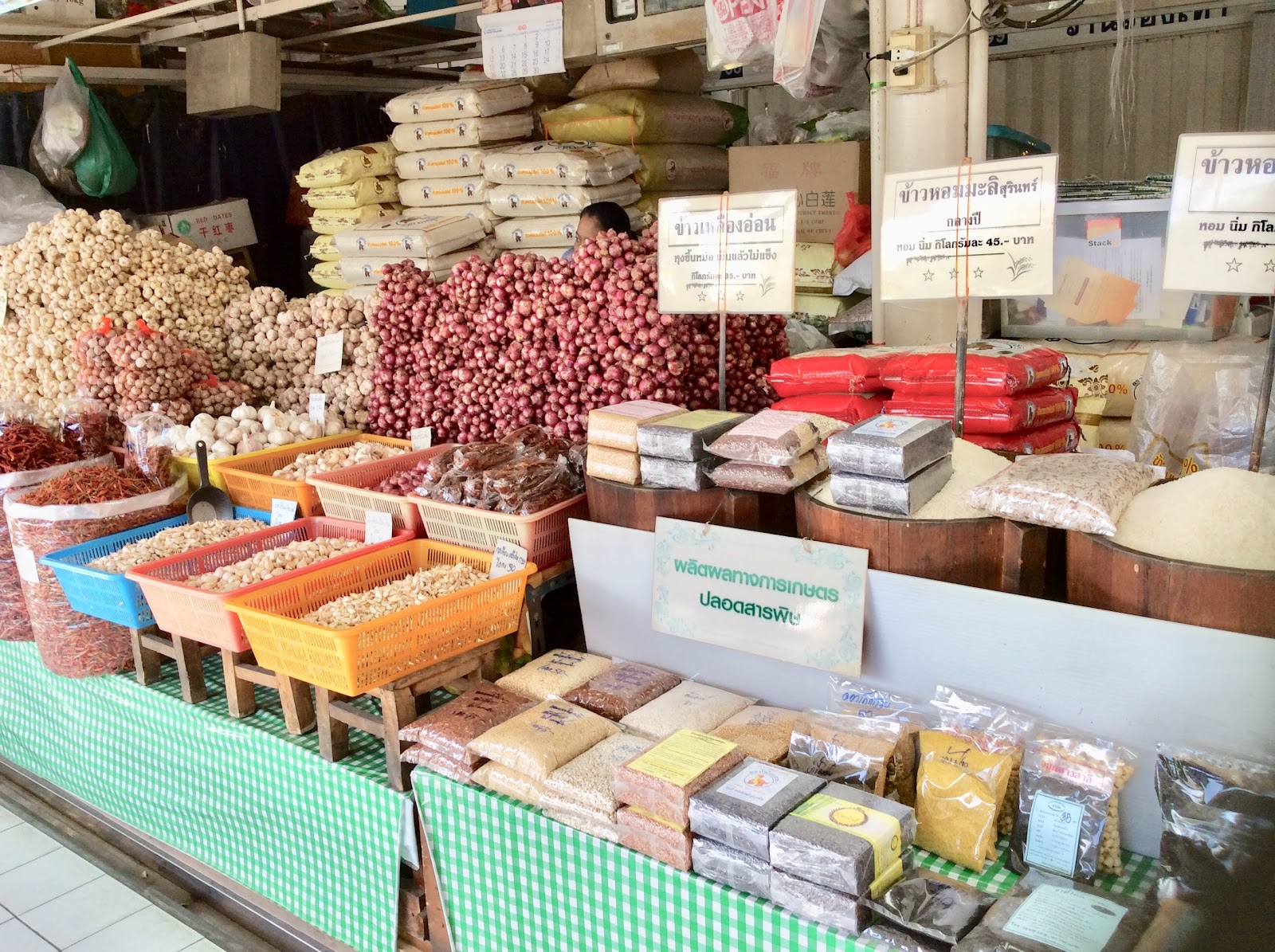
Or Tor Kor takes its name from the initials of the Marketing Organization for Farmers (MOF), a state enterprise that set up the Phahon Yothin central market here. According to the MOF's own history, the government approved the lease of more than 42 rai of State Railway land for it in 1975, and the market and warehouses were completed in May 1977. The market shares the MOF's address, 101 Yan Phahon Yothin Road, in Chatuchak.
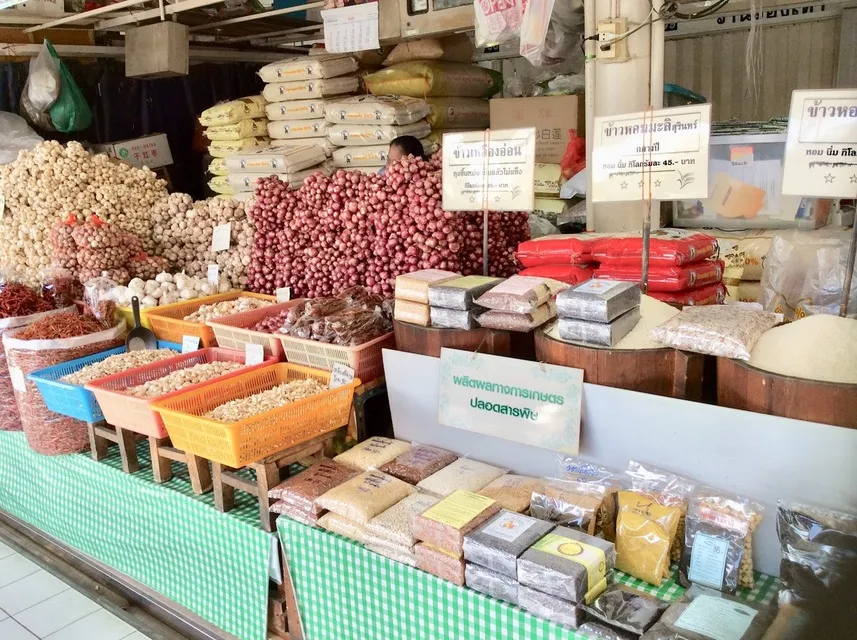
For spice buyers, the dry-goods stalls are the draw: whole dried chilies, garlic and shallots, dried shrimp, peppercorns and curry pastes sit beside the produce sections that sell fresh lemongrass, galangal, makrut lime leaves and Thai basil. Many of the aromatics in Thai cooking are fresh herbs rather than dried spices, and a fresh market is the place to see both side by side.
The MOF also publishes a daily list of product prices on its website. On September 26, 2026, for example, it listed large-bulb garlic at 150 baht a kilogram and black and white sesame at 280 baht a kilogram. It is a useful reference point before you buy.
Chatuchak Weekend Market
By Google Places coordinates, Or Tor Kor is only about 430 meters from the Chatuchak Weekend Market, so on a Saturday or Sunday it is easy to combine the two. The Tourism Authority of Thailand counts Chatuchak among Asia's largest and most diverse open-air markets, and its thousands of stalls include food and home goods alongside clothing and crafts. It is a better place for gift-packed spices, dried herbs and cooking tools than for bulk buying. TAT's advice for big markets: carry cash in baht and bargain politely where haggling is expected.
Phahurat: Bangkok's Little India
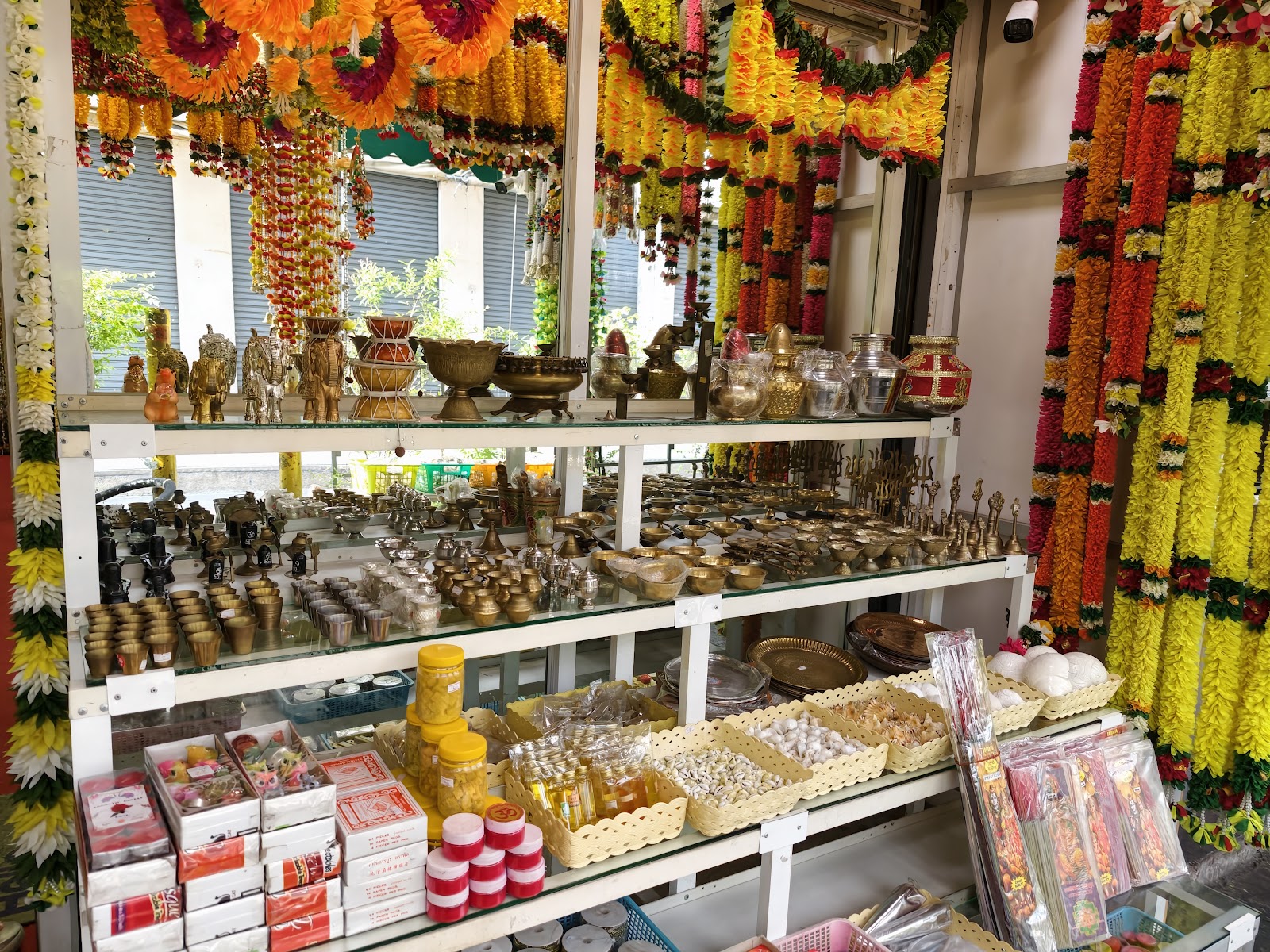
For Indian spices, spice blends and other ingredients for Indian cooking, the place to start is Phahurat, on the edge of the old city next to Chinatown. TAT describes Phahurat as Little India and notes the area's Indian heritage; in 2025 it hosted TAT's first Grand Diwali Festival, with a Diwali market at Phahurat and Khlong Ong Ang. Phahurat Market itself is on Triphet Road in Phra Nakhon, about a kilometer from the Grand Palace in a straight line (computed from map coordinates).
The streets around it are a mix of textile shops, Indian sweet shops, religious goods and grocers, so walk them rather than looking for one shop. Chinatown's main road, Yaowarat, begins a short way east; Wat Traimit, at the far end of Chinatown, is about 1.7 kilometers away.
Supermarkets: packaged spices and pastes to take home
If you want sealed, labeled packs that travel well, a large supermarket is the practical choice. Gourmet Market, for example, has a branch on the ground floor of Siam Paragon and lists its other branches on its website. Supermarkets stock Thai curry pastes, dried herbs and spice mixes from Thai brands, with printed ingredients and dates, which makes them easier to carry through customs at home.
Learn what to buy first
If you are not sure which chilies, pastes or herbs you need, a cooking class makes shopping easier. Baipai Thai Cooking School in Chatuchak starts each class with the ingredients, either in its herb garden or, on some mornings, with a market visit, and students take recipe booklets home.
Tips for buying spices in Bangkok
- Buy whole where you can. Whole peppercorns, coriander seed and dried chilies keep their flavor longer than ground spices.
- Check dates and packaging on packaged goods, and ask for sealed bags at market stalls if you are flying home.
- Know your home rules. Many countries restrict plant products, seeds and fresh herbs at the border. Dried, sealed, commercially packed spices are usually easier to bring in, but check your own country's customs rules before you buy.
- Bring cash. Market stalls often prefer baht.
For more markets and malls, see our Bangkok shopping guide.
Sources: Marketing Organization for Farmers, history, Marketing Organization for Farmers, daily product prices, TAT Newsroom, Grand Diwali Festival 2025, TAT Newsroom, Chatuchak Weekend Market, TAT Newsroom, market advice, Gourmet Market, Baipai Thai Cooking School, Google Places records for market locations. Checked September 26, 2026.
Or Tor Kor Market in Chatuchak, run by the state Marketing Organization for Farmers, is the obvious first stop, with produce and dry-goods stalls under one roof. For Indian spices, go to Phahurat (Little India); for sealed packs to take home, use a large supermarket.
At the Marketing Organization for Farmers site, 101 Yan Phahon Yothin Road, Chatuchak, Bangkok 10900, in north Bangkok, about 430 meters from Chatuchak Weekend Market.
The Marketing Organization for Farmers publishes a daily price list. On September 26, 2026 it listed large-bulb garlic at 150 baht per kilogram, black and white sesame at 280 baht per kilogram and shelled peanuts at 150 baht per kilogram. Prices change daily.
Phahurat, which TAT calls Bangkok's Little India, beside Chinatown in Phra Nakhon. Phahurat Market is on Triphet Road.
It depends on your country's customs rules. Many restrict fresh herbs, seeds and plant material; sealed, commercially packed dried spices are usually simpler. Check the rules of your destination before buying.
It is better for gift-packed spices, dried herbs and cooking tools than bulk buying. It trades on Saturdays and Sundays, and TAT advises carrying cash and bargaining politely.