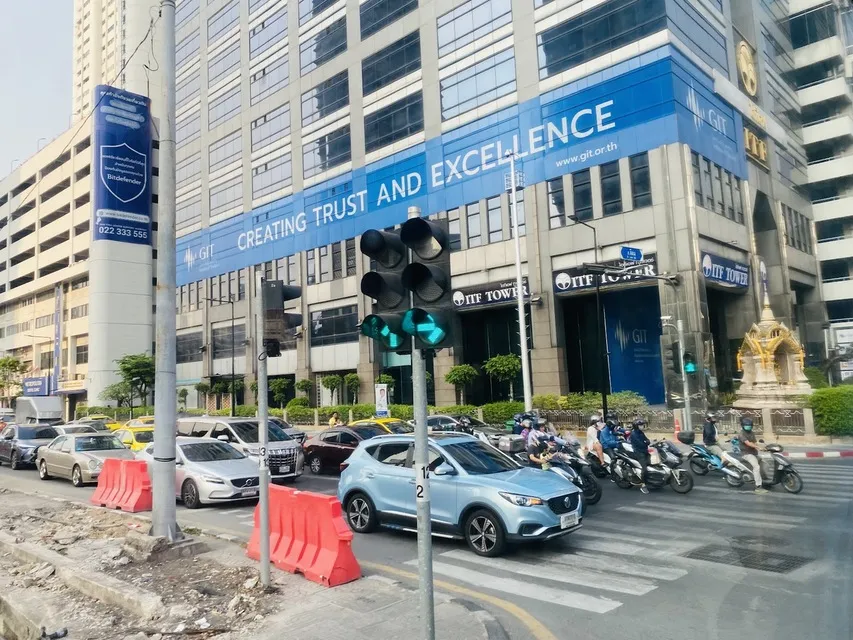
The safest way to buy gemstones in Bangkok is to buy from a shop in the Gem and Jewelry Institute of Thailand's Buy With Confidence program, or to have any stone you are considering tested at the institute's own laboratory on Silom Road before you pay. The main gem trading streets are Silom and Surawong, Mahesak, Yaowarat for gold and Charoen Krung for silver, all in the older business districts near the river.
This guide explains how the official certification works, where the trade is concentrated, and the scam that official Thai and foreign government sources still warn visitors about. It does not recommend individual shops: the institute publishes its own member directory, and that list, not a travel blog, is the one to trust.
Start with the GIT: the national gem institute and lab
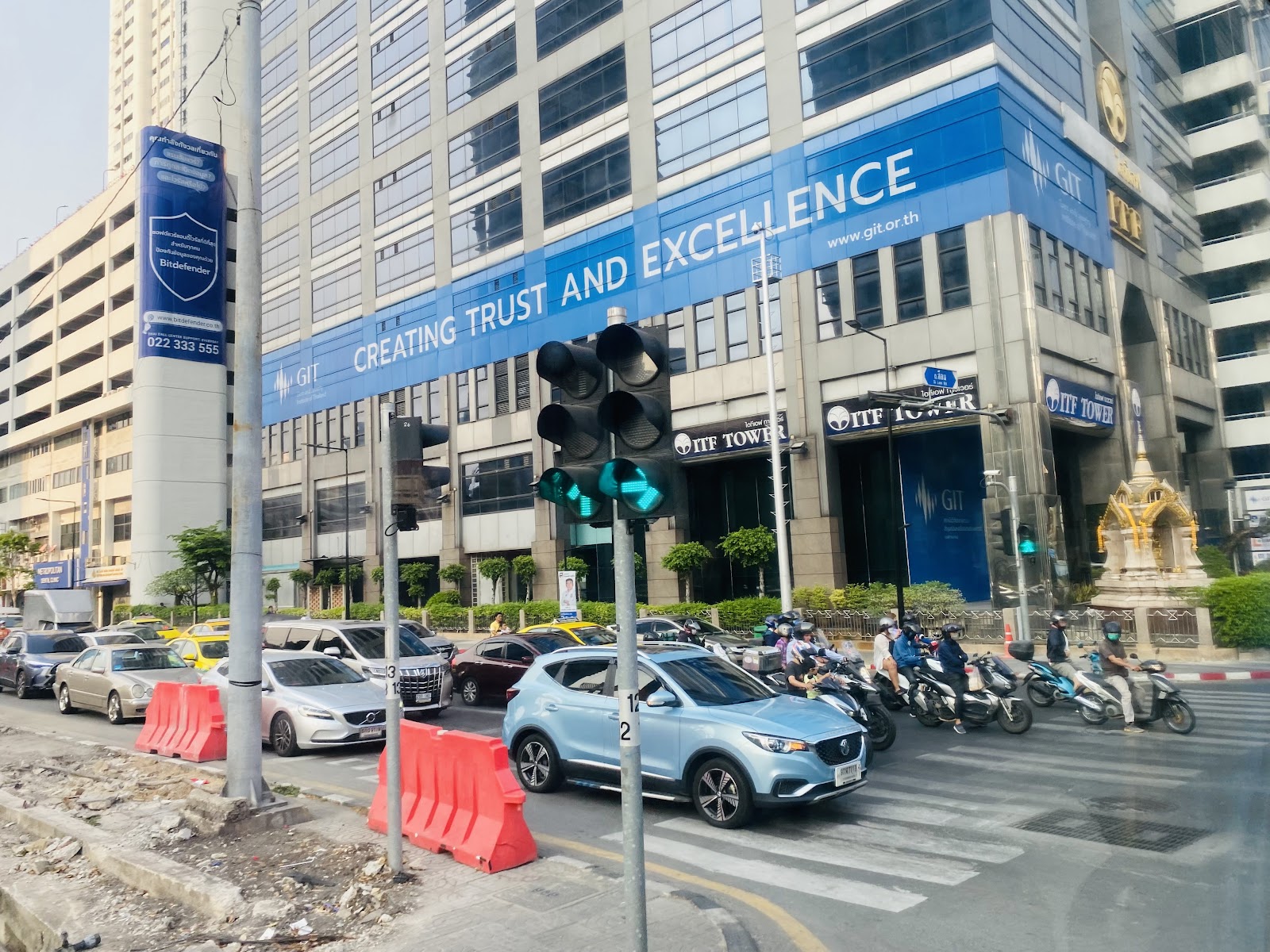
The Gem and Jewelry Institute of Thailand (GIT) is a public organization under the Ministry of Commerce. It occupies floors of the ITF Tower at 140 Silom Road in Bang Rak, about 265 meters north of the King Power Mahanakhon tower (computed from map coordinates), so it is easy to pair with the Mahanakhon SkyWalk on the same trip.
Three things there matter to a buyer:
- The Gem Testing Laboratory on the fourth floor identifies natural, synthetic and imitation stones, detects treatments, and can report the geographic origin of rubies, sapphires and emeralds. The institute says the lab is recognized by the World Jewellery Confederation (CIBJO) and is a member of the Laboratory Manual Harmonization Committee. Reports are printed on security paper with a hologram of the Grand Palace, and can be checked through the GIT's report verification service.
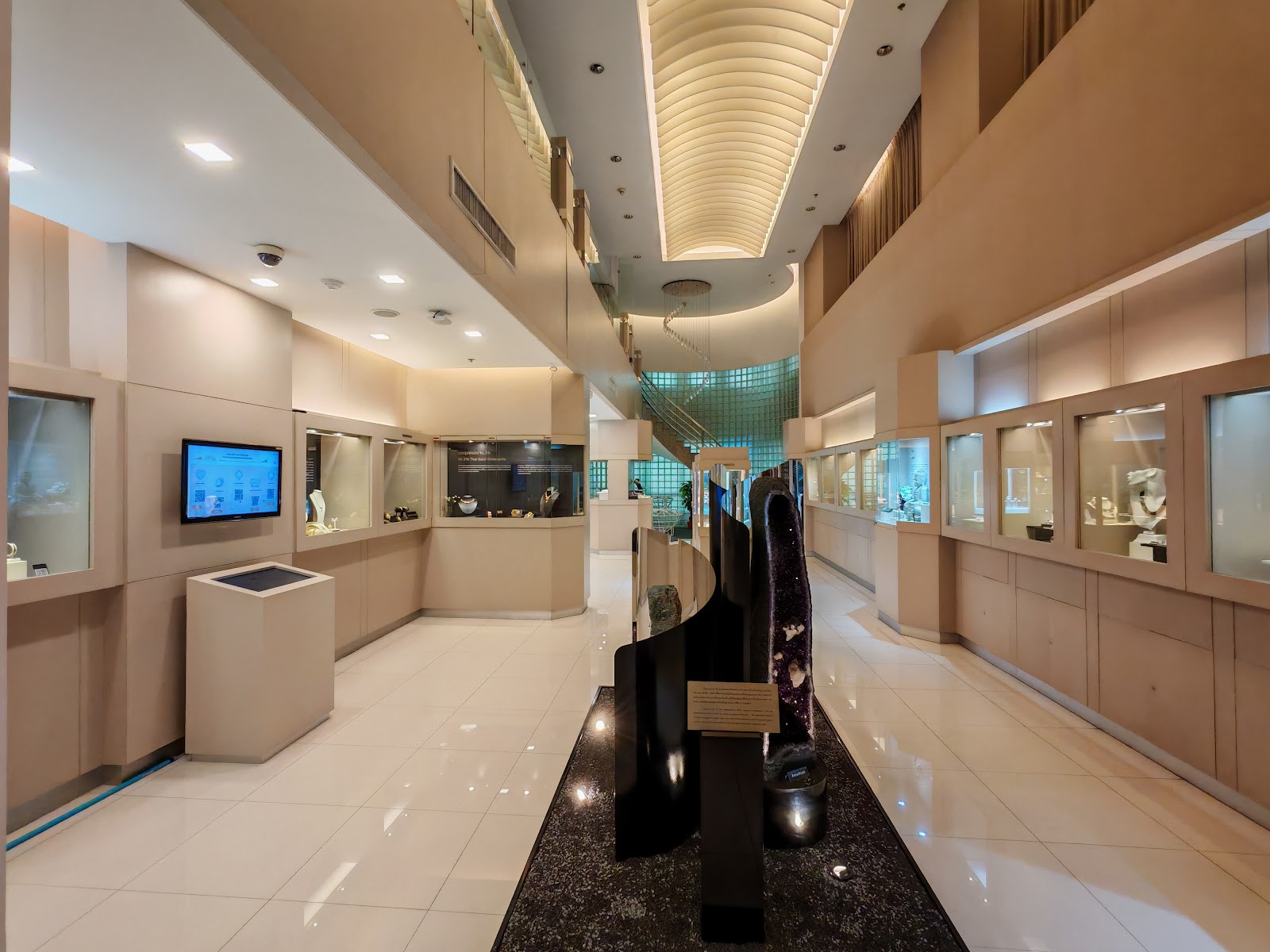
- The Gem and Jewelry Museum walks through the whole chain from mining to cutting and jewelry making, including a section on synthetic and imitation stones. It is a useful hour before you shop, because it shows what you are looking at.
- The Buy With Confidence (BWC) directory, which lists participating traders.
The lab and offices keep weekday hours only, so plan a testing visit for Monday to Friday. Lab fees and museum admission are in the FAQ below.
How Buy With Confidence works
The GIT launched Buy With Confidence in April 2018 with the Tourism Authority of Thailand (TAT), the Office of the Consumer Protection Board, the Department of Tourism and the Tourist Police Bureau. According to TAT, participating businesses display the campaign sticker at their shopfront, and a product sold under the scheme carries a BWC tag with a QR code. Scanning the code shows the GIT quality report for that piece.
That gives you two checks before you pay: the shop should appear on the BWC member list with an approved status, and the tag should scan to a GIT report that matches the stone in front of you. The member list shows each trader's status (approved or still pending), so read it rather than trusting a sticker alone.
TAT's older buying guide also names the Jewel Fest Club (JFC), founded in 1995 by TAT, the Thai Gem and Jewelry Traders Association, the Tourist Police and the Department of Export Promotion. The GIT's own buying advice recommends JFC and BWC member shops.
Where the gem trade is in Bangkok
The GIT's Buy With Confidence site describes four trading districts in Bangkok, each with a different emphasis.
Silom and Surawong: diamonds and jewelry
Hundreds of jewelry shops and many of the country's leading exporters line both roads in the financial district, and the GIT itself is here. BWC's directions: BTS Sala Daeng for Surawong, BTS Chong Nonsi for Silom.
Mahesak: loose colored stones
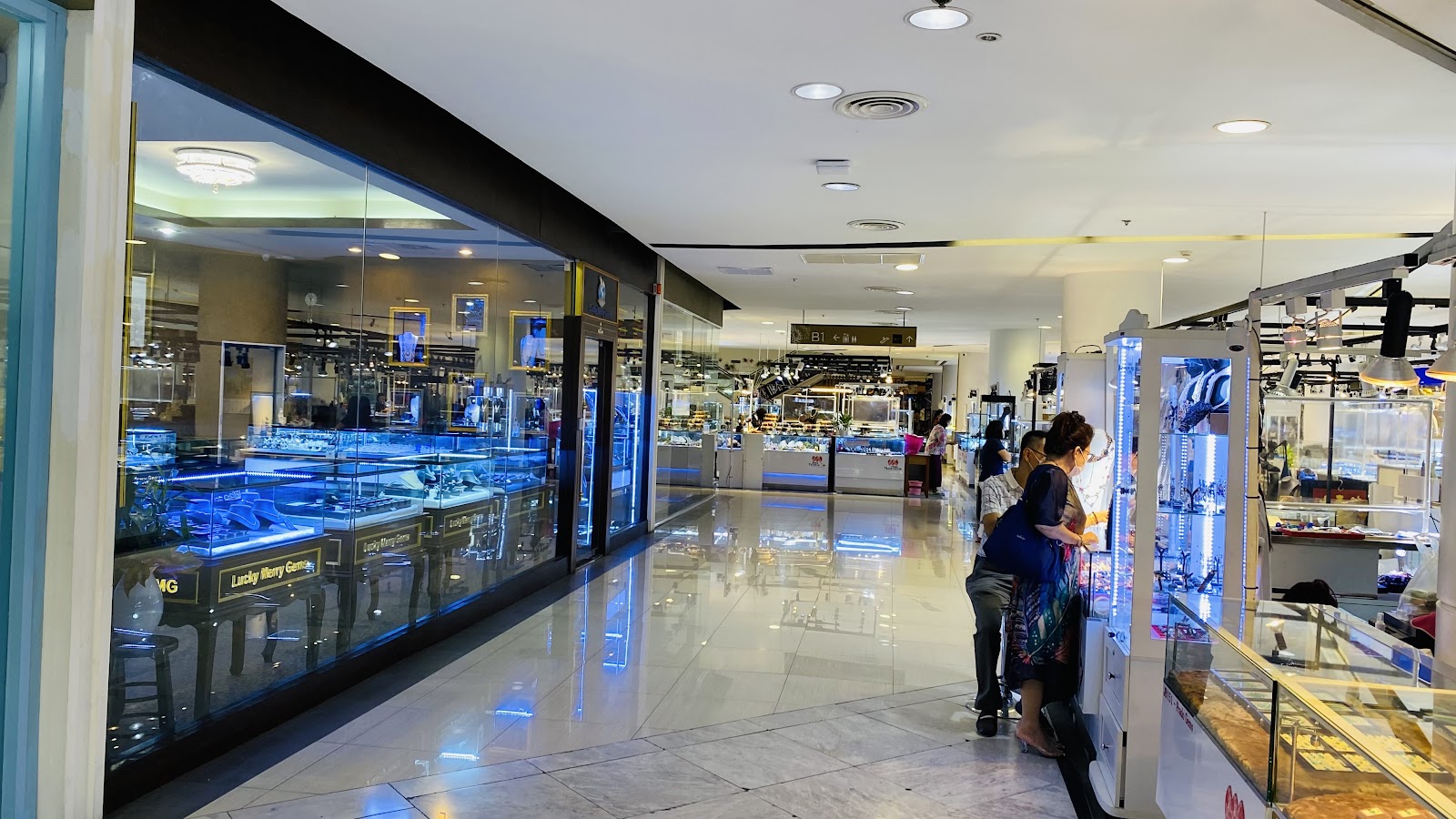
Mahesak Road is the wholesale and export center for colored gemstones. BWC suggests BTS Surasak, then about a ten-minute walk. At the Silom end is the Jewelry Trade Center (JTC) at 919/1 Silom Road, a trade building that says it houses more than 300 retailers and 1,500 wholesalers and lists several independent gem laboratories among its tenants.
Yaowarat: gold
Chinatown's main road is the place for gold jewelry: necklaces, rings, pendants and brooches, priced largely by weight and purity. At the Chinatown end of the district is Wat Traimit and its Golden Buddha, worth combining with a gold-shopping trip.
Charoen Krung: silver
Bangkok's oldest paved road has both wholesale and retail silver jewelry shops. BWC's directions: BTS Saphan Taksin.
For malls, markets and other shopping, see our Bangkok shopping guide.
The gem scam: what official sources warn about
The Bangkok gem scam is old, and it still works. TAT, the GIT and the Government of Canada all describe the same pattern:
- A friendly stranger, sometimes claiming to be a government official, or a taxi or tuk-tuk driver, tells you about a special one-day sale or a government export promotion.
- You are taken to a shop, often one paying the driver a commission, and encouraged to buy stones as an investment you can resell at a profit at home.
- The stones turn out to be of low quality at inflated prices, and the promised guarantee or buy-back is not honored. Canada's travel advice notes that its government cannot help obtain refunds.
TAT's own guidance is blunt: street touts who say nearby gem shops offer deals that will make you rich are almost always running a scam, and you should not expect to buy cheap loose stones in Thailand and sell them for a large profit back home.
A buying checklist from TAT and the GIT
- Choose the shop yourself. Never let a stranger, new acquaintance or driver take you to one; the commission is added to your price.
- Check the shop on the BWC member list, and look for the BWC tag and QR code.
- Learn the 4Cs (color, clarity, cut, carat) for the stone you want, and compare like with like in several shops.
- Look at the stone in daylight, even if the shop has a daylight lamp.
- For larger or costlier stones, ask for a recent lab report from the GIT or another recognized lab, or have the stone tested yourself. TAT notes that a lab reports on a stone; it does not certify it.
- Consider buying a loose stone and having it set afterwards. Prongs can hide flaws.
- Get a detailed receipt listing the stone's type, color, weight, size, cut and quality, plus any certificate or warranty, and check it before you leave.
- Buy because you like the piece, not as an investment. The GIT's own advice is to buy for pleasure, not speculation.
If a stone costs a significant amount, a GIT report is a small extra expense for knowing exactly what you bought.
Sources: The Gem and Jewelry Institute of Thailand (contact, gem identification services, lab fees, museum and entry fees), GIT Buy With Confidence (member list, buying guide, trading districts), TAT Newsroom, Buy With Confidence, TAT Newsroom, buying gems and jewellery in Thailand, Government of Canada, Thailand travel advice, Jewelry Trade Center. Checked September 26, 2026.
At the Gem Testing Laboratory of the Gem and Jewelry Institute of Thailand (GIT), 4th floor, ITF Tower, 140 Silom Road, Bang Rak. The lab is open Monday to Friday, 8:30 a.m. to 4:30 p.m., except weekends, public holidays and institute holidays. Phone +66 2 634 4999.
GIT's published fees (excluding 7% VAT): a gem identification report with photograph for a ruby, sapphire or emerald is 1,600 baht under 3 carats, 2,500 baht for 3 to 6.99 carats and 3,700 baht from 7 carats, plus 1,500 baht per stone for origin determination. A mini report starts at 300 baht per stone for semi-precious stones and 500 baht for precious stones or diamonds. GIT says prices can change without notice.
Look for the GIT's Buy With Confidence sticker, check that the business appears as approved on the member list at bwc.git.or.th, and scan the BWC tag's QR code to see the GIT report for the piece. TAT also points to Jewel Fest Club (JFC) members.
A stranger, a person posing as an official, or a taxi or tuk-tuk driver steers you to a shop for a special sale or government promotion, and you are sold low-quality stones at high prices as an investment to resell at home. TAT says such offers are almost always a scam, and Canada's travel advice notes that promised guarantees are not always honored.
Yes. GIT lists admission as 200 baht for foreign tourists, 80 baht for Thai visitors and 20 baht for students; children under 6, monks, people with disabilities and licensed guides enter free. It is in the GIT building on Silom Road.
The Jewelry Trade Center at 919/1 Silom Road lists its hours as Monday to Saturday, 10 a.m. to 7 p.m., closed Sunday. Phone 02-630-1000.
Official sources advise against buying for investment. TAT warns not to expect to resell stones at a large profit at home, and the GIT recommends buying for enjoyment rather than speculation.