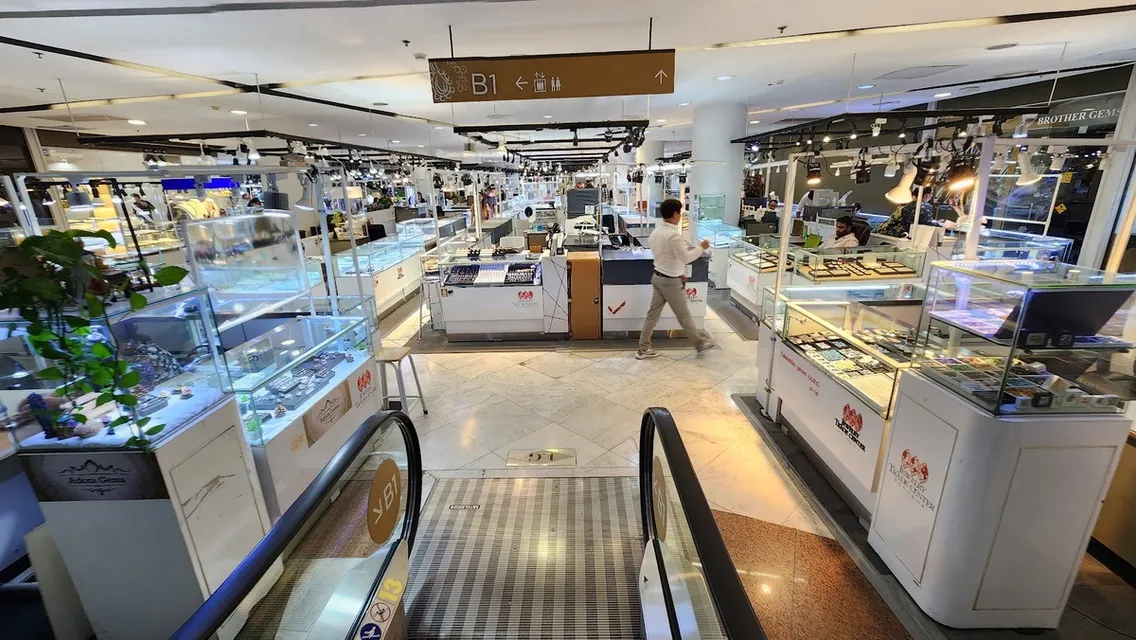
The safest places to buy pearls in Bangkok are established jewelers in the Silom and Surawong jewelry district, including the pearl shops inside the Jewelry Trade Center on Silom Road, and brand boutiques such as Mikimoto at Siam Paragon. Whatever you buy, ask for a laboratory report from the Gem and Jewelry Institute of Thailand (GIT), the state gem institute, whose lab on Silom Road tests pearls for the public. And walk away from anyone who approaches you in the street with a special deal on jewelry.
Where to buy pearls in Bangkok
The Silom and Surawong jewelry district
GIT's consumer program names Silom and Surawong roads as Bangkok's main street for diamonds and jewelry, with hundreds of shops on both sides of the road in the financial district, as well as many leading gem and jewelry exporters. GIT's directions are BTS Sala Daeng for Surawong and BTS Chong Nonsi for Silom. It also points to Mahesak Road, off Silom, as the city's wholesale gem-trading hub, reached from BTS Surasak with about a 10-minute walk. The district runs toward the river end of Silom Road, the same road as lebua at State Tower.
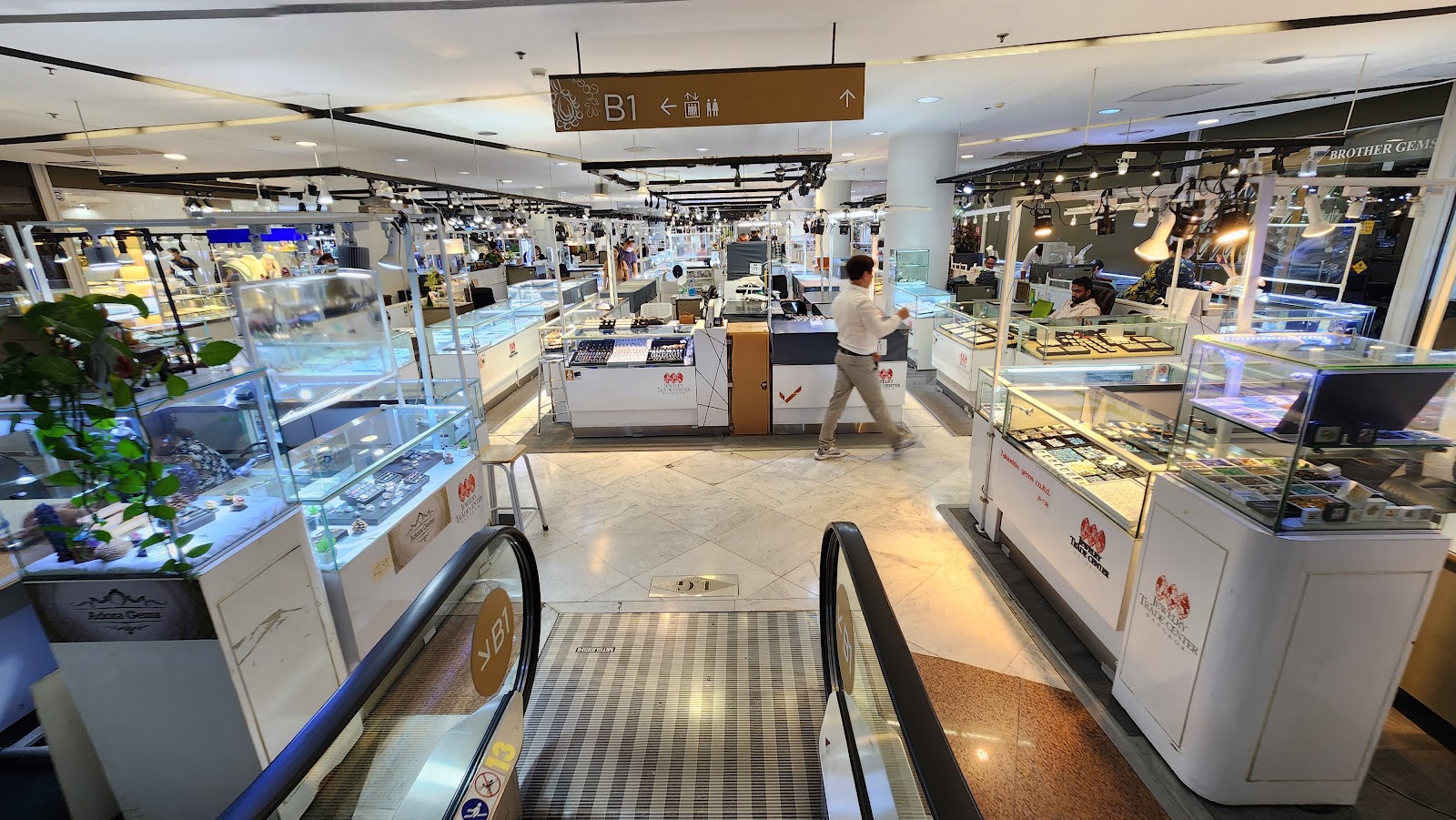
Jewelry Trade Center, Silom Road
The Jewelry Trade Center (JTC) at 919/1 Silom Road describes itself as Thailand's leading trade building for diamonds, gems and jewelry, with shops, offices and apartments in one complex. Its own store directory lists two pearl jewelry shops, Jinheng (Bangkok) and Pearl Depot, both on the second floor, alongside many shops selling fine jewelry, gemstones and silver. Having a building full of jewelers in one place makes it easier to compare quality and prices before you commit. The center is open Monday to Saturday and closed on Sundays.
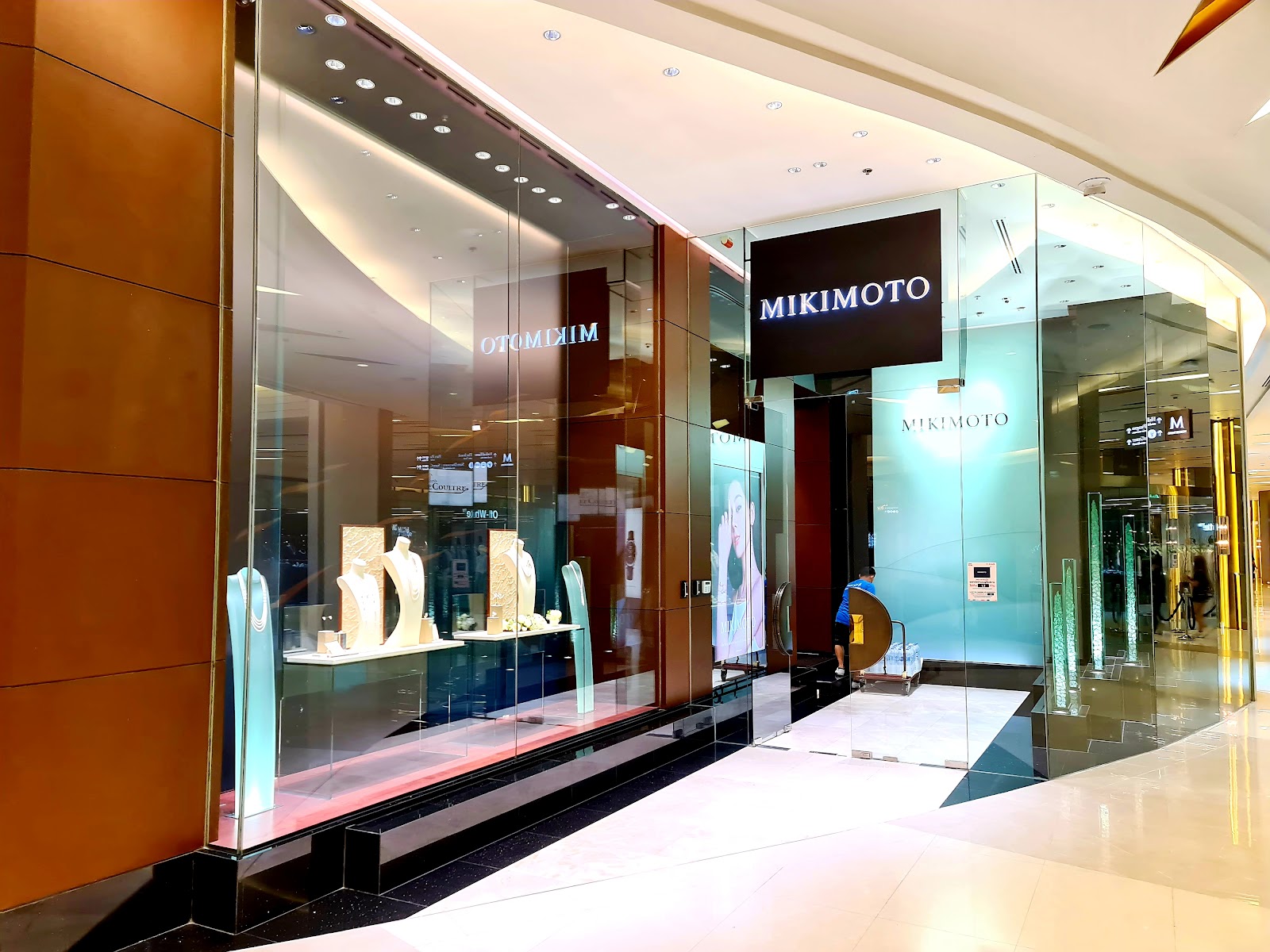
Mikimoto at Siam Paragon
For branded cultured pearls, the Japanese pearl jeweler Mikimoto lists a single Bangkok boutique on its Thai website, in the Siam Paragon shopping center on Rama I Road. Expect brand prices, but also a known product sold under the brand's own name. If you are staying at Siam Kempinski Hotel Bangkok, a covered walkway on the second floor leads straight into Siam Paragon.
Our Bangkok shopping guide covers the city's malls and markets more broadly.
How GIT says to judge a pearl
GIT's buying guide starts with the type of pearl, because type sets the price range.
- Saltwater or freshwater. Saltwater pearls are generally worth more than freshwater ones. The best-known saltwater types are Akoya, South Sea, and black South Sea or Tahitian pearls.
- Natural or cultured. Natural pearls are worth more because they are rare, not because they are necessarily better quality than cultured pearls.
- Luster. GIT calls luster, the amount of light a pearl reflects from its surface, the most important factor. Among saltwater pearls, Akoya pearls often have high luster. A cloudy or dull surface can mean a thin nacre layer, which affects both luster and durability.
- Size. All else equal, bigger is worth more, and prices rise sharply above about 8 to 9 mm. Cultured South Sea pearls are the largest.
- Shape. Round, symmetrical pearls are the most expensive, though other shapes can make distinctive jewelry.
- Color and surface. Colors range from white to black, with overtones of pink, green, purple or blue; choosing one is personal. A clean surface that reflects light evenly raises the price, but GIT notes that small natural blemishes can actually help show that a pearl is genuine.
For care, GIT suggests taking pearls to a jeweler about once a year to check the silk and restring it, and making sure the new strand is knotted between each pearl so a break does not scatter them.
Get a GIT report and look for Buy With Confidence
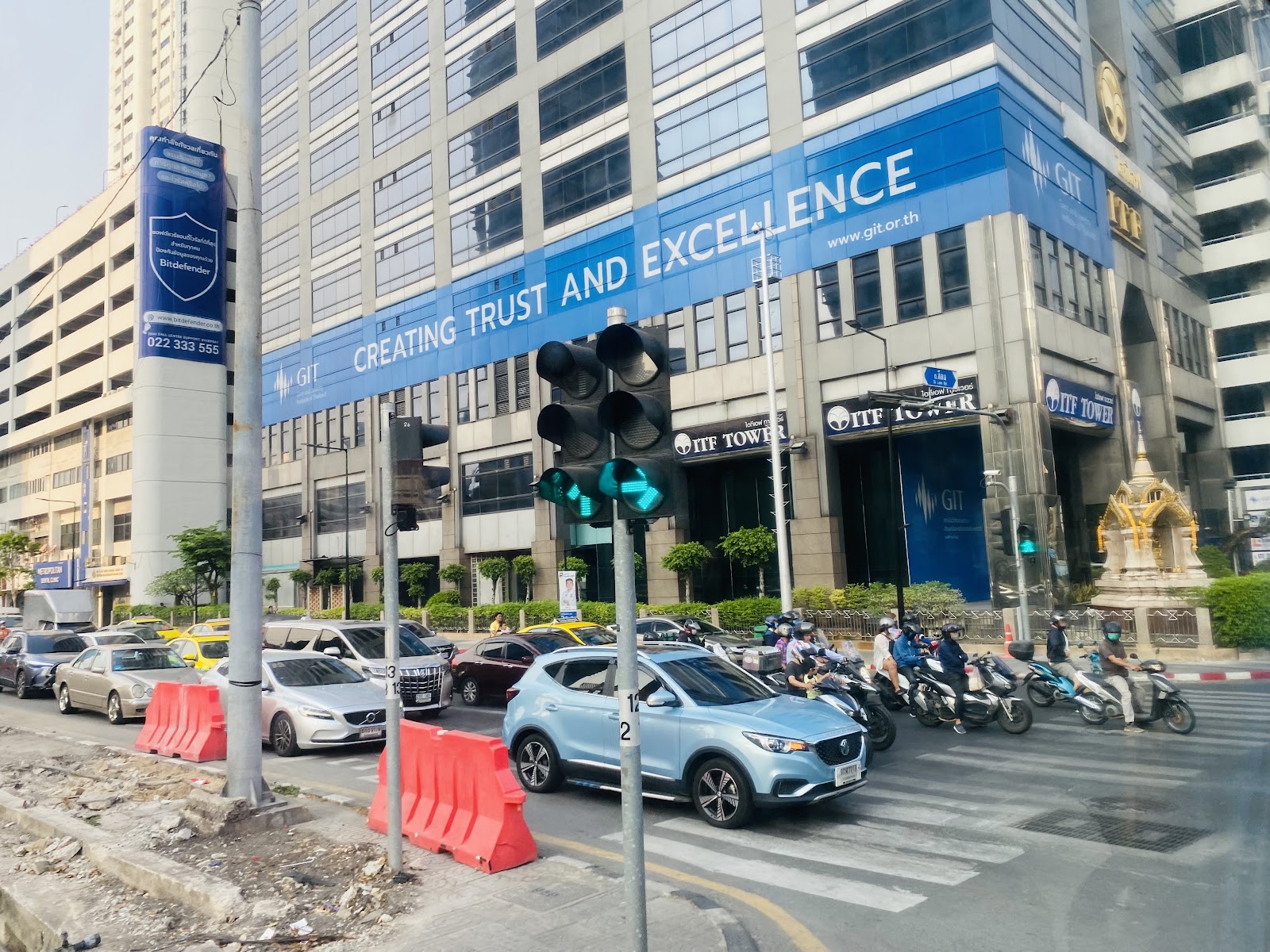
GIT's laboratory, on the 4th floor of the ITF Tower on Silom Road, identifies pearl type and checks for treatments, issuing a report with a color photograph printed on security paper. Ask the seller for a recent report before paying for anything expensive, or take the piece to GIT yourself. Remember that a lab reports on what a pearl is; it does not vouch for the shop.
GIT also runs the Buy With Confidence campaign with the Tourism Authority of Thailand, the Tourist Police and consumer-protection agencies. Member shops display the campaign sticker, and products sold under it carry a BWC tag with a QR code that links to the GIT report.
The gem scam: how to recognize it
A long-running tourist scam in Thailand involves gems and jewelry, and it usually starts before you reach a shop. The Tourism Authority of Thailand warns visitors to:
- ignore any stranger who poses as a government official and promises a special one-day sale, and any taxi or tuk-tuk driver who makes the same offer;
- distrust anyone who says nearby gem shops offer deals that will make you rich, which TAT says is almost always a scam;
- never buy jewelry expecting to resell it at a profit back home;
- refuse to be rushed, and walk away if a price is far below what the same quality costs elsewhere;
- get a detailed written receipt describing the item, and a recent lab report from GIT or the Asian Institute of Gemological Sciences for larger purchases.
If something goes wrong, contact the Tourist Police on 1155.
Sources: GIT Buy With Confidence: buying guide, GIT Buy With Confidence: jewelry districts, GIT gem testing services, GIT lab fees, Jewelry Trade Center, Mikimoto Thailand, TAT: buying gems and jewelry, TAT: Buy With Confidence, TAT: Tourist Police 1155. Checked September 26, 2026.
The Silom and Surawong jewelry district, including the Jewelry Trade Center at 919/1 Silom Road, where Jinheng (Bangkok) and Pearl Depot sell pearl jewelry on the second floor, and the Mikimoto boutique at Siam Paragon for branded pearls. Ask for a GIT report on anything valuable.
Monday to Saturday, 10 a.m. to 7 p.m.; closed on Sundays, according to its website on September 26, 2026. Phone +66 2 630 1000.
A pearl identification report with photograph costs THB 1,600 for a single pearl up to 12 mm and THB 2,500 above 12 mm. A strand of 16 inches or less costs THB 5,000 if the pearls are under 12 mm and THB 8,000 if larger, with longer strands charged pro rata. All fees are plus 7% VAT, as listed on September 26, 2026.
On the 4th floor of the ITF Tower on Silom Road in Bang Rak. The lab is open Monday to Friday, 8:30 a.m. to 4:30 p.m., except public holidays. Phone +66 2 634 4999.
According to GIT, saltwater pearls such as Akoya, South Sea and Tahitian are generally worth more than freshwater pearls, and natural pearls more than cultured ones because of their rarity. Round shape, high luster and size over about 8 to 9 mm all raise the price.
Be wary of strangers or drivers who steer you to a shop with a one-day sale or a government-backed deal, of prices far below normal, and of any promise that you can resell at a profit at home. TAT says these offers are almost always scams.
The Tourist Police on 1155. GIT, which runs the Buy With Confidence campaign with the Tourist Police, can also test what you bought.