National Museum Bangkok
About
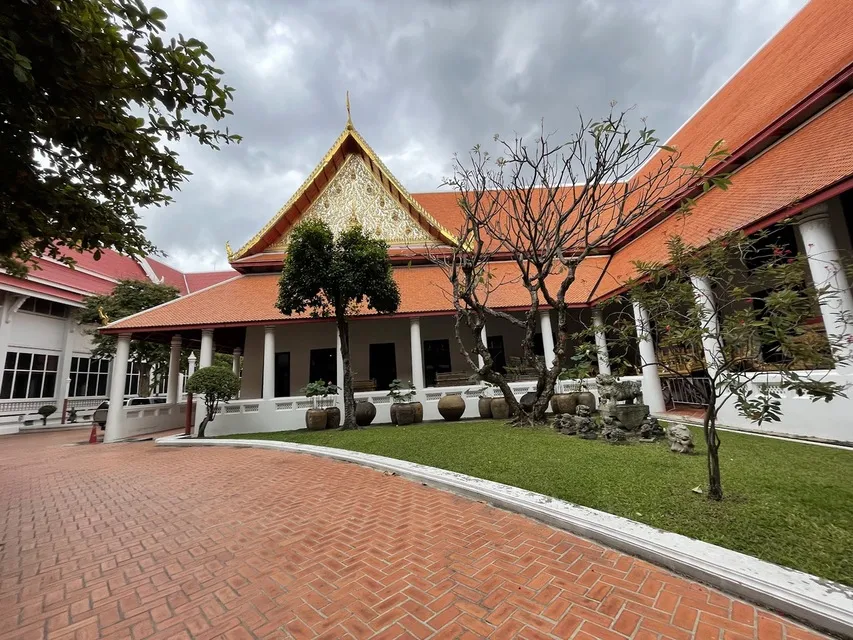
The National Museum Bangkok is the country's first public museum, with a deep collection of Thai and regional art spread through the halls of the Front Palace, the Wang Na, where the vice-kings of the early Chakri dynasty lived. The Fine Arts Department runs it, and the visit is as much about the palace buildings, some dating from the 1780s, as about the objects inside them.
It suits travelers with a real interest in Buddhist art, Thai history or Southeast Asian sculpture, and anyone who wants to understand what they have seen at the Grand Palace and Wat Pho. The museum stands on Na Phra That Road, across Sanam Luang from the Grand Palace and near Tha Chang pier. Plan around its schedule: it opens Wednesday to Sunday only.
A palace turned museum
King Chulalongkorn opened the kingdom's first public museum inside the Grand Palace in 1874, and moved it here in 1887, after the office of vice-king was abolished and the Front Palace fell empty. King Prajadhipok reopened it as the Museum for Bangkok in 1926, and it became the National Museum under the Fine Arts Department in 1934. The oldest hall, Siwamokkhaphiman, was built in 1782 as an open pavilion where the vice-king received nobles.
Ten pieces the museum says not to miss
The museum's own shortlist is a good way to navigate a large site. It starts with the Phra Buddha Sihing, a gilded bronze image brought from Chiang Mai in 1795 and still housed in the Buddhaisawan Chapel. In the Mahasurasinghanat Building are a Ganesha from Candi Singhasari in East Java, presented to King Chulalongkorn in 1896, a Srivijaya-era bodhisattva torso from Chaiya, and a bronze Roman lamp excavated in Kanchanaburi. The Prapas Phiphitthaphan Building holds the Ramkhamhaeng Inscription, listed by UNESCO as Memory of the World in 2003, alongside a Dvaravati stone Buddha and Lanna and Sukhothai bronzes.
Royal chariots and throne halls
The Royal Chariot hall keeps the Great Victory Chariot, built in 1795 for royal cremations: 18 meters long, more than 11 meters high and about 13.7 tonnes, and used in 2017 for the royal cremation of King Bhumibol. In the Issaret Winitchai Hall stands the carved and gilded Busabok Kroen throne from the reign of King Rama I. Since May 2024 the Lopburi room has also shown the bronze Shiva known as the Golden Boy, returned to Thailand from the Metropolitan Museum of Art in New York.
Sources: National Museum Bangkok, ten highlights, opening calendar, museum history, Golden Boy display. Checked September 25, 2026.
Contact Information
Bangkok, 10200
Photo: Amin Mohamed via Google
National Museum Bangkok
About National Museum Bangkok
The National Museum Bangkok is the country's first public museum, with a deep collection of Thai and regional art spread through the halls of the Front Palace, the Wang Na, where the vice-kings of the early Chakri dynasty lived. The Fine Arts Department runs it, and the visit is as much about the palace buildings, some dating from the 1780s, as about the objects inside them.
It suits travelers with a real interest in Buddhist art, Thai history or Southeast Asian sculpture, and anyone who wants to understand what they have seen at the Grand Palace and Wat Pho. The museum stands on Na Phra That Road, across Sanam Luang from the Grand Palace and near Tha Chang pier. Plan around its schedule: it opens Wednesday to Sunday only.
A palace turned museum
King Chulalongkorn opened the kingdom's first public museum inside the Grand Palace in 1874, and moved it here in 1887, after the office of vice-king was abolished and the Front Palace fell empty. King Prajadhipok reopened it as the Museum for Bangkok in 1926, and it became the National Museum under the Fine Arts Department in 1934. The oldest hall, Siwamokkhaphiman, was built in 1782 as an open pavilion where the vice-king received nobles.
Ten pieces the museum says not to miss
The museum's own shortlist is a good way to navigate a large site. It starts with the Phra Buddha Sihing, a gilded bronze image brought from Chiang Mai in 1795 and still housed in the Buddhaisawan Chapel. In the Mahasurasinghanat Building are a Ganesha from Candi Singhasari in East Java, presented to King Chulalongkorn in 1896, a Srivijaya-era bodhisattva torso from Chaiya, and a bronze Roman lamp excavated in Kanchanaburi. The Prapas Phiphitthaphan Building holds the Ramkhamhaeng Inscription, listed by UNESCO as Memory of the World in 2003, alongside a Dvaravati stone Buddha and Lanna and Sukhothai bronzes.
Royal chariots and throne halls
The Royal Chariot hall keeps the Great Victory Chariot, built in 1795 for royal cremations: 18 meters long, more than 11 meters high and about 13.7 tonnes, and used in 2017 for the royal cremation of King Bhumibol. In the Issaret Winitchai Hall stands the carved and gilded Busabok Kroen throne from the reign of King Rama I. Since May 2024 the Lopburi room has also shown the bronze Shiva known as the Golden Boy, returned to Thailand from the Metropolitan Museum of Art in New York.
Sources: National Museum Bangkok, ten highlights, opening calendar, museum history, Golden Boy display. Checked September 25, 2026.