
How long can you stay in Bangkok without a visa? Since September 15, 2026, most Western visitors, including travelers from the United States, the United Kingdom, Canada, Australia and most of Europe, can stay up to 30 days for tourism under Thailand's visa exemption. That replaced the 60-day exemption that applied from July 15, 2024 until the rule change, so older articles quoting 60 days are out of date.
Bangkok has no separate rules: the stay you are given at immigration covers the whole of Thailand. This guide explains who gets 30 days, the limit on how often you can use it, how to extend, what happens if you overstay, and when you need a visa instead. Rules have changed several times since 2024, so always confirm the current position with a Thai embassy or the Immigration Bureau before you fly.
The new 30-day visa exemption (from September 15, 2026)
On September 1, 2026, the Tourism Authority of Thailand (TAT) announced that new visa exemption categories, published in the Royal Gazette on August 31, 2026, take effect on September 15, 2026 and replace the 60-day measure. Under the new framework, passport holders from 60 countries and territories can enter visa-free for tourism and stay up to 30 days. The list published by TAT includes:
- North America and Oceania: the United States, Canada, Australia, New Zealand and Fiji.
- Europe: the United Kingdom, Ireland, Germany, France, Italy, Spain, the Netherlands, the Nordic countries, Switzerland and every European Union member state.
- Asia and the Middle East: Japan, India, Taiwan, Singapore, Malaysia, Indonesia, the Philippines, the United Arab Emirates, Saudi Arabia, Qatar, Israel and others.
The Royal Thai Embassy in Washington, D.C. confirms the 30-day stay for US passport holders on its visa exemption page, updated September 17, 2026. The exemption is for tourism only. The UK government's travel advice adds that it does not cover business travel, including conferences and meetings.
If your country is not on the 30-day list
TAT's notice sets out other categories that may apply instead:
- 15-day exemption: passport holders from Seychelles and Mauritius.
- Visa on Arrival: the notice names Azerbaijan, Belarus and Serbia.
- Bilateral agreements: some nationalities enter under separate agreements that give 90, 30 or 14 days, depending on the agreement.
If you cannot find your nationality in any of these, you will need a visa before you travel. Check with the Thai embassy or consulate that serves your country.

How often can you use the visa exemption?
This is the part that changed most, and official sources do not describe it the same way:
- TAT's notice says travelers using the 30-day exemption may enter through land-border checkpoints no more than twice per calendar year (nationals of Malaysia, Brunei, Indonesia and Singapore are excepted).
- The Royal Thai Embassy in London tells British and Irish travelers that eligible passport holders may enter under the exemption only twice within a calendar year, and advises anyone planning more visits to apply for a visa.
The safe reading: if you plan more than two visa-free trips to Thailand in one calendar year, get a visa first rather than hoping for a third exemption stamp.
Can you extend a 30-day stay in Bangkok?
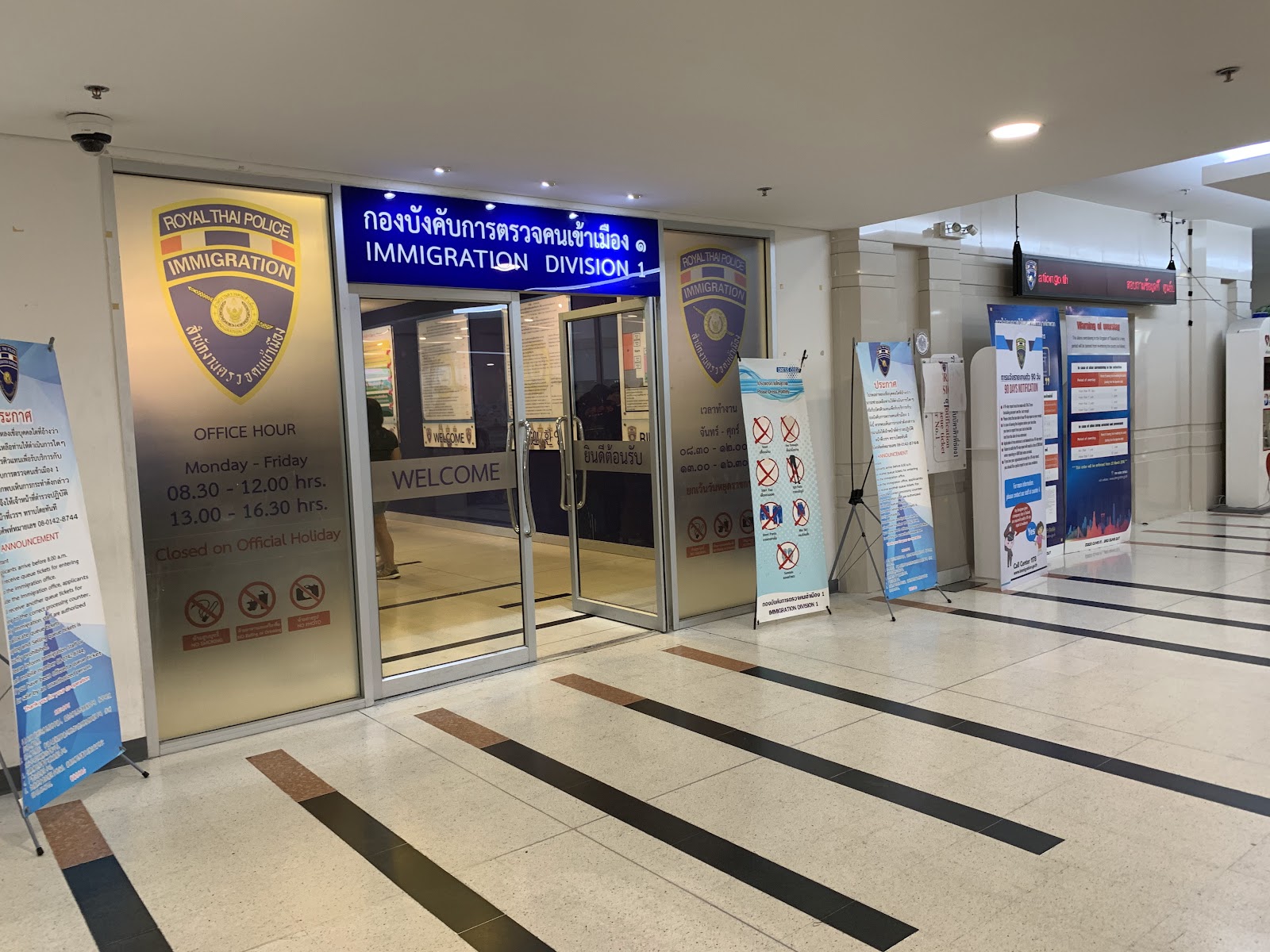
Usually, once. The Royal Thai Embassy in Washington says the 30-day exemption can be extended for another period of up to 30 days, and that the extension is solely at the discretion of the immigration officer. You apply in person at an Immigration Bureau office while you are in Thailand, before your permitted stay runs out. In Bangkok, the Immigration Bureau's Immigration Division 1 is at the Government Complex on Chaeng Watthana Road in Lak Si district, in the city's north. Check the Immigration Bureau for the office, documents and fee that apply to you before you go.
Make sure the date you are working from is the one stamped in your passport at arrival, not the date you assume. If you entered before September 15, 2026, the UK government's advice says you will usually be allowed to stay for the period granted when you arrived.
What to have ready at immigration
- Passport validity: the UK government's advice says your passport must be valid for at least six months from the date you arrive and have at least one blank page.
- Funds: officers can ask for proof that you can support yourself. The Washington embassy lists 20,000 baht per person or 40,000 baht per family in cash or equivalent. The UK advice quotes a lower figure, so carry evidence of funds either way.
- Onward travel: the UK advice says you may be asked for proof of onward or return travel, and that travelers have been refused entry without it.
- Thailand Digital Arrival Card (TDAC): since May 1, 2025, foreign nationals entering by air, land or sea must complete it online before arrival, within the three days before you arrive. The official site is run by the Immigration Bureau and says no fee is required.
What happens if you overstay?
Overstaying is an immigration offense in Thailand, even by a day. Penalties include a daily fine and, for longer or repeated overstays, possible detention, deportation at your own expense and a ban on re-entering Thailand. The Immigration Bureau sets the amounts, so if you realize you are about to overstay, go to an immigration office before the date passes rather than waiting for the airport.
Staying longer than 30 days
If you already know your trip will be longer than 30 days, or longer than 60 with an extension, apply for a visa before you travel. Thailand's visa applications are made online through the official Thai e-Visa website, and the embassies point applicants there. Choose the visa that matches your purpose: tourism, business, study, retirement and work all have separate categories, and a visa-exempt entry is for tourism only.
Planning a Bangkok stay around the 30 days
Thirty days is still plenty for Bangkok: time for the Grand Palace and Wat Pho, a weekend at Chatuchak Weekend Market, and trips out of the city. If you are building a longer itinerary, count the days from your arrival stamp and book your departure inside that window. Our guides to Bangkok hotels and Bangkok attractions can help you plan the time you have.
Sources: Tourism Authority of Thailand, new 30-day and 15-day visa exemption rules, Royal Thai Embassy, Washington, D.C., Visa Exemption, Royal Thai Embassy, Washington, D.C., FAQs, Royal Thai Embassy, London, revision of visa exemption, Immigration Bureau, Thailand Digital Arrival Card, Thai e-Visa, Tourism Authority of Thailand, 60-day exemption (2024), UK FCDO, Thailand entry requirements. Checked September 26, 2026.
Up to 30 days for tourism, from September 15, 2026. The Royal Thai Embassy in Washington, D.C. says the stay can be extended once for up to 30 more days at the immigration officer's discretion (checked September 26, 2026).
No. The Tourism Authority of Thailand says the 60-day visa exemption ended on September 15, 2026 and was replaced by 30-day and 15-day exemptions, Visa on Arrival for some nationalities, and existing bilateral agreements.
Up to 30 days for tourism from September 15, 2026. The Royal Thai Embassy in London says eligible passport holders may use the visa exemption only twice in a calendar year (checked September 26, 2026).
Plan on two. TAT's notice applies a twice-per-calendar-year limit to land-border entries, while the Royal Thai Embassy in London and the UK government describe a general limit of two visa-exempt entries a year. If you plan a third trip, get a visa first.
The Royal Thai Embassy in Washington lists 20,000 baht per person or 40,000 baht per family in cash or equivalent for visa-exempt travelers. Officers may not ask, but carry evidence of funds and onward travel (checked September 26, 2026).
Yes. Since May 1, 2025, all foreign nationals must complete the TDAC online before arriving by air, land or sea, within three days before arrival. The official Immigration Bureau site says there is no fee.
Overstaying brings a fine for each day over, and longer overstays can lead to detention, deportation and a re-entry ban. The Immigration Bureau sets the amounts; confirm the current figures with the Bureau or your Thai embassy, and extend before your stay expires.
No. Your permission to stay is granted for Thailand as a whole, so the date stamped at arrival applies in Bangkok, Chiang Mai, Phuket or anywhere else in the country.