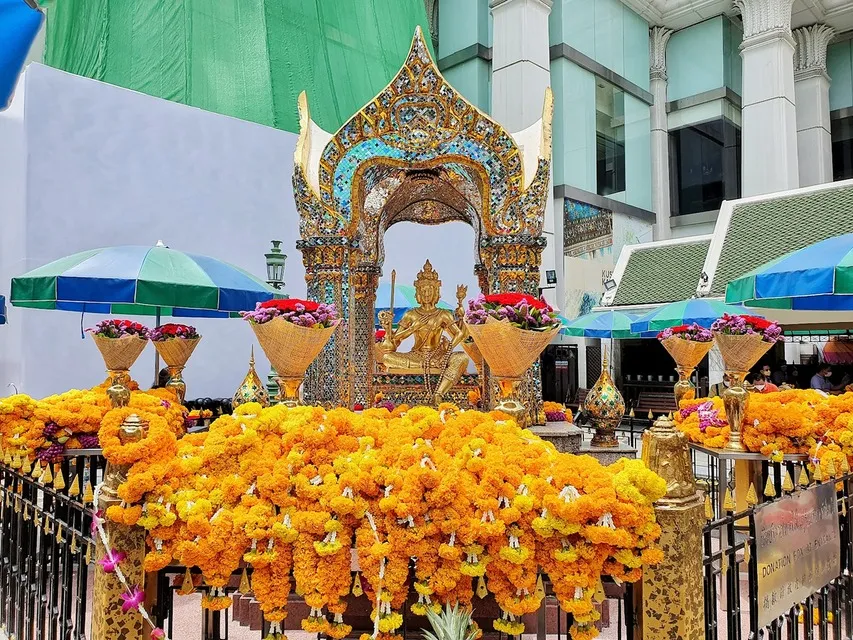
To pray at the Erawan Shrine, the shrine of the Four-Faced Buddha in Bangkok, start at the front-facing image with 3 incense sticks, 1 candle and 1 garland, then walk clockwise and make the same offering at each of the other three faces. Finish with a prayer of thanks and a bow. The shrine is free and open daily from 6 a.m. to 10 p.m., and its own guidance asks visitors to dress modestly and speak softly.
That is the whole ritual. The rest of this guide explains who is honored at the shrine, what each offering means, and how to visit respectfully alongside the people who come here to pray.
Who is the Four-Faced Buddha?
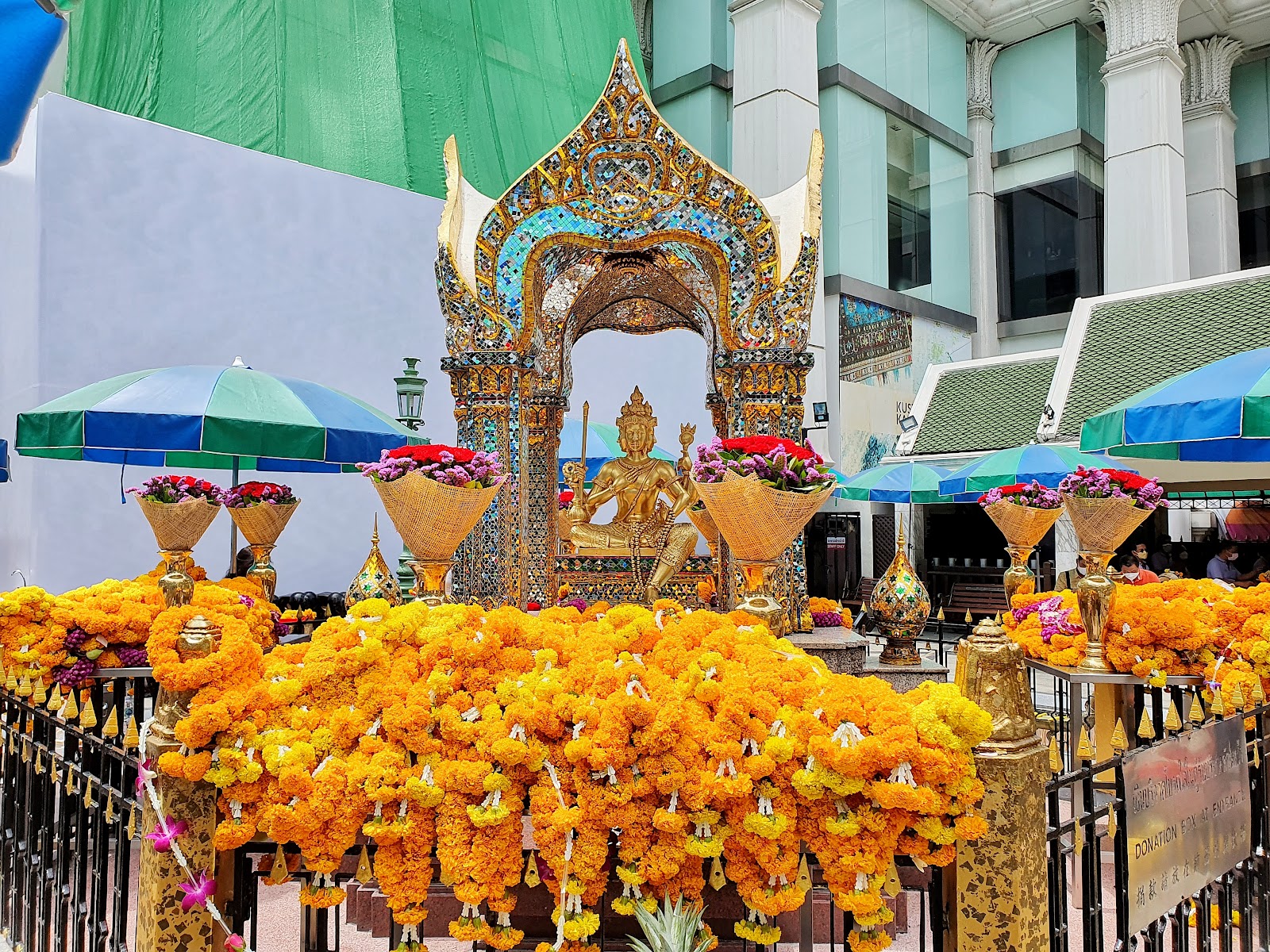
Although visitors often call it the Four-Faced Buddha, the image at the Erawan Shrine is Thao Maha Phrom, the four-faced Brahma, and the shrine's official name is the Thao Maha Phrom Shrine. The shrine's history explains that Brahma is an important Hindu deity, but that here Thao Maha Phrom is revered as a guardian figure within Thai spiritual belief, in a practice that blends Hinduism, Buddhism and Thai folk tradition.
According to the shrine, the four faces represent compassion and protection spreading in every direction. That is why devotees honor all four, and why people bring every kind of prayer here: career, relationships, fortune, health and safety.
Before you go
The shrine stands at the corner of the Ratchaprasong intersection on Ratchadamri Road, in front of the Grand Hyatt Erawan Bangkok. It is open every day from 6 a.m. to 10 p.m. and admission is free, although hours can change according to notices on site. The simplest way there is the BTS Sukhumvit Line to Chit Lom: take Exit 8 and follow the elevated skywalk to the intersection. There is no MRT station at the shrine.
The shrine asks visitors to dress modestly, out of respect for a sacred site. Because it is outdoors, you keep your shoes on.
How to pray at the Erawan Shrine, step by step
- Prepare your offerings. Bring your own incense, candles and garlands, or buy an offering set from the vendors around the shrine. Prices vary with the type and size of the set.
- Begin at the front-facing image. Offer 3 incense sticks, 1 candle and 1 garland while silently making your prayer. Follow the shrine's current notices on lighting incense and candles, which can change.
- Move clockwise. Walk to the second, third and fourth faces in turn, making the same offering at each until all four have been honored.
- Complete your worship. Offer a final prayer of thanks and bow to Thao Maha Phrom.
Honoring all four faces takes 12 incense sticks, 4 candles and 4 garlands in total. Many devotees also recite the Brahma chant, which begins "Om paramesa namaskaram"; the shrine's website gives the full text with Thai, English and Chinese translations and suggests repeating it 3 or 9 times with a calm mind.
What the offerings mean
- Incense: three sticks for each face, twelve in all.
- Candles: one for each face, symbolizing light, blessing and guidance in life.
- Garlands: one for each face, as an expression of respect and devotion.
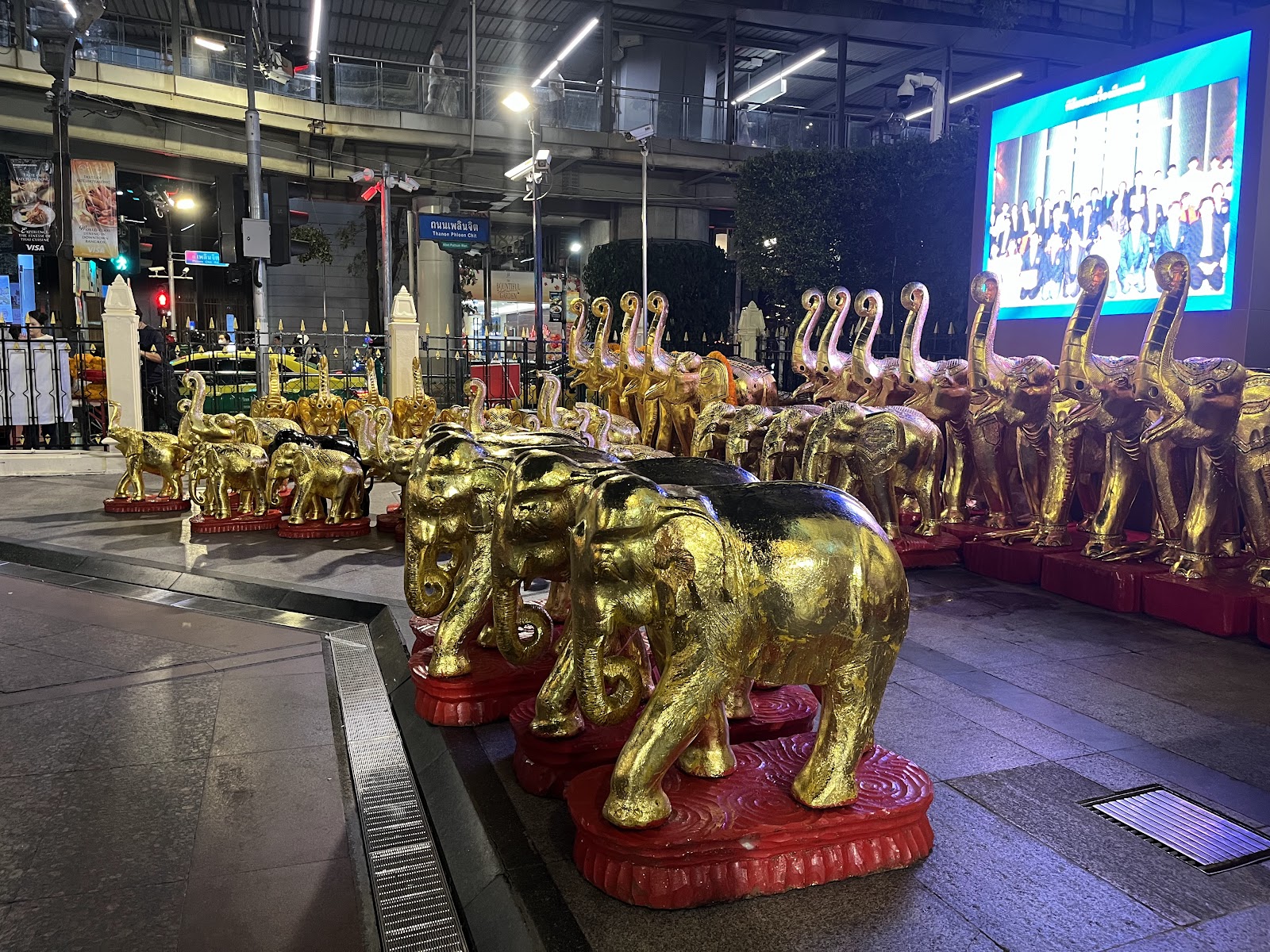
- Carved wooden elephants: an optional offering that devotees favor, standing for stability, wisdom, abundance and blessing. You will see rows of them left around the shrine.
Giving thanks when a prayer is answered
The traditional Thai dancers you will see performing at the shrine are part of the worship, not a show for visitors. According to the shrine, a dance performance is offered as a way of showing respect and gratitude when a prayer has been answered, and it is offered by worshippers who return to give thanks. Watch quietly from the side.
Etiquette at the shrine
- Dress modestly, remembering that this is a sacred site.
- Speak softly and give way to people who are praying.
- Keep the area clean and follow any guidance from the staff on site.
A short history
The shrine was set up in 1956, during construction of the original Erawan Hotel on this corner. The shrine's history records that the project ran into difficulties, and that specialists in Thai astrology recommended a shrine to a guardian deity to bring auspiciousness to the site. The four-faced Brahma image was designed and made by Thailand's Fine Arts Department and enshrined on 9 November 1956, after which the hotel's construction went ahead. Today it draws Thai worshippers and devotees from China, Hong Kong, Singapore, Taiwan and elsewhere in Asia throughout the year.
Other shrines around Ratchaprasong
The Erawan Shrine is the best known of several Hindu shrines around the intersection. When the Tourism Authority of Thailand launched a shrine walk here in 2017, it also listed shrines to Ganesha and the Trimurti in front of CentralWorld, the Lakshmi Shrine at Gaysorn, the Indra Shrine at Amarin Plaza and a Narayana statue at the InterContinental Bangkok, all connected by the elevated walkways. Each has its own followers and rituals, so watch before you join in.
Ratchaprasong is also a hotel and shopping district. Anantara Siam Bangkok Hotel and Waldorf Astoria Bangkok are both in the area, and for lunch after a morning visit, Paste Bangkok serves fine Thai cooking in the same district. More ideas are in our Bangkok attractions guide.
Sources: Erawan Shrine, How to worship, History, Visitor information, Tourism Authority of Thailand, Ratchaprasong shrine walk. Checked September 26, 2026.
No. The image at the Erawan Shrine is Thao Maha Phrom, the four-faced Brahma. Within Thai spiritual belief he is revered as a guardian figure, and the shrine reflects a blend of Hinduism, Buddhism and Thai folk tradition.
Every day from 6 a.m. to 10 p.m. Hours may change according to notices at the shrine.
No. Admission is free. Offering sets sold by vendors around the shrine are paid for separately, and prices vary with the size of the set.
Three for each of the four faces, so 12 in total, with 1 candle and 1 garland at each face (4 candles and 4 garlands).
Start at the front-facing image and move clockwise to the second, third and fourth faces, then finish with a prayer of thanks and a bow.
Many devotees recite the Brahma chant, which the shrine's website publishes with Thai, English and Chinese translations. You may repeat it 3 or 9 times. A silent, sincere prayer at each face is also fine.
Dress modestly out of respect for the site. Shoes may be worn because the shrine is outdoors.
Take the BTS Sukhumvit Line to Chit Lom, use Exit 8 and follow the skywalk to the Ratchaprasong intersection. From MRT Sukhumvit, change to the BTS at Asok. Buses 15, 25 and 40 run along Ratchadamri Road.