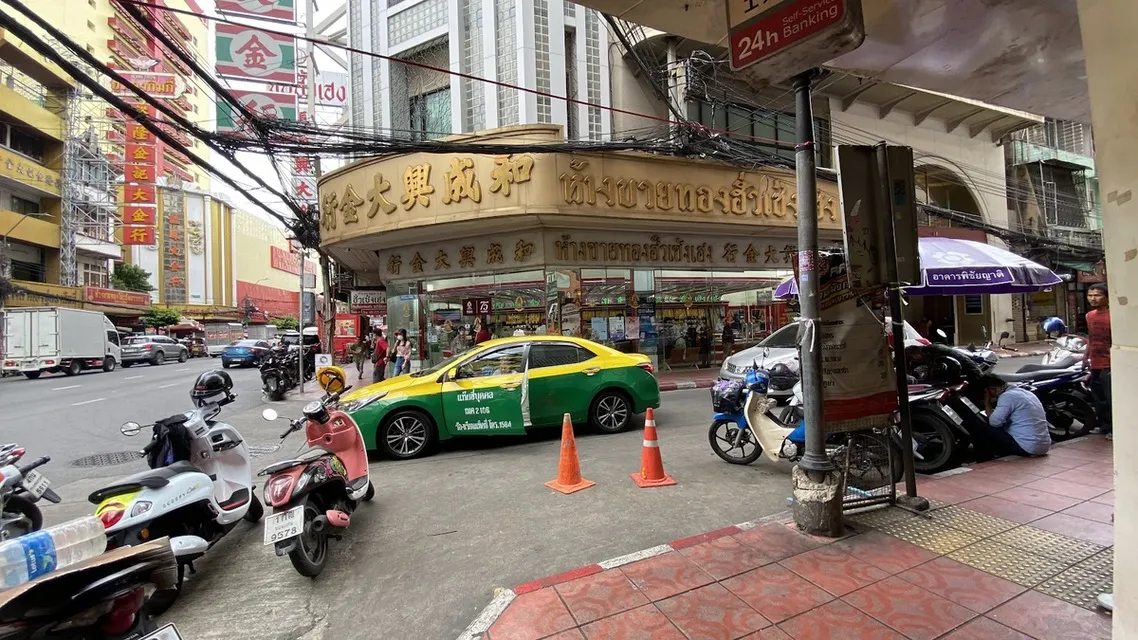
The best place to buy gold jewelry in Bangkok is Yaowarat, the main road of Chinatown, where long-established gold shops line the street and the city's gold trade still has its roots. Wherever you buy, prices follow the same system: the Gold Traders Association announces a daily price per baht of weight for 96.5% gold, the Thai standard, and the shop adds a making charge for each piece. Knowing that system, and what the labels and marks mean, matters more than which shop you choose.
We do not quote gold prices here, because they change during the day. Check the association's website on the morning you shop.
Why Yaowarat is Bangkok's gold street
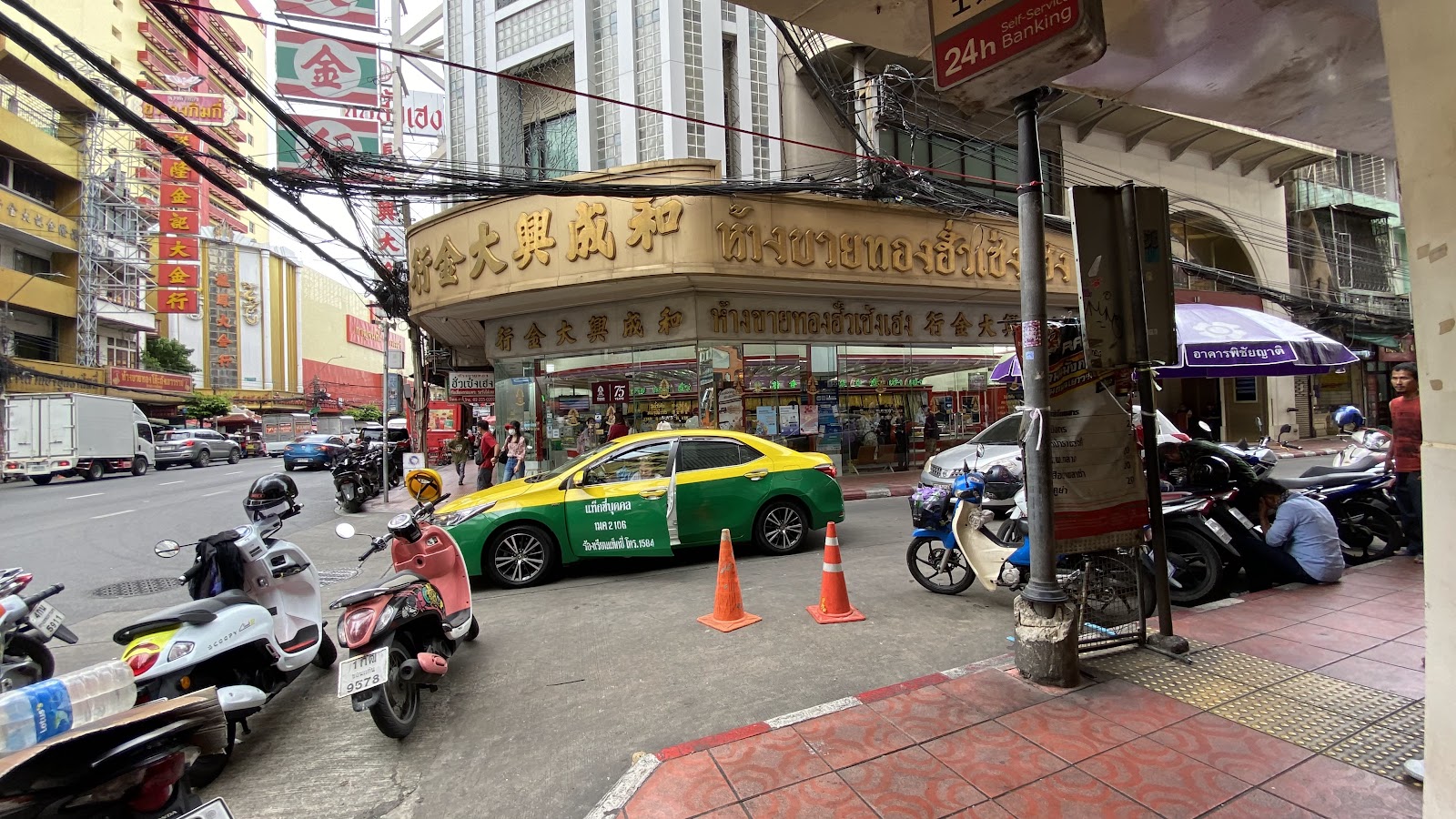
Yaowarat's gold shops helped build the modern Thai gold market. The Gold Traders Association says it grew out of a club of 11 large gold shops on Yaowarat Road, formed to agree common standards for gold purity and trading, and it was registered as an association on August 8, 1983, with Yaowarat gold shops as its first members. The association also notes that many retail gold shops around the country buy their stock from producers in areas such as Yaowarat and Ban Mo.
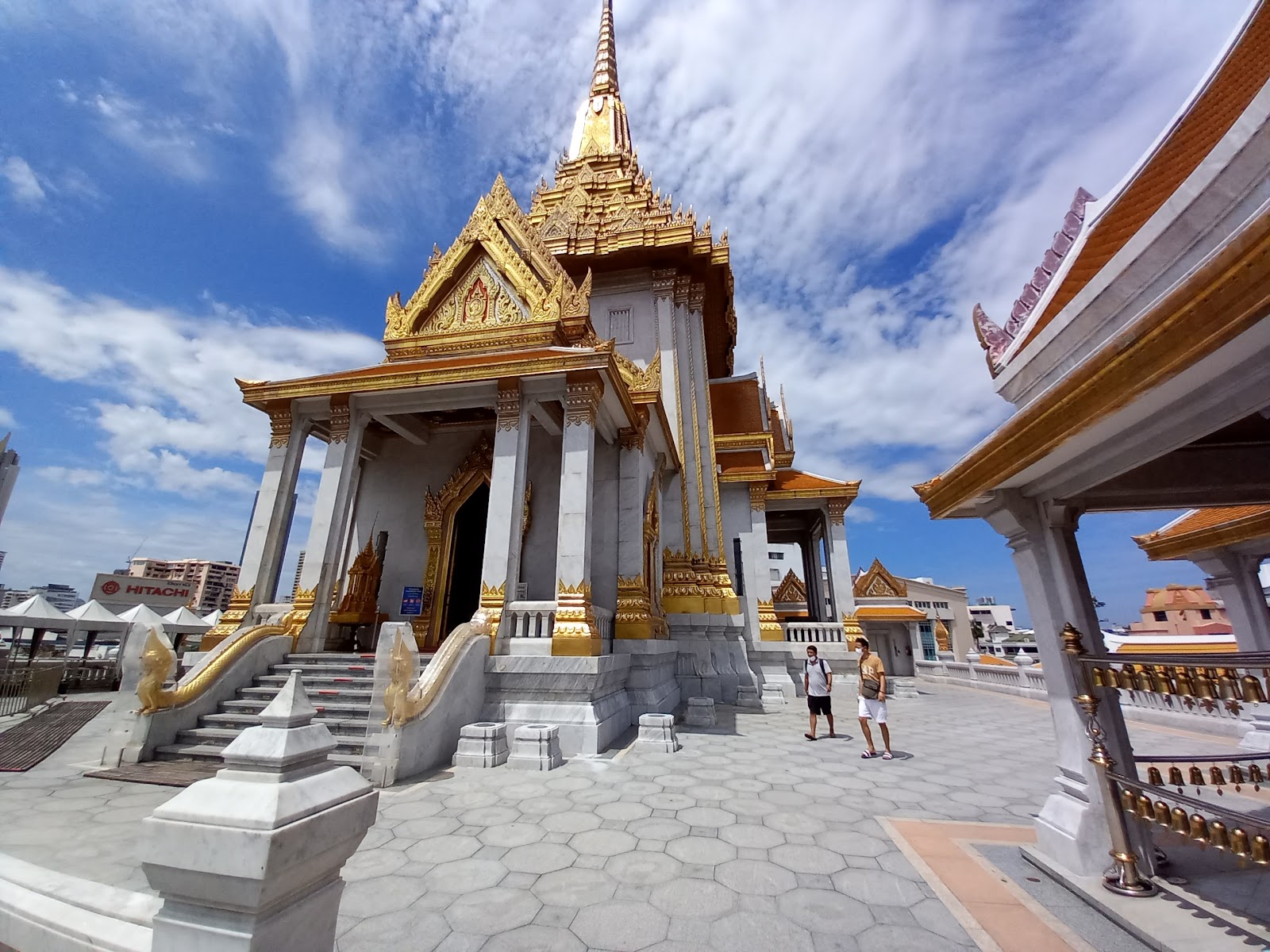
Chinatown is in Samphanthawong district. The nearest MRT station is Wat Mangkon; Restaurant POTONG, at the corner of Yaowa Phanit and Vanich 1 roads, directs guests from Exit 1 along Plaeng Nam Road and across Yaowarat Road. Wat Traimit, the temple of the Golden Buddha, stands on the Charoen Krung side of Chinatown, near Yaowarat, and makes a natural first stop before the gold shops. Yaowarat is also known for its street food, so plan a meal around the visit; our Bangkok restaurants guide has more places to eat.
Hua Seng Heng and the Yaowarat gold shops
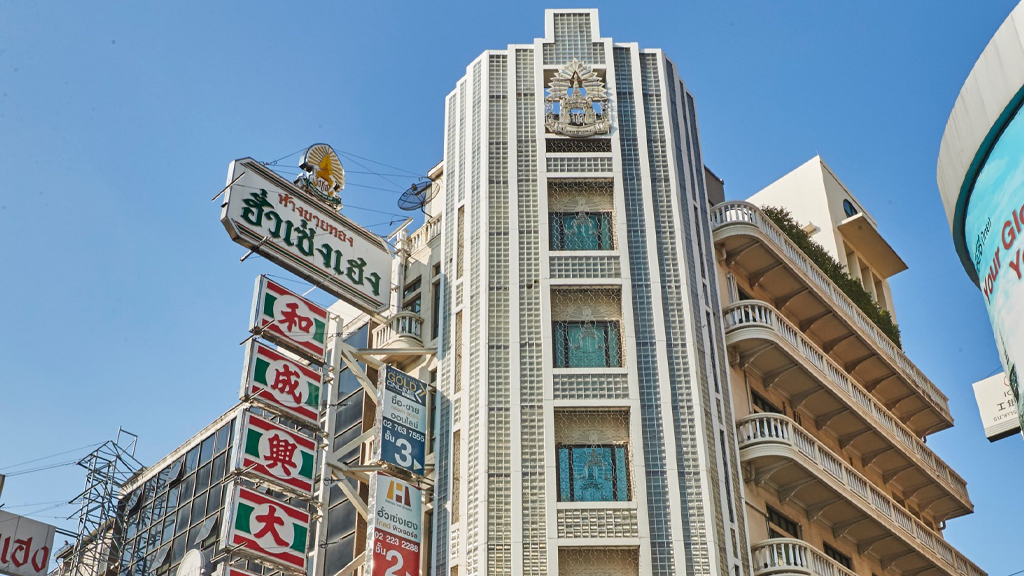
Gold shops line Yaowarat Road, and one of the best known, Hua Seng Heng, began as a goldsmith shop on Yaowarat Road in 1951 and is still run by the same family. Its headquarters is at 255 to 257 Yaowarat Road, and it has further Yaowarat branches on Plaeng Nam Road, on Yaowarat Road (its Yao Phanit branch), and on Mangkorn Road, all open daily from 9:30 a.m. to 5:30 p.m. It sells gold ornaments and jewelry, including Chinese-style pieces, as well as gold bars.
If you cannot get to Chinatown, Hua Seng Heng also has a branch on the third floor of Silom Complex in Bang Rak, open daily from 10:30 a.m. to 8 p.m. For other shopping, see our Bangkok shopping guide.
How gold is priced in Thailand
The Gold Traders Association announces the official price for 96.5% gold every trading day, quoted per baht of weight. It publishes three figures that matter to a shopper: the selling and buying prices for gold bars, and the selling price for gold ornaments, which is what jewelry is priced from. The association says the first price of the day is announced at around 9:20 to 9:40 a.m., and that it can change several times a day, with no fixed schedule, as the world gold price and the baht move.
A piece of jewelry is priced in two parts:
- The gold: the association's ornament selling price multiplied by the weight of the piece.
- The making charge (kha kamnet): a fee for the workmanship and the shop's costs. The association suggests a minimum of 500 baht per baht of weight, but says it is not compulsory, and more intricate designs cost more. Hua Seng Heng, for example, starts its making charges at 800 baht per baht of weight.
Weights are quoted in Thai units. Hua Seng Heng gives a one-baht gold bar as 15.244 grams and one baht of gold ornament as 15.16 grams. Smaller pieces come in fractions of a baht, such as a quarter or half baht. Because the making charge does not shrink in step with the weight, a small piece carries a higher making charge in proportion to its gold.
Purity and the marks to look for
- 96.5% is the Thai standard. Hua Seng Heng equates it to about 23.16 karats. The association notes that 99.99% gold ornaments exist, but because pure gold is soft they are usually heavy pieces, and most Thai gold jewelry is 96.5%.
- Read the tray label. The association says gold shops are overseen by Thailand's Office of the Consumer Protection Board (OCPB) under the labeling law, and every tray must be labeled with the weight, the gold percentage, the making charge and the type of product.
- Look for the shop's mark. Thai gold is stamped with the maker's logo. Hua Seng Heng, for instance, puts its logo on the loop or hook of a piece, and says any gold shop can tell where gold came from by its mark.
- Keep the receipt. Established shops issue receipts or tax invoices, which you will need to sell the piece back.
Selling gold back
Thai gold jewelry can be sold back, but at less than you paid, because the making charge is not refunded. Under OCPB rules cited by the Gold Traders Association, when you sell an ornament back to the shop that sold it, the shop may deduct no more than 5% from that day's gold bar buying price, and buy-back prices are posted in front of gold shops. The association advises buying from gold shops with a fixed, established address.
Tax refunds and taking gold home
Gold ornaments can qualify for Thailand's VAT Refund for Tourists if the shop displays the refund sign and you spend at least 2,000 baht there in a day. The Revenue Department lists gold ornaments and jewelry among the luxury goods that must be shown to Customs at the airport when an item is worth 10,000 baht or more, and gemstones without settings are not eligible. Ask the shop whether it takes part in the scheme before you buy.
Sources: Gold Traders Association daily prices, Gold Traders Association FAQ, Gold Traders Association history, Hua Seng Heng, about, Hua Seng Heng, branches and FAQ, Hua Seng Heng, 96.5% gold, Revenue Department, eligible goods, Revenue Department, eligible tourists. Checked September 26, 2026.
Yaowarat Road in Chinatown, where the Gold Traders Association began as a club of 11 large gold shops. Established names such as Hua Seng Heng have their headquarters there. Hua Seng Heng also has a branch at Silom Complex.
The price is the Gold Traders Association's daily selling price for 96.5% gold ornaments, per baht of weight, multiplied by the weight of the piece, plus a making charge. The association suggests a minimum making charge of 500 baht per baht of weight; shops set their own.
On the Gold Traders Association's website, goldtraders.or.th, or by phone on 0-2020-9000. The first price is announced at around 9:20 to 9:40 a.m. and can change several times a day.
It is the Thai standard purity: 96.5% gold and 3.5% other metals, which Hua Seng Heng equates to about 23.16 karats. Most Thai gold jewelry is 96.5%.
Hua Seng Heng gives one baht of gold bar as 15.244 grams and one baht of gold ornament as 15.16 grams.
The headquarters at 255 to 257 Yaowarat Road and the Plaeng Nam Road, Yao Phanit and Mangkorn Road branches are open daily from 9:30 a.m. to 5:30 p.m. The Silom Complex branch opens daily from 10:30 a.m. to 8 p.m. The call center is +66 2 112 2222.
Yes. Under OCPB rules cited by the Gold Traders Association, a shop buying back an ornament it sold may deduct no more than 5% from that day's gold bar buying price. You do not get the making charge back, so keep your receipt.
Only at shops that display the VAT Refund for Tourists sign, with a minimum spend of 2,000 baht per shop per day. Jewelry and gold ornaments worth 10,000 baht or more per item must be shown to Customs at the airport.