Restaurant POTONG
About
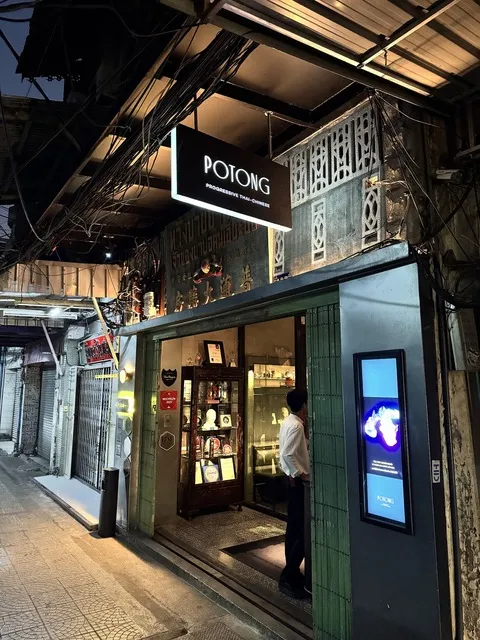
Restaurant POTONG serves a single progressive Thai-Chinese tasting menu inside the five-story Sino-Portuguese shophouse in Chinatown where Chef Pam's family made traditional Chinese herbal medicine from around 1910. The name, 普通, means “ordinary,” which undersells a building that took more than two years and over 70 specialists to restore, with much of the kitchen equipment carried up through the old one-meter-square loading shaft.
It suits a special-occasion dinner that doubles as an evening inside Chinatown's history, for diners happy to hand the whole meal to the kitchen: there is one menu, served at staggered seatings from mid-afternoon. The restaurant stands where Yaowa Phanit Road meets Vanich 1 Road in Samphanthawong, about a five-minute walk from exit 1 of MRT Wat Mangkon, and the lane outside is too narrow for large vans, so the train is the easy way in.
The five elements
Chef Pam builds every course around five elements, salt, acid, spice, texture and the Maillard reaction, and the menu shifts with the seasons; from June to mid-November it features the roe of young mud crabs from Ranong on the Andaman coast. Guests can add courses from earlier menus, such as the rice rolled noodle with caviar and the dry-aged duck guests have praised since the restaurant opened. A dedicated fermentation room produces kombuchas from Thai-Chinese fruits and herbs, served alongside the wine list as a pairing of their own.
A building read floor by floor
The ground floor was the family's dispensary storefront, with a strongroom and a wartime shelter behind it; today it is the POTONG SINO Bar under the original century-old wooden ceiling. The main dining room occupies the second floor, where medicines were once prepared, with a small balcony over the street. The third floor was left unrestored around its family shrine, with hand-painted wooden panels hiding eight tigers. It is a building of stairs, which is why the restaurant suggests leaving high heels at home.
Recognition
The MICHELIN Guide awards POTONG one MICHELIN star. The restaurant also lists appearances on Asia's 50 Best Restaurants, and Chef Pam was named The World's Best Female Chef by The World's 50 Best Restaurants in 2025, according to the restaurant.
Opium Bar upstairs
Opium Bar fills the fourth and fifth floors of the same building. The fourth floor, once the family's space for unwinding, now pours cocktails under the theme “Liquid Surreality,” with a private room called Black Jade at the back for groups with their own bartender. The fifth floor, where the family used to gather in the evening, looks out over the surrounding Chinatown rooftops. The bar runs its own reservations and suits a drink before or after dinner.
Sources: Restaurant POTONG, the building, reservations, tasting menu, Opium Bar, MICHELIN Guide. Checked September 25, 2026.
Contact Information
Bangkok, 10100
Photo: Christopher Chew via Google
Restaurant POTONG
About Restaurant POTONG
Restaurant POTONG serves a single progressive Thai-Chinese tasting menu inside the five-story Sino-Portuguese shophouse in Chinatown where Chef Pam's family made traditional Chinese herbal medicine from around 1910. The name, 普通, means “ordinary,” which undersells a building that took more than two years and over 70 specialists to restore, with much of the kitchen equipment carried up through the old one-meter-square loading shaft.
It suits a special-occasion dinner that doubles as an evening inside Chinatown's history, for diners happy to hand the whole meal to the kitchen: there is one menu, served at staggered seatings from mid-afternoon. The restaurant stands where Yaowa Phanit Road meets Vanich 1 Road in Samphanthawong, about a five-minute walk from exit 1 of MRT Wat Mangkon, and the lane outside is too narrow for large vans, so the train is the easy way in.
The five elements
Chef Pam builds every course around five elements, salt, acid, spice, texture and the Maillard reaction, and the menu shifts with the seasons; from June to mid-November it features the roe of young mud crabs from Ranong on the Andaman coast. Guests can add courses from earlier menus, such as the rice rolled noodle with caviar and the dry-aged duck guests have praised since the restaurant opened. A dedicated fermentation room produces kombuchas from Thai-Chinese fruits and herbs, served alongside the wine list as a pairing of their own.
A building read floor by floor
The ground floor was the family's dispensary storefront, with a strongroom and a wartime shelter behind it; today it is the POTONG SINO Bar under the original century-old wooden ceiling. The main dining room occupies the second floor, where medicines were once prepared, with a small balcony over the street. The third floor was left unrestored around its family shrine, with hand-painted wooden panels hiding eight tigers. It is a building of stairs, which is why the restaurant suggests leaving high heels at home.
Recognition
The MICHELIN Guide awards POTONG one MICHELIN star. The restaurant also lists appearances on Asia's 50 Best Restaurants, and Chef Pam was named The World's Best Female Chef by The World's 50 Best Restaurants in 2025, according to the restaurant.
Opium Bar upstairs
Opium Bar fills the fourth and fifth floors of the same building. The fourth floor, once the family's space for unwinding, now pours cocktails under the theme “Liquid Surreality,” with a private room called Black Jade at the back for groups with their own bartender. The fifth floor, where the family used to gather in the evening, looks out over the surrounding Chinatown rooftops. The bar runs its own reservations and suits a drink before or after dinner.
Sources: Restaurant POTONG, the building, reservations, tasting menu, Opium Bar, MICHELIN Guide. Checked September 25, 2026.