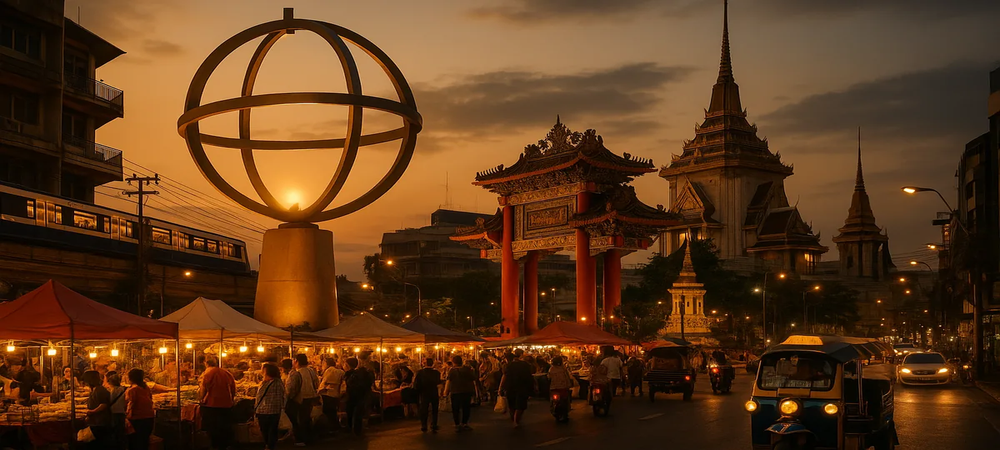
Bangkok is about 1,520 km (945 miles) north of the equator. The city center sits at roughly 13.75 degrees north latitude, and each degree of latitude near the equator covers about 110.6 km of ground, so the distance measured due south to the equator works out at a little over 1,500 km.
That places Bangkok well inside the tropics, about two-thirds of the way from the equator to the Tropic of Cancer. The numbers below explain what that position means for a visit: why the days barely change length, why sunset comes early all year, and why the midday sun is so high.
Bangkok's latitude and distance, in numbers
| Measure | Figure |
|---|---|
| Latitude of central Bangkok | 13.75 degrees N (13°45′N) |
| Longitude | 100.49 degrees E |
| Distance north of the equator | about 1,520 km (945 miles) |
| Distance south of the Tropic of Cancer (23.44 degrees N) | about 1,070 km (665 miles) |
| How much farther north than Singapore (about 1.3 degrees N) | about 1,380 km (855 miles) |
These are north-south distances along a line of longitude, calculated on the standard WGS 84 model of the Earth, which is what "distance from the equator" normally means. A flight path or a road route to an equatorial city would be longer.
Bangkok is in the Northern and Eastern Hemispheres. Because it lies south of the Tropic of Cancer, it is one of the places on Earth where the sun passes directly overhead during the year.
When the sun is directly overhead
For any city between the tropics, the noon sun stands straight overhead on two days a year. In Bangkok those dates fall around April 27–28 and again around August 16–17. On those days, according to the US Naval Observatory, the sun crosses the meridian at about 12:15 p.m. in April and 12:22 p.m. in August, and upright objects cast almost no shadow.
Even on the shortest day of the year, the noon sun in Bangkok is still more than 50 degrees above the horizon. In June it passes slightly to the north of overhead, at about 80 degrees. The practical result is strong sun at midday in every month, whatever the weather feels like. Sunscreen, a hat and shade between late morning and mid-afternoon make sense year-round.
Daylight barely changes through the year
Close to the equator, day length varies far less than in Europe or North America. Using US Naval Observatory data for central Bangkok:
- Shortest day: around December 22, with about 11 hours 19 minutes between sunrise and sunset.
- Longest day: around June 21, with about 12 hours 56 minutes.
- Sunrise ranges from about 5:49 a.m. in early June to about 6:46 a.m. in late January.
- Sunset ranges from about 5:47 p.m. in late November to about 6:50 p.m. in mid-July.
So wherever your trip falls on the calendar, expect roughly 12 hours of daylight and darkness by about 6 to 7 p.m. There are no long summer evenings. Twilight is short too: in December the gap between sunset and the end of civil twilight is only about 23 minutes, so a sunset plan needs you in place a little early.
Why solar noon comes after 12 o'clock
Thailand keeps Indochina Time, seven hours ahead of UTC, which is set for the 105 degrees east meridian. Bangkok lies about four and a half degrees farther west, so the sun reaches its highest point later than clock noon, between about 12:04 p.m. and 12:30 p.m. depending on the season. It is a small detail, but it is also why Bangkok's mornings start slightly later on the clock than you might expect so close to the equator.
What the latitude means for your trip
Warm every month
Bangkok's tropical position means there is no cold season in the northern sense. Visitors usually describe the year as three seasons: a cooler, drier period roughly from November to February, a hot season roughly March to May, and a rainy season roughly June to October. Latitude explains the constant warmth; the monsoon winds, not the sun, decide whether a given month is wet or dry.
Plan outdoor sightseeing for mornings and late afternoons
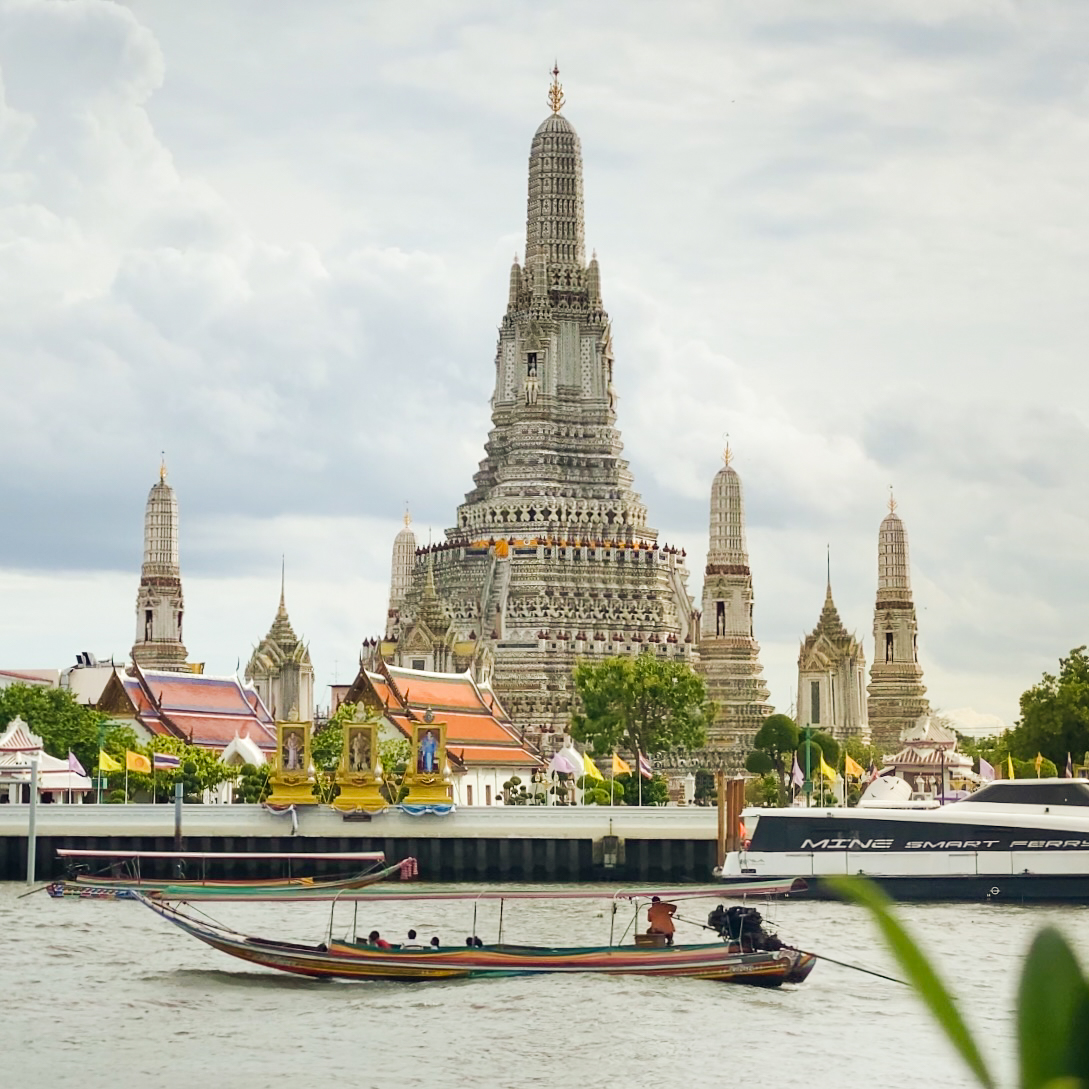
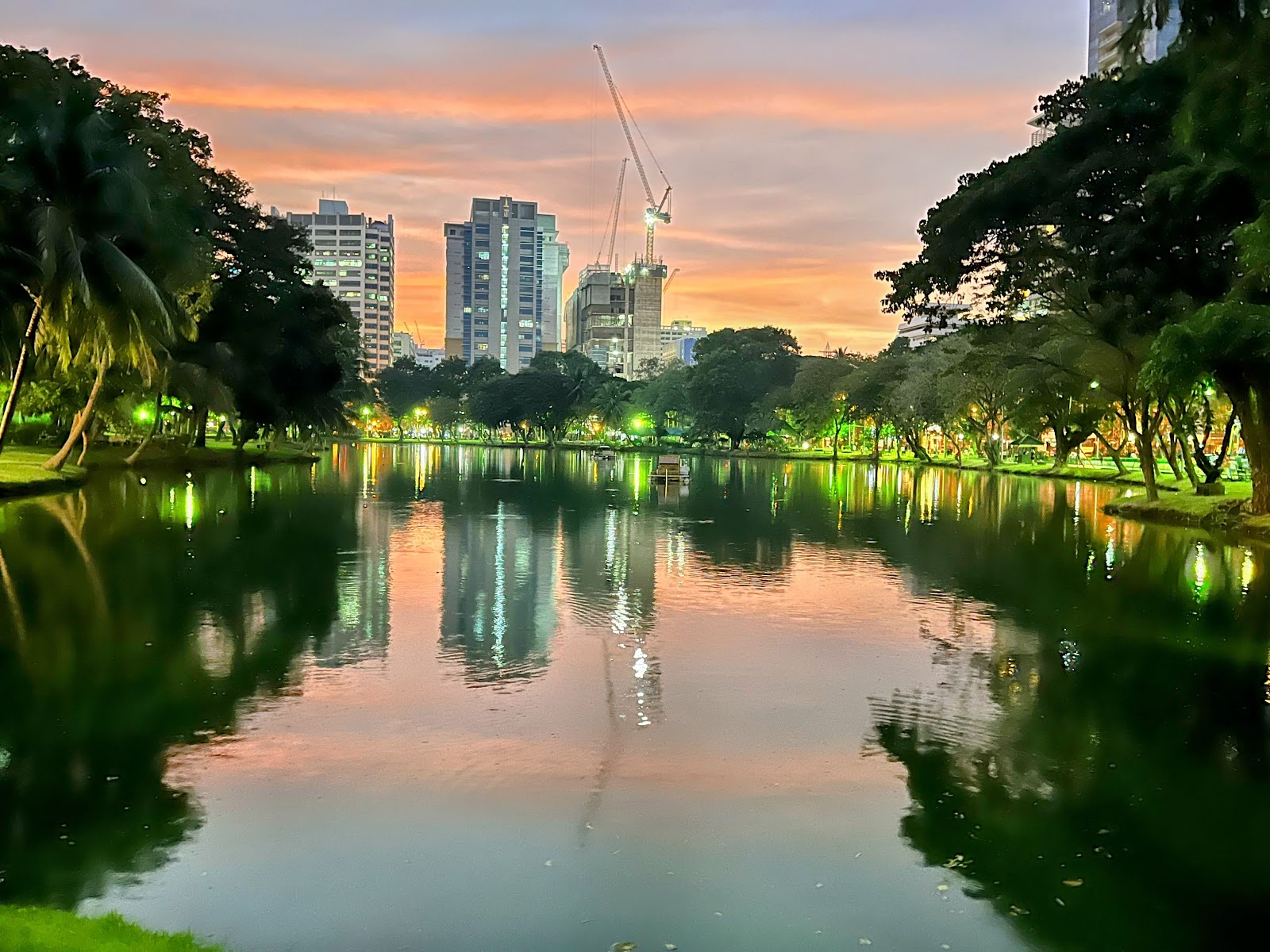
With the sun high by late morning, walking-heavy sights are more comfortable early or late in the day. Temple visits to Wat Pho or across the river at Wat Arun suit the first hours after opening, and a walk or run in Lumphini Park works best around sunrise or in the hour before sunset.
Sunset comes early, and fast
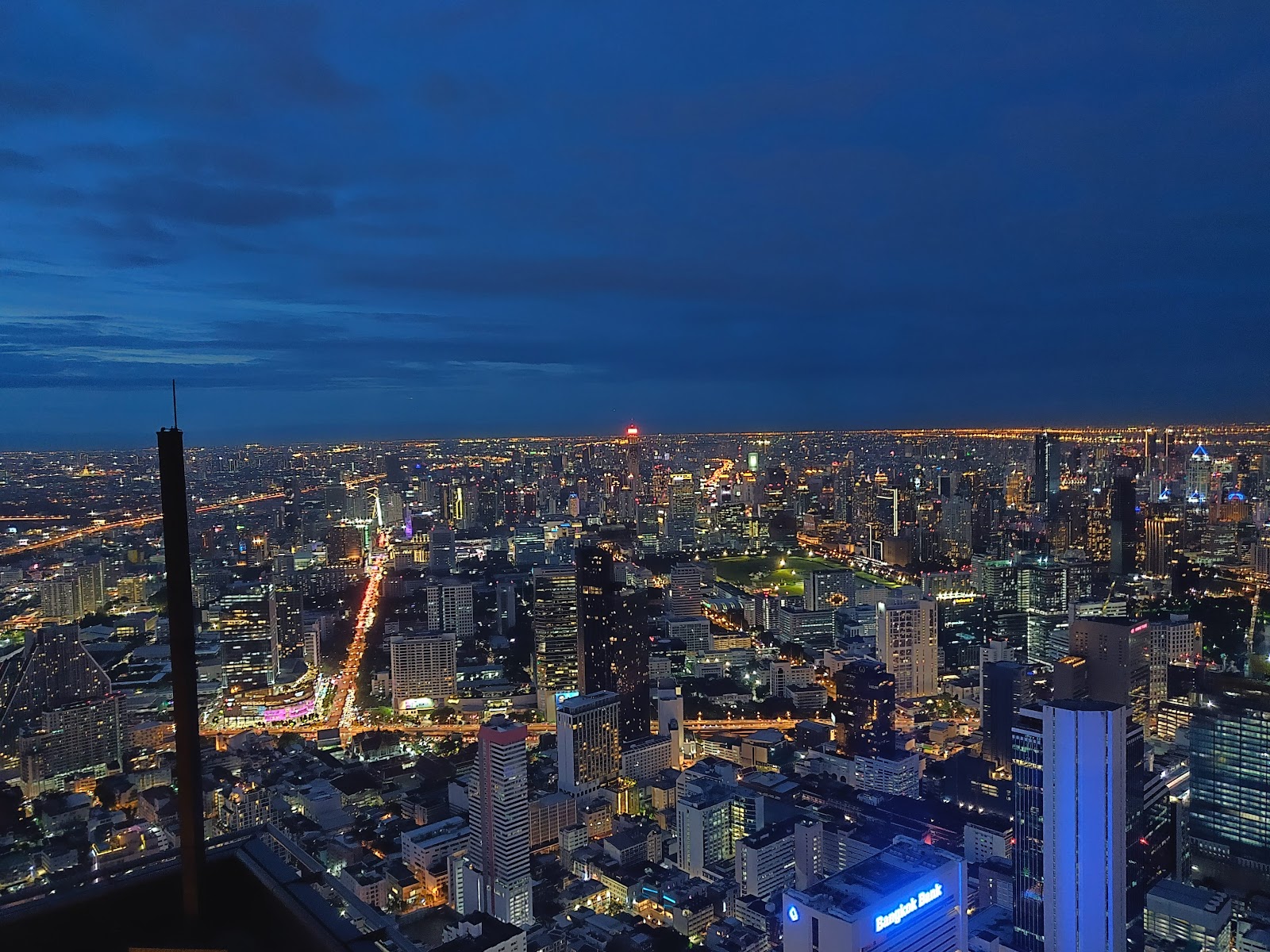
Because sunset falls between about 5:45 p.m. and 6:50 p.m. all year, an evening at a high viewpoint is easy to fit in before dinner. The Mahanakhon SkyWalk observation deck and the rooftop terrace at Sirocco are two high vantage points for watching it. Check the venue's own hours and dress code, and aim to arrive half an hour before sunset.
For more ideas by neighborhood, browse our Bangkok attractions and Bangkok hotels guides.
Sources: Wikipedia: Bangkok (coordinates), US Naval Observatory Astronomical Applications: sun rise, set and transit for 13.7525 N, 100.4942 E, UTC+7. Distances calculated on the WGS 84 ellipsoid. Checked September 26, 2026.
About 1,520 km (945 miles), measured due south along a line of longitude. Central Bangkok is at roughly 13.75 degrees north latitude.
Central Bangkok is at about 13 degrees 45 minutes north and 100 degrees 29 minutes east (13.7525 N, 100.4942 E).
Bangkok is in the Northern Hemisphere, and also in the Eastern Hemisphere. It lies between the equator and the Tropic of Cancer, about 1,070 km south of the tropic.
No. Singapore is at about 1.3 degrees north, almost on the equator. Bangkok is roughly 1,380 km (855 miles) farther north.
Between about 11 hours 19 minutes around December 22 and about 12 hours 56 minutes around June 21, according to US Naval Observatory data.
Between about 5:47 p.m. (late November) and 6:50 p.m. (mid-July). Sunrise ranges from about 5:49 a.m. in early June to 6:46 a.m. in late January.
Yes, twice a year: around April 27 to 28 and around August 16 to 17, when the noon sun is at or very near the zenith at about 12:15 p.m. and 12:22 p.m. respectively.