How much does it cost to live in Bangkok? There is no single honest number, because the answer depends mostly on two choices: where and how you rent, and how much of your life runs on imported goods and private services. A studio in a local neighborhood with meals from markets and trips on the Skytrain costs a fraction of a serviced condo near a Sukhumvit station with imported groceries, private health insurance and international school fees. This guide goes through each cost category, what pushes it up or down, and the few prices we could check against dated, official sources.
We have deliberately left out the monthly "you need X baht" figures that circulate online. Most are unsourced and out of date. Use the categories below to build your own estimate.
Housing: the biggest variable
Rent is usually the largest line in a Bangkok budget, and the spread is wide. The main drivers are:
- Distance to a BTS or MRT station. Buildings within walking distance of the rail lines command more, because they save so much time in traffic.
- Neighborhood. Central Sukhumvit, Silom, Sathorn and the riverside cost more than districts further out along the lines.
- Building type. A condo in a newer tower with a pool, gym and security costs more than an older low-rise apartment building.
- Furnishing and lease length. Furnished units and short leases cost more per month than long leases.
Our separate guides look at how much rent is in Bangkok and what a condo costs to buy, and where Sukhumvit is explains the most popular area with newcomers.
Utilities and connectivity
Electricity is metered, and in Bangkok's climate air-conditioning is what drives the bill: a household that runs it day and night pays far more than one that uses fans most of the time. Water is a small cost by comparison. Add home internet and a mobile plan. When you view an apartment, ask how electricity and water are billed, since some buildings charge their own rate rather than passing on the utility's tariff.
Food: markets, supermarkets and imports
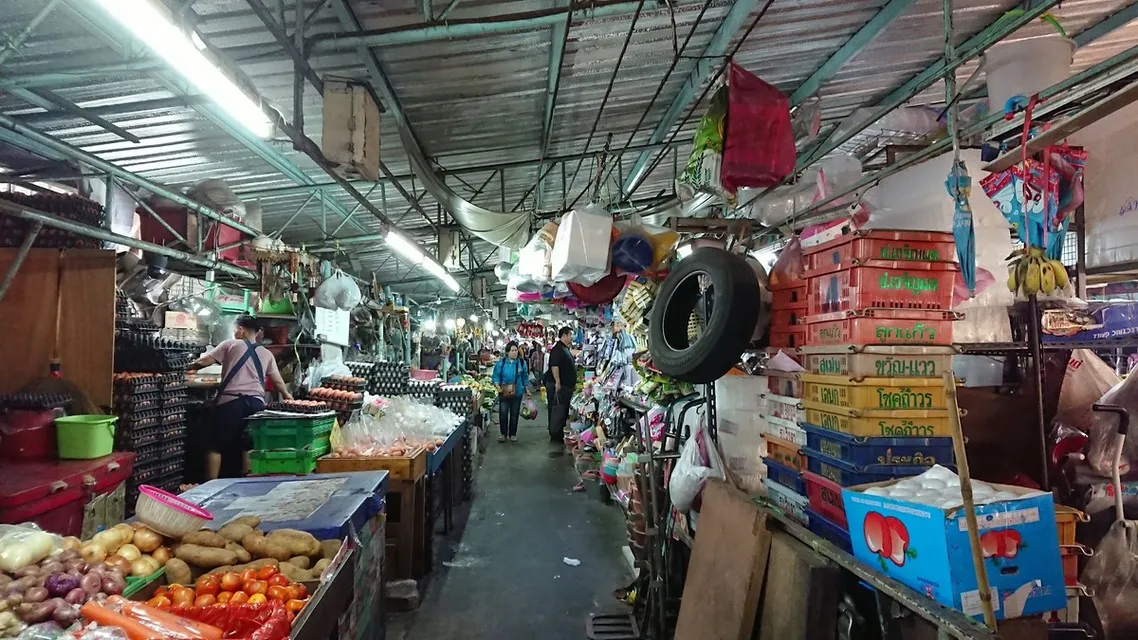
Food costs depend less on the city than on your habits. Street food, food courts and fresh markets are the cheapest way to eat; supermarket staples are moderately priced; imported cheese, wine, spirits and Western brands cost far more. As one dated example, on September 26, 2026 Tops Online listed 5-kilogram bags of Thai jasmine rice from several brands at between about 215 and 270 baht. Alcohol is heavily taxed, which is one reason a social life built around bars and imported wine adds up quickly.
Our guide on how much food costs in Bangkok covers eating out in more detail.
Getting around
Transport can be cheap if you live near a rail line. Fares on Bangkok's rail systems are mostly set by distance, and a few are published in full on the operators' own sites: the BTS lists a flat 15-baht fare on its short Gold Line, and the SRT Red Line's fare table showed adult fares from 12 to 42 baht per trip when we checked. City buses are cheaper still, and metered taxis and ride-hailing apps fill the gaps. Owning a car adds purchase, fuel, insurance and parking costs, and rarely beats the train for commuting in the center.
See our explainer on the BTS Skytrain, how much taxis cost and how to use Grab.
Health care and insurance
Bangkok has both public hospitals and large private hospitals, and most foreign residents budget for private care through health insurance. The cost of a policy depends on your age, cover and provider, so get quotes before you move. Some visas make insurance a formal requirement: Thailand's Long-Term Resident (LTR) visa, run by the Board of Investment, asks applicants to hold health insurance with at least USD 50,000 of cover, or to meet one of its alternatives such as Thai social security.
Visas and paperwork
Staying long term means paying for the right visa, extensions and the documents behind them, and some visa types set minimum income or savings levels, which is its own kind of cost-of-living floor. The LTR visa, for example, sets a minimum personal income of USD 80,000 a year for its work-from-Thailand and highly skilled professional categories, with a lower threshold for applicants with specified qualifications. Rules change often: from September 15, 2026, Thailand replaced its 60-day visa exemption with 30-day and 15-day categories, according to the Tourism Authority of Thailand. Check the current rules with official sources before you plan a move. Our guides on how to move to Bangkok and how long you can stay are a starting point.
Everything else
- Schooling. International schools are a major cost for families and vary widely by school.
- Household help. Some residents employ a cleaner or housekeeper, part time or full time.
- Leisure and travel. Gyms, spas, dining out and weekend trips out of the city are where budgets most often drift.
- Trips home. Flights to see family are easy to forget when you are adding up a monthly figure.
Building your own estimate
Start with rent in the area you want, near the station you would use, and add utilities, food at your own mix of markets and restaurants, transport, insurance and visa costs, then the extras that matter to you. If you are weighing a job offer, compare that total with our guide to what counts as a good salary in Bangkok, and for a picture of daily life beyond the numbers, read what it is like to live in Bangkok.
Sources: Tops Online, jasmine rice search results, BTS SkyTrain, Gold Line, SRT Electrified Train (Red Line), Board of Investment, Long-Term Resident Visa, TAT Newsroom, new visa exemption rules. Checked September 26, 2026.
It depends mainly on rent and lifestyle, and we do not publish a single figure because the ones that circulate online are rarely sourced or current. Build an estimate from rent in your chosen area, utilities, food, transport, health insurance and visa costs.
For most people, rent. Distance to a BTS or MRT station, the neighborhood, the building's facilities and the lease length all move the price.
On September 26, 2026, Tops Online listed 5-kilogram bags of Thai jasmine rice from several brands at about 215 to 270 baht, with some budget bags cheaper. Prices change with promotions.
Most rail fares are distance-based. On September 26, 2026, the BTS listed a flat 15-baht fare on the Gold Line, and the SRT Red Line fare table showed adult fares from 12 to 42 baht per trip.
Most foreign residents carry private health insurance, and some visas require it. The Long-Term Resident visa, for example, asks for health insurance with at least USD 50,000 of cover or one of its listed alternatives.
Often, for local food, transport and services, but not for imported goods, alcohol, international schooling or private health cover. How much you save depends on how much of your spending falls into those categories.