Jim Thompson House Museum
About
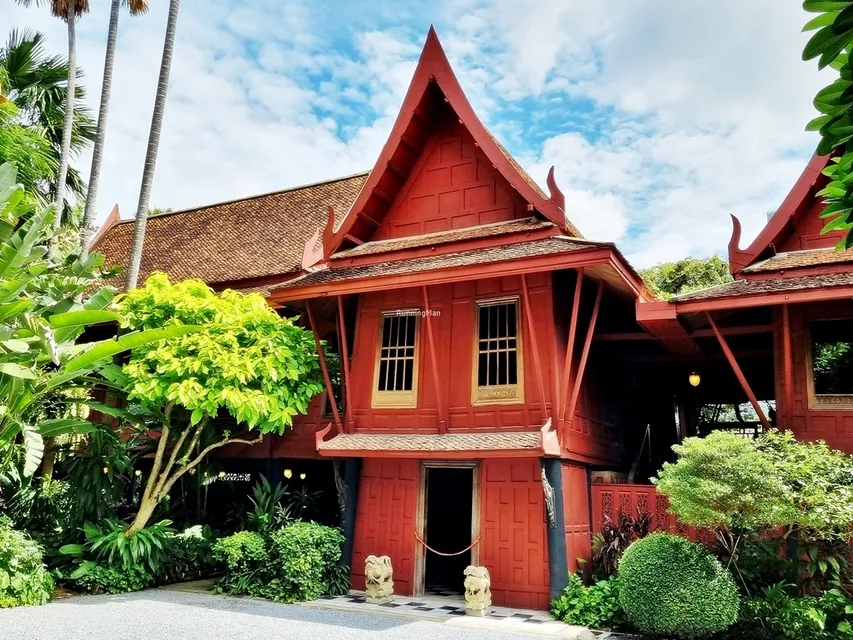
The Jim Thompson House Museum is the Bangkok home and Asian art collection of James H.W. Thompson, known as the Thai Silk King. Between 1958 and 1959 he assembled it from several traditional Thai houses acquired from the Ayutthaya region, set on teak pillars a full floor above the ground, the oldest a weaver's house from around 1800 from the village of Ban Krua. It stands beside a canal, a few minutes' walk from BTS National Stadium.
It suits anyone interested in Thai architecture, design or the story of Thai silk, and it sits down a narrow lane a block from the city's main shopping district. The main house can only be seen on a guided tour, run in Thai, English, French, Chinese and Japanese, so the visit has a set shape and suits first-timers who want context rather than labels.
The house
Thompson designed the house himself and brought carpenters down from Ayutthaya to reassemble the woodwork. Inside, the collection is displayed much as it was in his time: Buddhist sculpture from the Dvaravati, Lopburi and Ayutthaya periods, old Thai religious paintings, Chinese blue-and-white porcelain and objects he collected from 1946 onward.
Silk across the canal
The house faces the klong because of the silk. Thompson was convinced that the beauty and quality of Thai silk would sell outside Thailand, exported it internationally, and inspected pieces at the canal side in Ban Krua, the Cham weaving village across the water. He rebuilt his home on a plot directly across from the village, and the foundation's archive holds photographs of him showing his silks in this living room.
Beyond the Buddha images
The foundation's collection runs to paintings of the life of the Buddha from the Bangkok school, a set of thirteen cloth paintings of the Vessantara Jataka, a painting from the northern kingdom of Lanna, and four wooden figures of Burmese nat spirits from near Amarapura, given to Thompson when he visited Burma as an official guest in the 1950s.
The garden
Thompson called his garden a jungle, and its planting of palms, golden bamboo and creepers keeps the same general outline today. The former pantry and servants' quarters have become small pavilions showing benjarong porcelain, paintings and manuscripts.
In the same compound
The Jim Thompson Art Center shares the grounds and runs changing exhibitions, education programs and publications, and works with Thai and international cultural institutions. It can also be visited on its own.
Sources: Jim Thompson House Museum, visitor information, The James H.W. Thompson Foundation, The House on the Klong, The Prince Vessantara Tale, Jim Thompson Art Center. Checked September 25, 2026.
Contact Information
Bangkok, 10330
Photo: Ivan Teh via Google
Jim Thompson House Museum
About Jim Thompson House Museum
The Jim Thompson House Museum is the Bangkok home and Asian art collection of James H.W. Thompson, known as the Thai Silk King. Between 1958 and 1959 he assembled it from several traditional Thai houses acquired from the Ayutthaya region, set on teak pillars a full floor above the ground, the oldest a weaver's house from around 1800 from the village of Ban Krua. It stands beside a canal, a few minutes' walk from BTS National Stadium.
It suits anyone interested in Thai architecture, design or the story of Thai silk, and it sits down a narrow lane a block from the city's main shopping district. The main house can only be seen on a guided tour, run in Thai, English, French, Chinese and Japanese, so the visit has a set shape and suits first-timers who want context rather than labels.
The house
Thompson designed the house himself and brought carpenters down from Ayutthaya to reassemble the woodwork. Inside, the collection is displayed much as it was in his time: Buddhist sculpture from the Dvaravati, Lopburi and Ayutthaya periods, old Thai religious paintings, Chinese blue-and-white porcelain and objects he collected from 1946 onward.
Silk across the canal
The house faces the klong because of the silk. Thompson was convinced that the beauty and quality of Thai silk would sell outside Thailand, exported it internationally, and inspected pieces at the canal side in Ban Krua, the Cham weaving village across the water. He rebuilt his home on a plot directly across from the village, and the foundation's archive holds photographs of him showing his silks in this living room.
Beyond the Buddha images
The foundation's collection runs to paintings of the life of the Buddha from the Bangkok school, a set of thirteen cloth paintings of the Vessantara Jataka, a painting from the northern kingdom of Lanna, and four wooden figures of Burmese nat spirits from near Amarapura, given to Thompson when he visited Burma as an official guest in the 1950s.
The garden
Thompson called his garden a jungle, and its planting of palms, golden bamboo and creepers keeps the same general outline today. The former pantry and servants' quarters have become small pavilions showing benjarong porcelain, paintings and manuscripts.
In the same compound
The Jim Thompson Art Center shares the grounds and runs changing exhibitions, education programs and publications, and works with Thai and international cultural institutions. It can also be visited on its own.
Sources: Jim Thompson House Museum, visitor information, The James H.W. Thompson Foundation, The House on the Klong, The Prince Vessantara Tale, Jim Thompson Art Center. Checked September 25, 2026.