How do you move to Bangkok? Start with the visa, because everything else depends on it. Thailand's visa-exempt entry is for tourism only and, since September 15, 2026, allows a stay of up to 30 days for eligible nationals, so living in Bangkok means applying for a long-stay visa that fits your reason for being there: remote work, employment, retirement, study, family or investment.
This guide walks through the main visa routes as the Thai government and its embassies describe them, the documents to expect, how the online application works, and the practical side of settling in: choosing a neighborhood, budgeting and staying on the right side of immigration rules. It is general information, not legal or immigration advice. Rules change, and the Royal Thai Embassy or Consulate that serves your country of residence has the final word on your application.
Step 1: understand why visa-exempt entry is not a way to move
The Royal Thai Embassy in Washington, D.C. updated its visa exemption page on September 17, 2026. Under the new scheme, nationals of 60 countries and territories can enter without a visa for tourism, for up to 30 days, with one further extension of up to 30 days at the immigration officer's discretion. The embassy also says visitors under the scheme must carry cash of 20,000 baht per person, or 40,000 baht per family.
That is useful for a scouting trip to look at neighborhoods and apartments, but it is not a basis for living in Bangkok. For how long each kind of permission lasts, see our guide to how long you can stay in Bangkok.
Step 2: choose the visa that matches your reason for moving
Thai embassies group long-stay visas by purpose. The ones people moving to Bangkok most often look at are below; fees are the ones the Washington embassy lists, and other embassies may charge in their own currency.
Remote workers and freelancers: the Destination Thailand Visa (DTV)
The DTV is a five-year visa for what the embassy calls workcation (digital nomads, remote workers, foreign talent and freelancers), for Thai soft power activities such as Muay Thai, Thai cooking courses or medical treatment, and for the spouse and children of DTV holders. Applicants show recent bank statements with a set minimum balance, proof of their remote work or the course they have enrolled in, and a criminal record certificate.
Employees: Non-Immigrant B and IB visas
If a Thai employer is hiring you, the visa is a Non-Immigrant B (or IB for companies promoted by Thailand's Board of Investment). The embassy lists separate B categories for employment, teaching, internships and sport coaching. Your employer's paperwork drives the application, so start with the company's HR team.
Retirees aged 50 and over: O-A and O-X
The Non-Immigrant O-A is a one-year long-stay visa for applicants aged 50 or over who will not work in Thailand; the O-X is the five-year version. The embassy's O-A page, updated September 1, 2026, sets out financial requirements (a bank deposit, a monthly income, or a combination), a criminal record check and a medical certificate, and asks applicants to apply at least 20 working days before travel.
Higher earners, investors and specialists: LTR and SMART visas
The Long-Term Resident (LTR) visa is a ten-year visa for four groups: wealthy global citizens, wealthy pensioners, work-from-Thailand professionals and highly skilled professionals, plus their dependents. Eligibility is decided by the Board of Investment through the official LTR website before the embassy issues the visa. The SMART visa, also run through the Board of Investment, covers talent, investors, executives and startup founders.
Step 3: apply online through the Thai e-Visa system
Most applications now go through the official Thailand e-Visa website. You upload scanned documents, choose the embassy or consulate that serves your country of residence, and pay the fee online; the Washington embassy says it accepts payment by credit card only. Expect to upload a passport bio page, a recent photo, proof of where you currently live, bank statements and, for most long-stay categories, a criminal record certificate. Documents issued in a third country may need certified English translations.
Before you fly, every foreign arrival fills in the Thailand Digital Arrival Card, which the Immigration Bureau's official site says carries no fee. Be wary of lookalike sites that charge for it.
Step 4: after you arrive
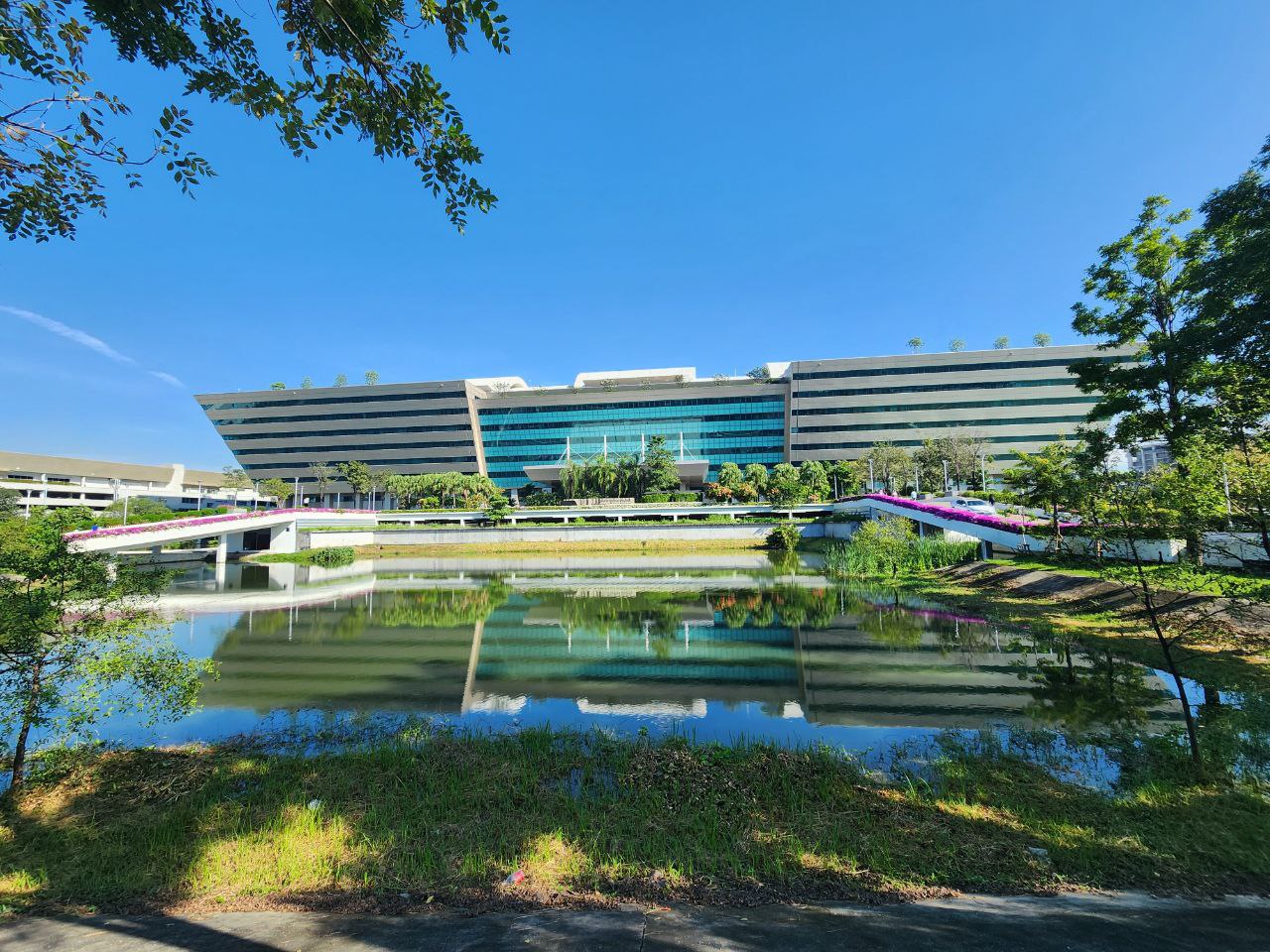
Once you are living in Bangkok, some matters, such as extending your permission to stay, are handled in person by the Immigration Bureau. For Bangkok, Immigration Division 1 has its offices at the Government Complex on Chaeng Watthana Road in Lak Si district, in the north of the city. Our guide to where the immigration office is in Bangkok covers the trip there. Keep copies of your passport pages, visa and arrival records, and check the conditions printed on your visa: several long-stay categories, including the O-A, prohibit work of any kind.
Choosing where to live in Bangkok
Most newcomers pick a neighborhood by its rail line, because traffic makes a long taxi commute tiring. The main options are:
- Sukhumvit (Nana, Asok, Phrom Phong, Thong Lo, Ekkamai), a long corridor along the BTS Sukhumvit Line with many serviced apartments and condos. See where Sukhumvit is.
- Silom and Sathorn, the business district, with the BTS Silom Line and the MRT, and Lumphini Park on its edge. See where Silom is.
- Ari, a quieter area of cafés north of Victory Monument on the BTS Sukhumvit Line.
- The riverside, along the Chao Phraya, where river boats and the BTS at Saphan Taksin do much of the commuting.
Green space matters more than newcomers expect in a hot city. Benjakitti Park, on Ratchadaphisek Road in Khlong Toei, is linked by a skywalk and the Green Bridge to Lumphini Park near Silom, so the two together give residents a long green route for running and walking.
Budgeting for the move
Rent is usually the largest monthly cost, and it varies widely by building age, size and distance from a station. Our guides to rent in Bangkok and the cost of living in Bangkok break down typical spending. Remember that several visas set their own financial thresholds, so your budget has to satisfy the visa rules as well as your lifestyle.
Health, insurance and vaccinations
Arrange health insurance that works in Thailand before you arrive; the LTR visa, for example, requires health insurance with a set minimum level of cover, or an alternative deposit. See a travel health clinic about vaccinations several weeks before you travel; the CDC's Thailand page lists hepatitis A and typhoid among the vaccines it recommends for travelers, and TravelHealthPro publishes the UK recommendations.
Sources: Royal Thai Embassy, Washington D.C., visa exemption (updated September 17, 2026), DTV (updated September 10, 2026), work and business visas, O-A long stay (updated September 1, 2026), long-stay visas, LTR visa, SMART visa, Board of Investment LTR, Thailand e-Visa, Thailand Digital Arrival Card, CDC, Thailand, TravelHealthPro, Thailand. Checked September 26, 2026.
No. Visa-exempt entry is for tourism only. The Royal Thai Embassy in Washington says that from September 15, 2026 it allows up to 30 days, with one possible extension of up to 30 days at the immigration officer's discretion. To live in Bangkok you need a long-stay visa for your purpose.
Many look at the Destination Thailand Visa (DTV). The Washington embassy lists it as valid for 5 years with a fee of USD 400, and asks for bank statements for the last three months with an ending balance of at least 500,000 baht (about USD 16,000) each month, proof of remote work or freelance status and a criminal record certificate. Requirements differ slightly between embassies.
Applicants aged 50 and over can apply for the Non-Immigrant O-A (1 year, USD 200 at the Washington embassy) or the O-X (5 years). The O-A page asks for a bank deposit of at least 800,000 baht, a monthly income of at least 65,000 baht, or a combination totaling 800,000 baht a year, and work of any kind is prohibited.
The Long-Term Resident visa is a 10-year visa with a fee of USD 1,600 at the Washington embassy. It covers wealthy global citizens, wealthy pensioners, work-from-Thailand professionals, highly skilled professionals and their dependents. The Board of Investment approves eligibility first, through ltr.boi.go.th.
Through the official Thailand e-Visa website, thaievisa.go.th, choosing the Thai embassy or consulate that serves your country of residence. You upload your documents and pay online. Only use the official site.
Yes. All foreign arrivals complete the Thailand Digital Arrival Card online before arriving. The official site, tdac.immigration.go.th, says no fee is required.
Immigration Division 1 is at the Government Complex on Chaeng Watthana Road, Lak Si, in northern Bangkok. Check the Immigration Bureau's current guidance before you go.
If your situation is complicated, for example a change of visa category, a business or property purchase, it is worth speaking to a qualified professional. For visa rules, rely on the Thai embassy that serves you and the official e-Visa site.