Bangkok's currency is the Thai baht, the national currency of Thailand, written THB in banking and on price lists, and often with the ฿ sign in shops and on menus. One baht is divided into 100 satang. There is no separate Bangkok currency, and the baht is the only money accepted for everyday payments in the city.
This guide covers the notes and coins you will handle, when cash matters more than cards, ATMs and exchanging money, and the rules for carrying cash in and out of Thailand. It does not give exchange rates, which change daily; the Bank of Thailand publishes its daily reference rates on its website.
Why it is called the baht
Thailand's Currency Act sets the unit of currency as the baht, divided into one hundred satang, and says the currency consists of coins and notes. The word is older than the paper money: the baht is also a traditional Thai unit of weight, and it is still used that way for gold. Gold shops price jewelry and bars per baht of weight, and Hua Seng Heng, one of the long-established gold dealers on Yaowarat Road, gives a one-baht gold bar as 15.244 grams.
Thai banknotes
The Bank of Thailand issues five banknotes in its current series, Series 17, first issued on July 28, 2018. Every note shows King Maha Vajiralongkorn on the front, and the back of each denomination shows two earlier kings of the Chakri dynasty.
| Note | Size | Back of the note |
|---|---|---|
| 20 baht | 72 x 138 mm | King Rama I and King Rama II |
| 50 baht | 72 x 144 mm | King Rama III and King Rama IV |
| 100 baht | 72 x 150 mm | King Rama V and King Rama VI |
| 500 baht | 72 x 156 mm | King Rama VII and King Rama VIII |
| 1,000 baht | 72 x 162 mm | King Rama IX and King Rama X |
Each note is 6 millimeters longer than the one below it, which helps when you are sorting a wallet in a hurry. You will also see plastic polymer notes: the 20 baht polymer note has circulated since March 2022, and polymer 50 and 100 baht notes were issued on November 21, 2025. The Bank of Thailand says paper notes remain legal tender and can be used as usual, so expect a mix of both.
To check a note, the Bank of Thailand suggests three steps: feel for the raised print around the King's portrait and the value, look at the watermark and security thread against the light, and tilt the 500 and 1,000 baht notes to see the ink shift from gold to green.
Thai coins
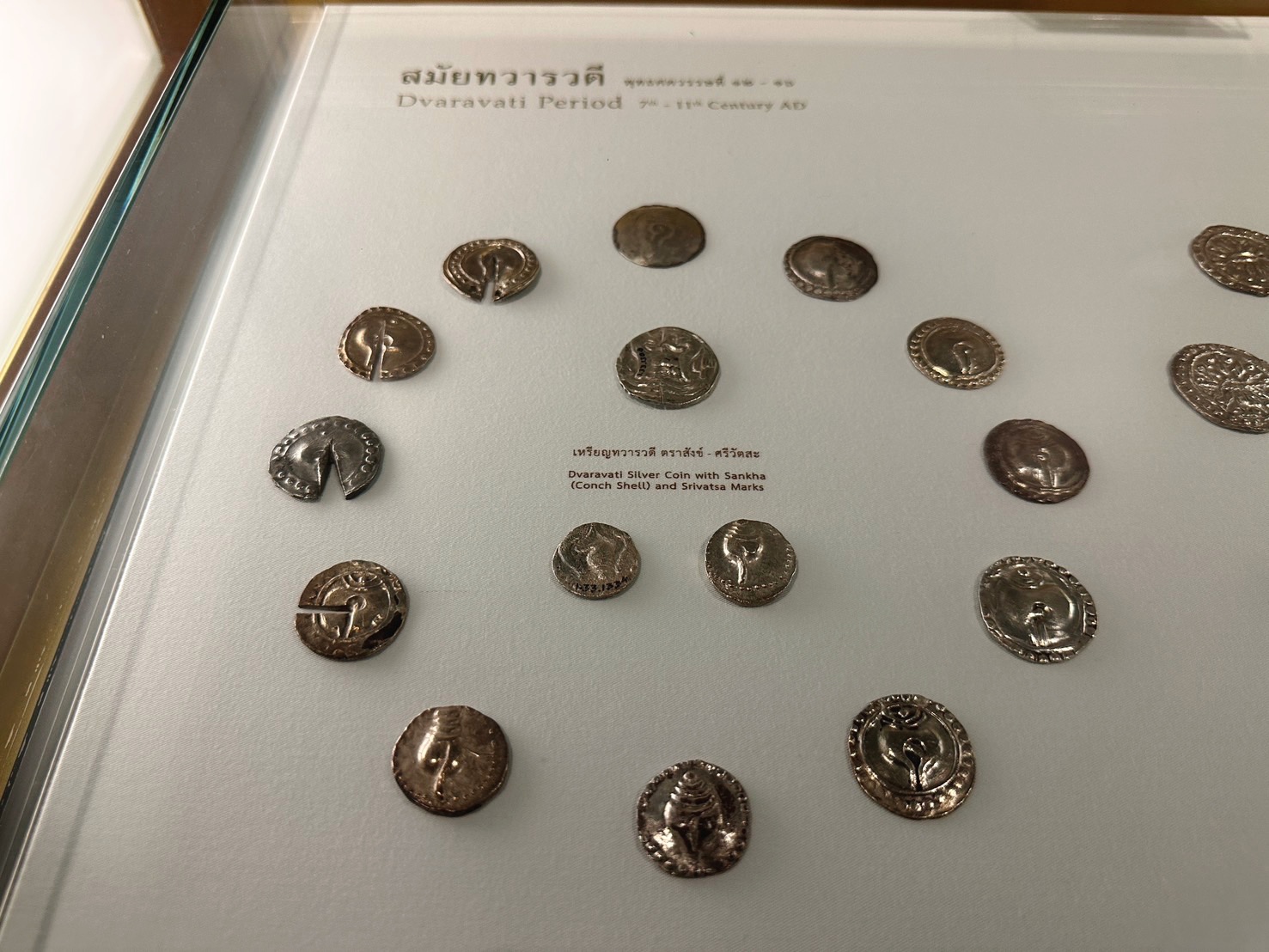
According to the Treasury Department, six coins are in everyday circulation: 25 satang, 50 satang, and 1, 2, 5 and 10 baht. The 1, 5 and 10 satang coins exist but are used for accounting only, so you are unlikely to be handed one. Coins and 20 baht notes are the easiest way to pay for small purchases such as snacks and drinks.
Cash or card in Bangkok?
You will need both. Hotels, malls and most sit-down restaurants take cards: the MICHELIN Guide lists credit cards as accepted at restaurants such as Gaggan and Sorn, and hotels such as lebua at State Tower guarantee reservations by credit card. Cash matters most in these places:
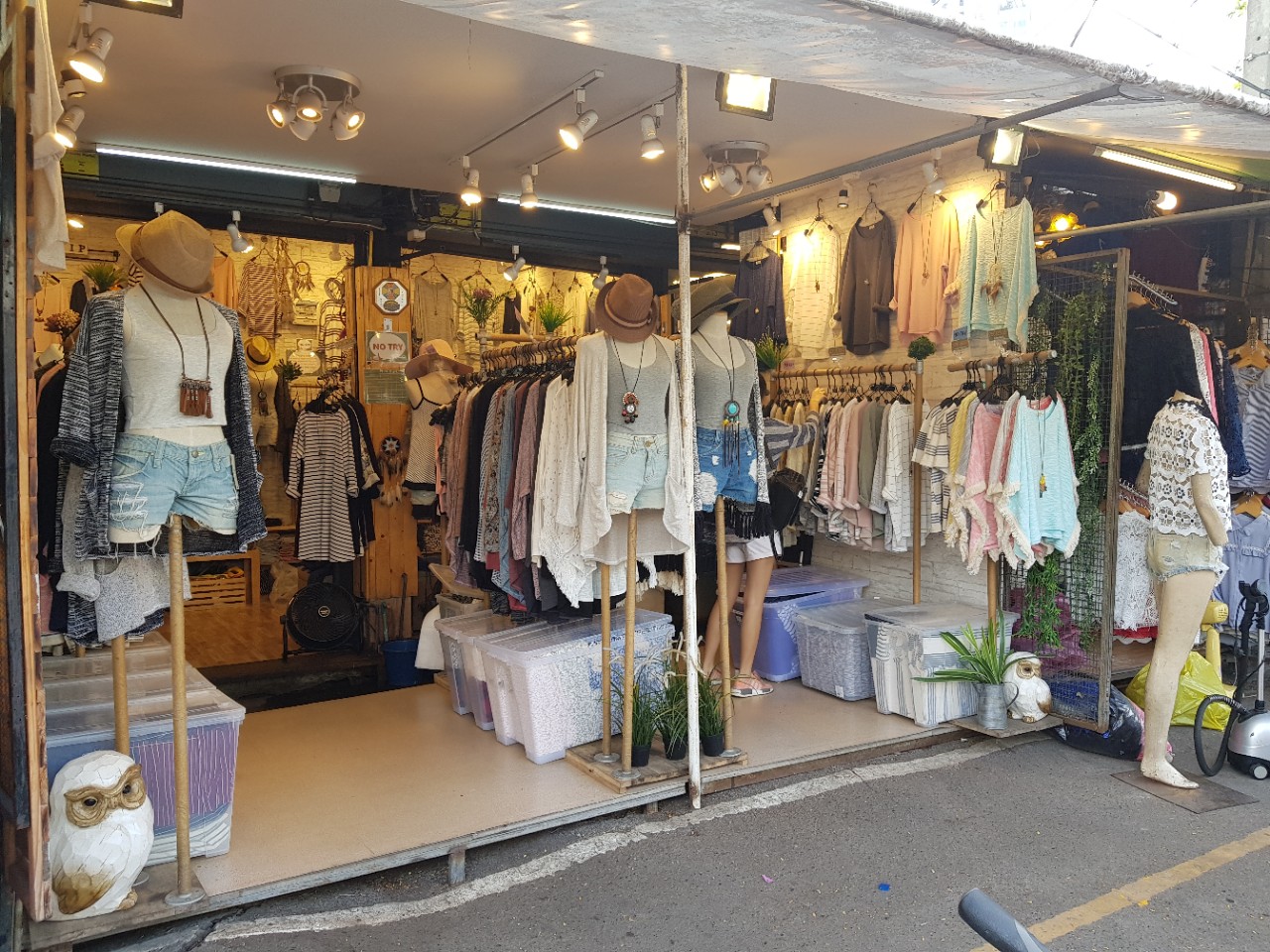
- Markets: the Tourism Authority of Thailand advises carrying baht at Thai markets because many vendors prefer cash, including at Chatuchak Weekend Market.
- Street food: the MICHELIN Guide lists Jay Fai, the one-star street-food kitchen, as cash only.
- Temples: smaller temples such as the Golden Mount do not publish fees online, so bring cash for entry. At the Grand Palace, the audio guide needs a passport or credit card as a deposit.
- Taxis and small shops: carry small notes and coins rather than relying on 1,000 baht notes.
ATMs and exchanging money
The Bank of Thailand does not exchange foreign currency itself; it points visitors to Thailand's commercial banks, and money can also be changed at authorized money changers. Change money at a bank branch or a licensed exchange booth rather than with individuals, and keep the receipt, because the amount of foreign currency you can take back out of Thailand is linked to what you bought from authorized banks or money changers.
ATMs are the simplest way to get baht with a foreign card. Before confirming a withdrawal, check the screen for any fee the Thai bank adds, and ask your own bank about its charges. If an ATM or card machine offers to charge you in your home currency, you can choose baht instead and let your card issuer do the conversion.
Carrying cash in and out of Thailand
- You can bring foreign currency and baht into Thailand without an amount limit.
- You must make a Customs declaration if you bring in or take out more than THB 450,000 in baht notes, or more than USD 15,000 or its equivalent in foreign notes.
- When you leave, you can take up to THB 50,000 in baht notes to most countries, and up to THB 2 million to countries bordering Thailand, Vietnam and China's Yunnan province.
See the history of Thai money
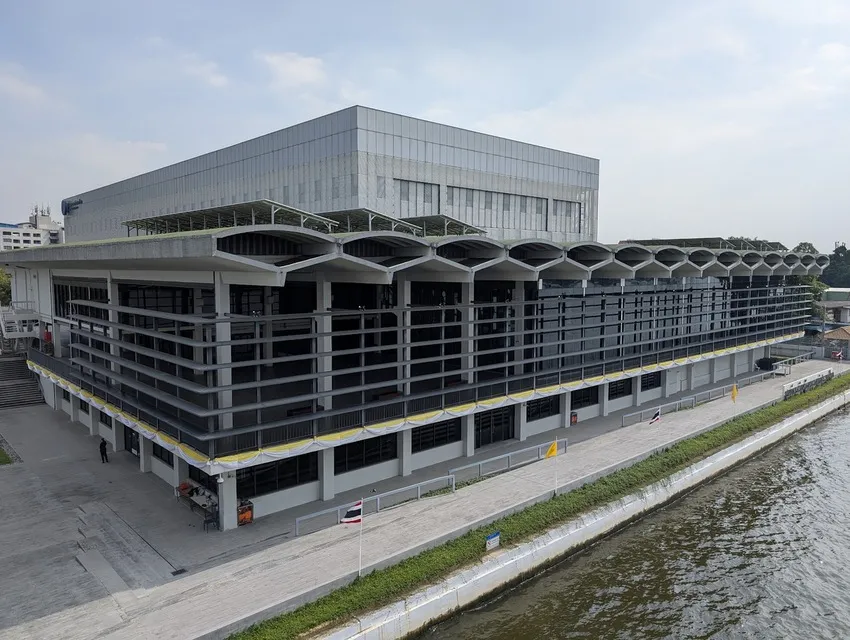
The Bank of Thailand Museum tells the story in person. It is part of the Bank of Thailand Learning Center at 273 Samsen Road, an open space on the Chao Phraya in the bank's former banknote printing house, and its exhibitions include Note Printing and Money through the Ages. The nearest river pier is Thewet, served by the Chao Phraya Express Boat. Krua Apsorn, a Bib Gourmand restaurant, is also on Samsen Road, and more ideas are on our Bangkok attractions page.
Sources: Currency Act (Bank of Thailand), Bank of Thailand, Series 17 banknotes, 100 baht polymer note, 50 baht polymer note, banknote security features, banknote FAQ, Bank of Thailand exchange control regulations, Bank of Thailand Learning Center, Treasury Department, coins, Hua Seng Heng, MICHELIN Guide, Jay Fai. Checked September 26, 2026.
The Thai baht (THB), Thailand's national currency. One baht equals 100 satang. Bangkok has no currency of its own.
The current series has 20, 50, 100, 500 and 1,000 baht notes. The 20, 50 and 100 baht notes also circulate in polymer versions; the Bank of Thailand says the paper versions remain legal tender.
25 and 50 satang, and 1, 2, 5 and 10 baht. The Treasury Department says 1, 5 and 10 satang coins are used for accounting only.
Both. Hotels, malls and most restaurants take cards, but markets, street-food stalls, small temples and taxis often need cash. The Tourism Authority of Thailand advises carrying baht at markets.
At commercial banks and authorized money changers. The Bank of Thailand does not provide a currency exchange service. Keep your receipts.
There is no limit on bringing baht or foreign currency in, but you must declare amounts over THB 450,000 in baht notes or over USD 15,000 or its equivalent in foreign notes, on arrival or departure. You can take up to THB 50,000 in baht notes out to most countries.
Take it to a Government Savings Bank or commercial bank branch. A note with at least three-fifths remaining that is clearly genuine can be exchanged at full value immediately; badly damaged notes go to the Bank of Thailand for assessment.
Rates change every day, so we do not publish them. The Bank of Thailand publishes daily reference rates on its website, and banks and money changers post their own buying and selling rates.