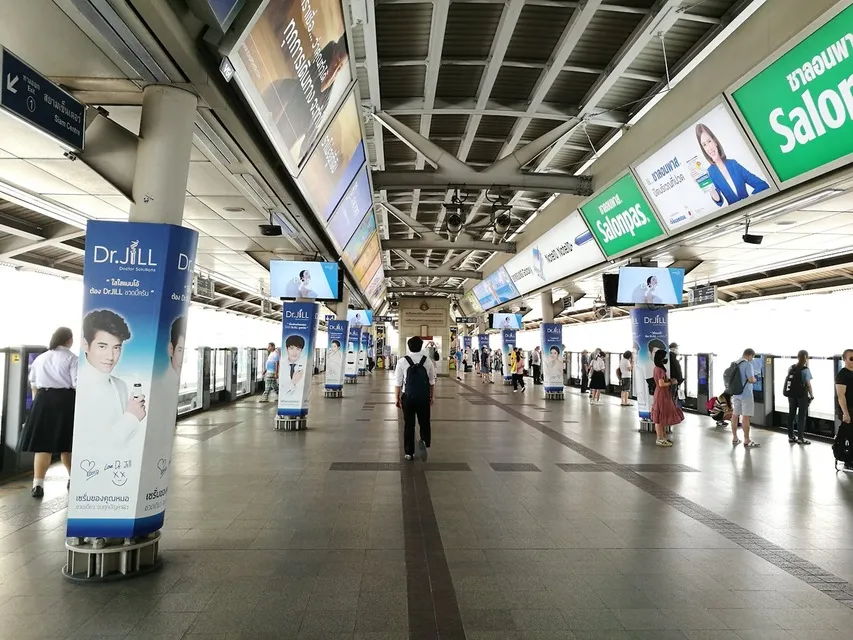
The language spoken in Bangkok is Thai. More precisely it is Central Thai, the sole official language of Thailand, and the Bangkok variety is the standard form heard on national radio and television. In the parts of the city most visitors see, such as hotels, big malls and the ticket offices of the major sights, English is used routinely, so you can get by without Thai. A few polite words still go a long way, especially in markets, small restaurants and taxis.
This guide covers how Thai works, where you can expect English, which help lines answer in English, and a short list of phrases worth learning before you arrive.
Thai: the language of the city
Thai belongs to the Tai branch of the Kra-Dai language family and is written in its own alphabet, the Thai script. Two features matter most to a visitor.
- It is tonal. Standard Thai has five tones: mid, low, falling, high and rising. The same syllable said with a different tone can be a different word, which is why a phrase from a guidebook sometimes draws a puzzled look. Listening and copying the rhythm helps more than reading romanized spellings.
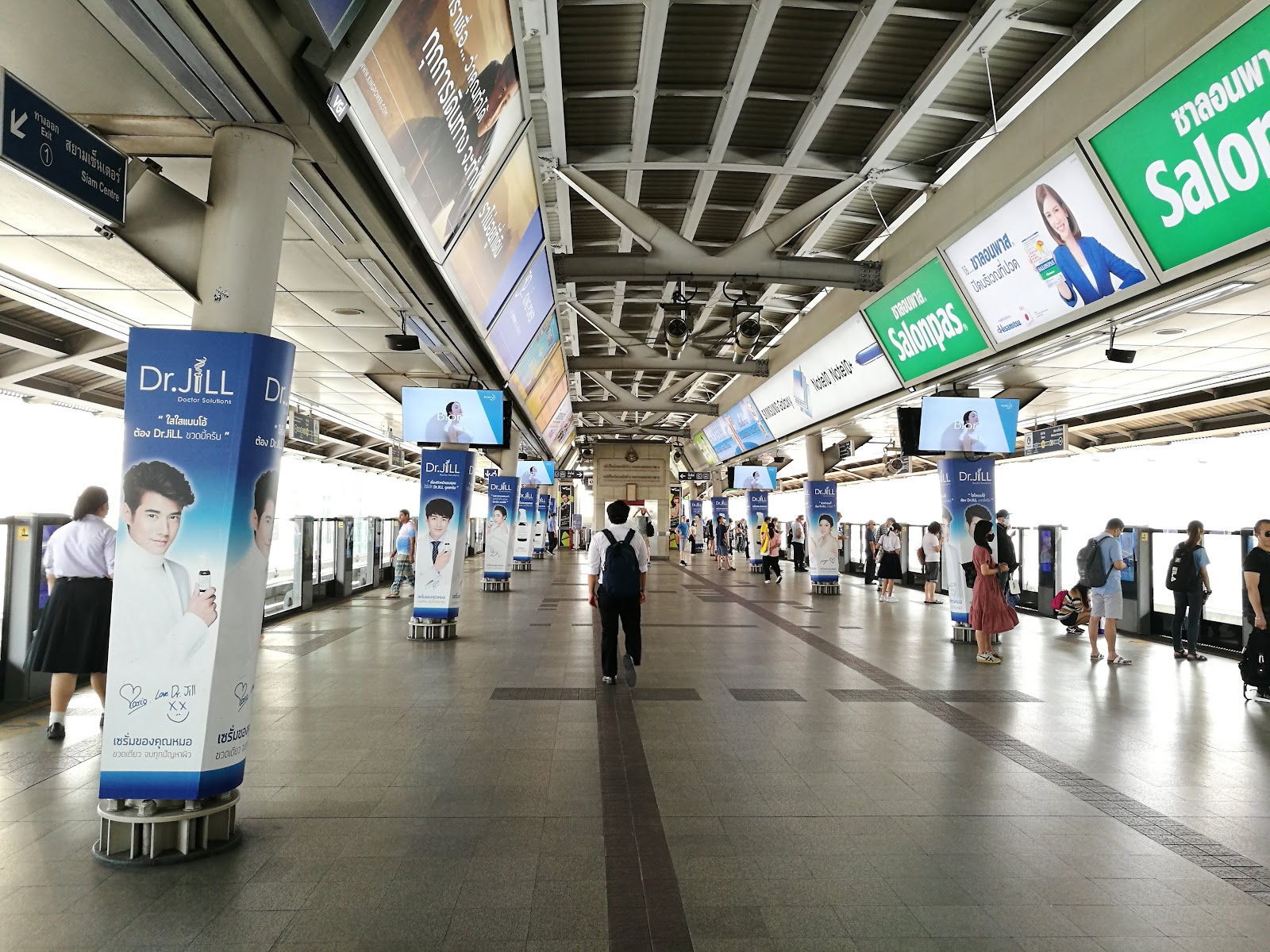
- Romanization varies. Thai place names are converted into Roman letters in more than one way, so you will see the same street or station spelled differently on signs, maps and hotel websites. Sukhumvit, Charoen Krung and Yaowarat are stable, but many smaller names are not. If a spelling doesn't match, compare the map pin rather than the letters.
Bangkok's long Chinese heritage also shows in the language. A number of everyday Thai words were borrowed from Chinese, many via the Teochew dialect, and around Yaowarat, Bangkok's Chinatown, shop signs often carry Chinese characters beside the Thai. The temple of Wat Traimit and its Golden Buddha sits at the edge of that district.
If you want to see how Thais themselves think about language and identity, Museum Siam in the Old City runs a permanent, hands-on exhibition called Decoding Thainess.
How much English will you hear?
English is the working second language of Bangkok's visitor economy. Large hotels, international restaurants and the main shopping centers deal with foreign guests all day, and most major attractions publish their visitor information in English. The Grand Palace, for example, sells tickets online through an English-language site and rents personal audio guides in English and seven other languages.
English is thinner once you step away from those places. Street-food vendors, market stallholders, motorcycle-taxi riders and many taxi drivers work mainly in Thai. At Chatuchak Weekend Market, prices are usually settled with a calculator or fingers held up as much as with words, so knowing the numbers, or simply how to ask the price, is useful.
A few habits make this easy:
- Ask your hotel to write your destination and the hotel's own address in Thai. Showing a taxi driver the Thai text is quicker than pronouncing a romanized name.
- Keep map pins for the places you plan to visit, so you can show a location rather than describe it.
- For longer conversations, a translation app with a Thai voice option bridges most gaps.
- Speak slowly and simply rather than loudly. Short sentences with key nouns are the easiest to follow for someone using English as a second language.
Getting help in English
Two official lines are set up for visitors. The Tourist Police answer on 1155, and the Tourism Authority of Thailand runs a call center on 1672. The Tourist Police also have a free smartphone app with an SOS button and a live chat that works in English, Chinese, Japanese, Korean and Russian, according to the Tourism Authority of Thailand. Save both numbers before you arrive.
Being polite in Thai: khrap and kha
The single most useful thing to learn is not a word but an ending. Thai speakers soften and add respect to a sentence with a polite particle: khrap if the speaker is a man, and kha if the speaker is a woman. The particle depends on who is speaking, not on who you are talking to. Adding it to "hello" and "thank you" turns a basic phrase into a courteous one, and people notice the effort.
Useful Thai phrases for Bangkok
Spellings below follow common learner romanization. Add khrap or kha to the end of each.
| English | Thai (romanized) |
|---|---|
| Hello / goodbye | sawatdi |
| Thank you (very much) | khop khun (mak) |
| Excuse me / sorry | kho thot |
| Never mind / no problem | mai pen rai |
| How much? | thao rai |
| Where is the toilet? | hong nam yu thi nai |
| Do you speak English? | phut phasa angkrit dai mai |
| I can't speak Thai | phut phasa thai mai dai |
| Please speak slowly | phut cha cha noi |
Two notes on meaning. Mai pen rai is used where English speakers would say "no problem", "it's fine" or "never mind", and you will hear it constantly. And the words often taught for "yes" and "no", chai and mai chai, really mean "that's right" and "that's not right". In everyday answers Thais more often repeat the verb of the question, so don't be surprised if a simple yes sounds different from the phrasebook.
Do you need to learn Thai before a trip?
No. A short stay built around hotels, the rail network, museums and the big temples works in English. What Thai adds is warmth and ease in the places where English runs out: ordering at a street stall, asking a price, thanking a driver. Learn hello, thank you, the polite particle and "how much", and you will use them every day. For planning the sights themselves, start with our guide to Bangkok attractions.
Sources: Thai language (Wikipedia), Languages of Thailand (Wikipedia), Thai phrasebook (Wikivoyage), Tourism Authority of Thailand Newsroom, The Grand Palace, Museum Siam. Checked September 26, 2026.
Thai. Bangkok uses Central Thai, the sole official language of Thailand, and the Bangkok variety is the standard form used on national radio and television.
In hotels, large malls, international restaurants and the ticket offices of major attractions, yes. Street vendors, market stalls and many taxi drivers work mainly in Thai, so carry your destination written in Thai.
Hello is sawatdi and thank you is khop khun. Men add khrap to the end and women add kha, which makes the phrase polite: sawatdi khrap or sawatdi kha.
They are polite particles added to the end of a sentence. Men say khrap and women say kha. The choice depends on the speaker, not the listener.
Yes. Standard Thai has five tones: mid, low, falling, high and rising. The tone can change the meaning of a syllable, so listening to native speakers helps more than reading romanized spellings.
The Tourist Police on 1155 and the Tourism Authority of Thailand call center on 1672. The Tourist Police app also has a live chat in English, Chinese, Japanese, Korean and Russian.
Yes. The palace rents personal audio guides for 200 baht in English, French, German, Japanese, Mandarin, Russian, Spanish and Thai, with a passport or credit card left as a deposit.