Why is Bangkok so dirty? That is the question many visitors type after a hazy January day or a walk past overflowing street stalls, and the fair answer has two parts. The most serious issue is not litter but air quality: fine-particle pollution (PM2.5) regularly rises above Thailand's health standard in the dry months from roughly November to March, then falls well within it for the rest of the year. The second part is what visitors see at street level, which comes mostly from how much of the city's life happens outdoors.
This guide sets out what Thailand's Pollution Control Department (PCD) measures, when the air is worst, what that means for a trip, and how to plan around it.
What PM2.5 is and what Thailand's standard says
PM2.5 is dust and smoke particles 2.5 micrometers across or smaller, small enough to be breathed deep into the lungs. The World Health Organization describes outdoor air pollution as a major environmental health problem, linked to heart disease, stroke and respiratory illness.
Thailand's Pollution Control Department publishes live readings on its Air4Thai service. Its standard for PM2.5 is a 24-hour average of no more than 37.5 micrograms per cubic meter and an annual average of no more than 15. Air4Thai shows five color levels: blue, green and yellow are within the standard, with yellow close to the limit, while orange and red mean the standard has been exceeded and the general public can be affected.
When Bangkok's air is worst
The PCD's 2025 report for its roadside monitoring station on Rama IV Road in Pathum Wan, a central district, shows the pattern clearly:
- January: monthly average of 48 micrograms per cubic meter, with 23 of 31 days above the 24-hour standard.
- February: average 39, with 16 of 28 days above the standard.
- March: average 33, with 11 days above.
- April to October: monthly averages between 15 and 22, and no days above the standard.
- November and December: averages of 25 and 31, with 2 and 7 days above the standard.
That is 59 days over the standard in 2025 at that station, all of them between November and March. A roadside monitor on a major road reads higher than a quiet side street, but the seasonal shape is the point. The PCD's general (non-roadside) stations in Bang Na and Phaya Thai show the same pattern with fewer bad days: in January 2025, 18 and 11 days above the standard respectively, and none at all from April to October. By contrast, when we checked Air4Thai on the afternoon of September 26, 2026, Bangkok stations were reading between about 6 and 10 micrograms per cubic meter, the best color band.
Why the dry season is worse
The UK government's travel advice for Thailand notes high air pollution in large cities including Bangkok, and seasonal regional smoke haze caused by farmers burning trees and crops. City traffic adds to it all year round. Whatever the mix of causes on a given day, the PCD's monthly figures show the months from about April to October reading far lower. If you are choosing when to travel, our guides to Bangkok's rainy season and why Bangkok is so hot cover the rest of the trade-off.
How to cope with high-PM2.5 days
- Check the reading, not the view. Haze is visible on bad days, but numbers are more reliable. Air4Thai shows readings by station, and its 24-hour average is steadier than the hourly figure.
- Know if you are in a sensitive group. The PCD says people over 60, children under 5, pregnant women and people with heart or respiratory disease are more at risk. The UK travel advice warns that pollution can worsen bronchial, sinus or asthma conditions, so talk to your doctor before a dry-season trip if that applies to you.
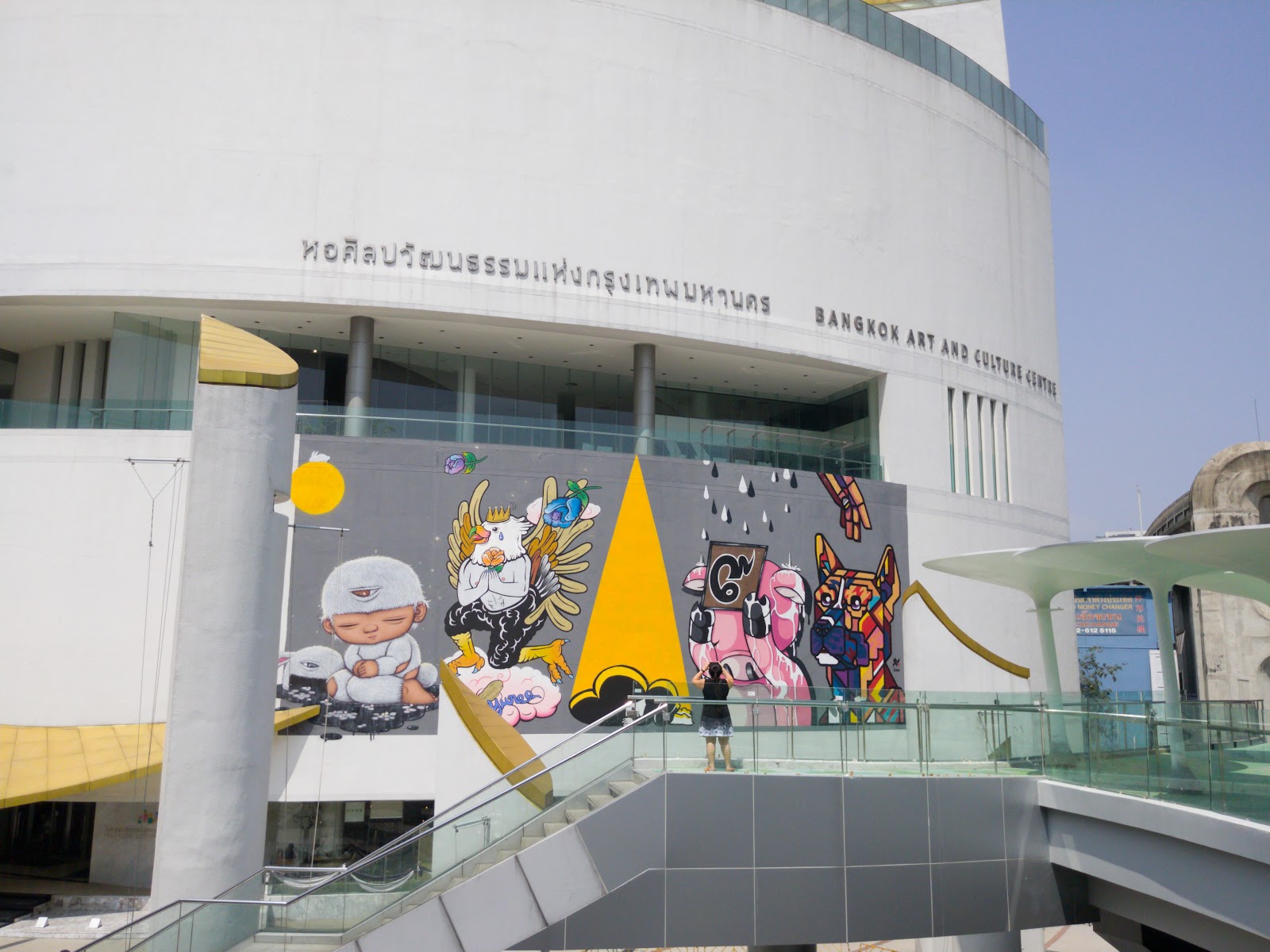
- Move the outdoor plans. On orange or red days, put the long walks and park visits on another day and spend more time indoors. Bangkok has plenty to fill a day under a roof: the Bangkok Art and Culture Centre at Siam, the Bangkok National Museum and Museum Siam in the Old City, and the city's malls.
- Consider a mask. On high days, a well-fitting mask designed for fine particles, such as an N95-type respirator, filters far more than a loose cloth mask.
- Use the rail network. The BTS and MRT keep you off the roadside for most of a journey, and they are usually faster than a taxi in traffic anyway. Our guide to getting around Bangkok explains the options.
What about the streets?
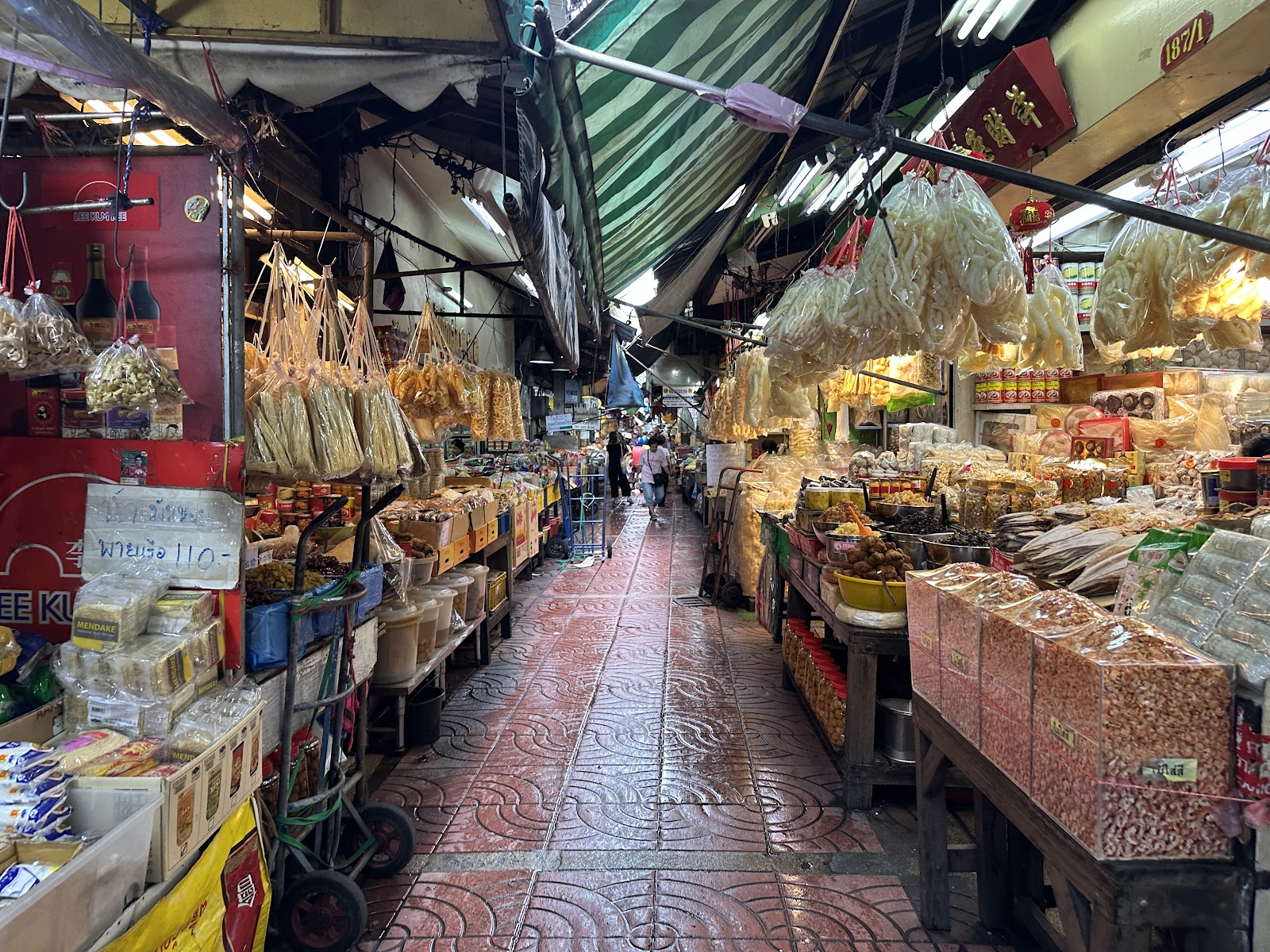
The other half of the "dirty" reputation is what people see on the pavement, and much of it comes from how the city lives. Bangkok eats, shops and trades outdoors. Street food stalls, market carts and delivery riders share the sidewalks with pedestrians, and at the end of a busy evening the edges of a market street can look untidy before it is cleared. Heat makes smells from drains and bins more noticeable, and heavy downpours in the wet season can leave some streets under water for a while.
None of that makes the city unusually unsafe for visitors, but it does change how you plan:
- Street food: choose busy stalls where food is cooked in front of you. Our guide to Bangkok belly explains the stomach upsets travelers sometimes get and how to lower the risk.
- Footwear: closed shoes are more comfortable than sandals on market streets and after rain.
- Health prep: see what vaccinations you may need for Bangkok before you go.
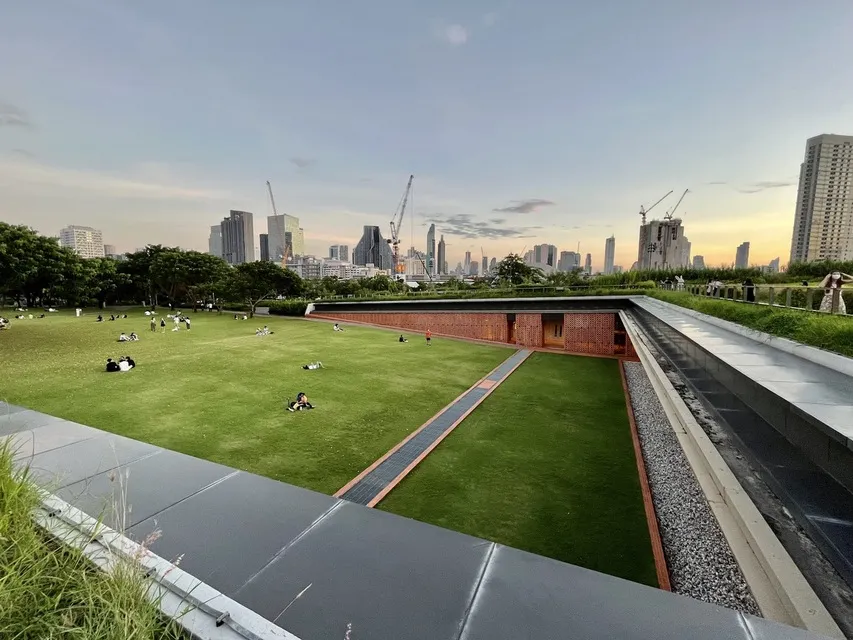
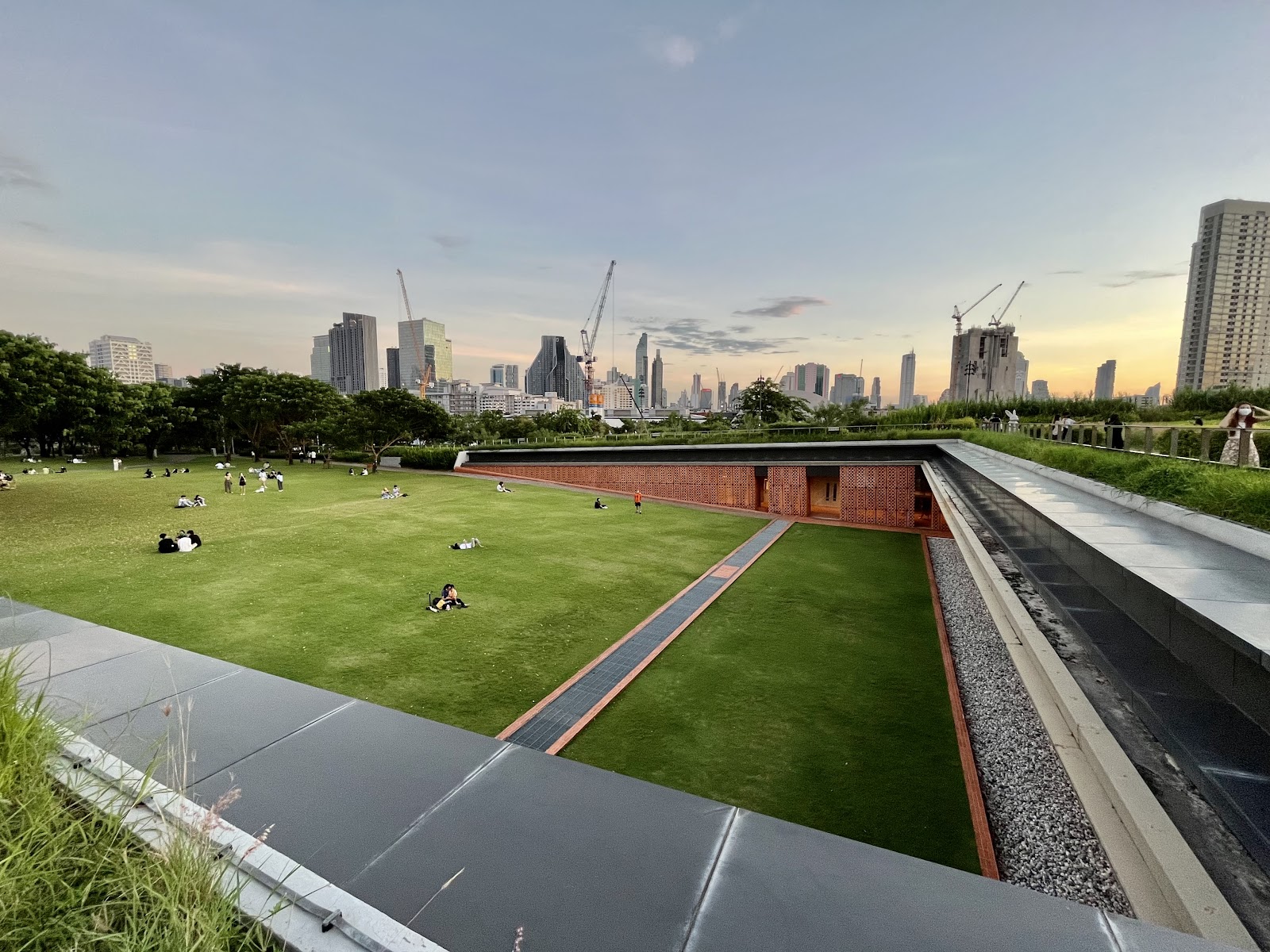
It is also fair to say that the Bangkok many visitors spend most of their time in, the rail system, museums, temples, parks and malls, is kept clean and orderly. Newer green spaces such as Chulalongkorn University Centenary Park in Pathum Wan, and older ones like Lumphini Park, are good places to spend a clear morning.
The short answer
Bangkok is not so much dirty as dense, hot and lived outdoors, and its genuine environmental problem is seasonal air pollution. Travel between about April and October and PM2.5 is much less likely to be an issue; travel in the dry months and check Air4Thai each morning, keep flexible plans and have indoor options ready.
Sources: Pollution Control Department, Air4Thai, PCD 2025 report, Rama IV Road station, PCD 2025 report, Bang Na station, PCD 2025 report, Phaya Thai station, World Health Organization: ambient air quality and health, UK FCDO Thailand travel advice: health. Checked September 26, 2026.
The Pollution Control Department's standard is a 24-hour average of no more than 37.5 micrograms per cubic meter and an annual average of no more than 15 micrograms per cubic meter.
In the PCD's 2025 figures, every day above the PM2.5 standard at its Rama IV Road, Bang Na and Phaya Thai stations fell between November and March, with January the worst month. April to October had no days above the standard at those stations.
Use the Pollution Control Department's Air4Thai website or app, which shows readings for each monitoring station. Blue, green and yellow are within the standard; orange and red mean it has been exceeded.
The PCD names people over 60, children under 5, pregnant women and people with heart or respiratory disease as more at risk. If that includes you, ask your doctor for advice before traveling in the dry season.
Usually not. In the PCD's 2025 figures there were no days above the standard in September at its Rama IV Road, Bang Na or Phaya Thai stations, and on the afternoon of September 26, 2026, Air4Thai showed Bangkok stations reading between about 6 and 10 micrograms per cubic meter.
At street level it can look untidy because so much cooking, trading and delivery happens outdoors, but the rail system, museums, temples, parks and malls most visitors use are kept clean. The more significant issue is seasonal air pollution between about November and March.