When is rainy season in Bangkok? Roughly May to October. Long-term climate figures from the Thai Meteorological Department, published by the World Meteorological Organization, show the rain arriving in May, staying heavy through the summer and peaking in September, then easing through October before the dry months from November to February. September is the wettest month, with an average of 344 millimeters of rain over 18 rain days.
Rainy season does not mean rain all day. It means frequent showers and storms, some of them heavy, with dry spells in between. Here is how the months compare and how to plan a trip around them.
Bangkok's rain, month by month
The World Meteorological Organization's climate table for Bangkok averages the Thai Meteorological Department's records for 1961 to 1990. They are long-term normals, not a forecast for any particular year, but they show the pattern clearly:
| Month | Average rainfall | Average rain days |
|---|---|---|
| April | 65 mm | 4 |
| May | 220 mm | 13 |
| June | 149 mm | 12 |
| July | 155 mm | 13 |
| August | 197 mm | 15 |
| September | 344 mm | 18 |
| October | 242 mm | 14 |
| November | 48 mm | 5 |
By contrast, December and January average about 10 millimeters of rain and a single rain day each. The table also shows why the wet season can still feel hot: average daily highs stay between about 32°C and 34°C from May to October.
Early, middle and late rainy season
May to July
The rains start in May, which on these averages is already wetter than June or July. For many visitors June and July are the gentler part of the season, with fewer rain days than the months that follow. If you are traveling then, our guides to things to do in Bangkok in June and things to do in Bangkok in July suggest how to fill the days.
August to October
This is the heart of the season. August picks up, September is the peak, and October is still wet. It is also when flooding is most likely. In late September 2026, for example, the Tourism Authority of Thailand advised visitors that ongoing rainfall and localized flooding in parts of Bangkok and the surrounding area were slowing road travel, especially to the airports, and suggested allowing extra time and using the BTS Skytrain and MRT where roads were affected. Our notes on Bangkok in September and Bangkok in October cover those months.
Planning a trip in the rainy season
- Use the rail lines. Heavy rain slows traffic quickly, and trains run above or below the roads. A hotel near a BTS or MRT station makes wet days much easier; see our list of hotels near the BTS.
- Allow extra time for the airport. When roads flood, the airport and TAT both ask passengers to leave earlier than usual.
- Plan outdoor sights for the morning. Temples and parks are open to the elements, so keep a flexible plan and move indoors when a storm arrives.
- Pack for rain. A compact umbrella or light rain jacket and shoes that cope with wet pavements help more than a heavy coat; it stays warm.
- Check the forecast and alerts. The Thai Meteorological Department publishes daily forecasts and heavy-rain warnings, and its hotline is 1182.
Good places to be when it pours
Bangkok has plenty to do under a roof:
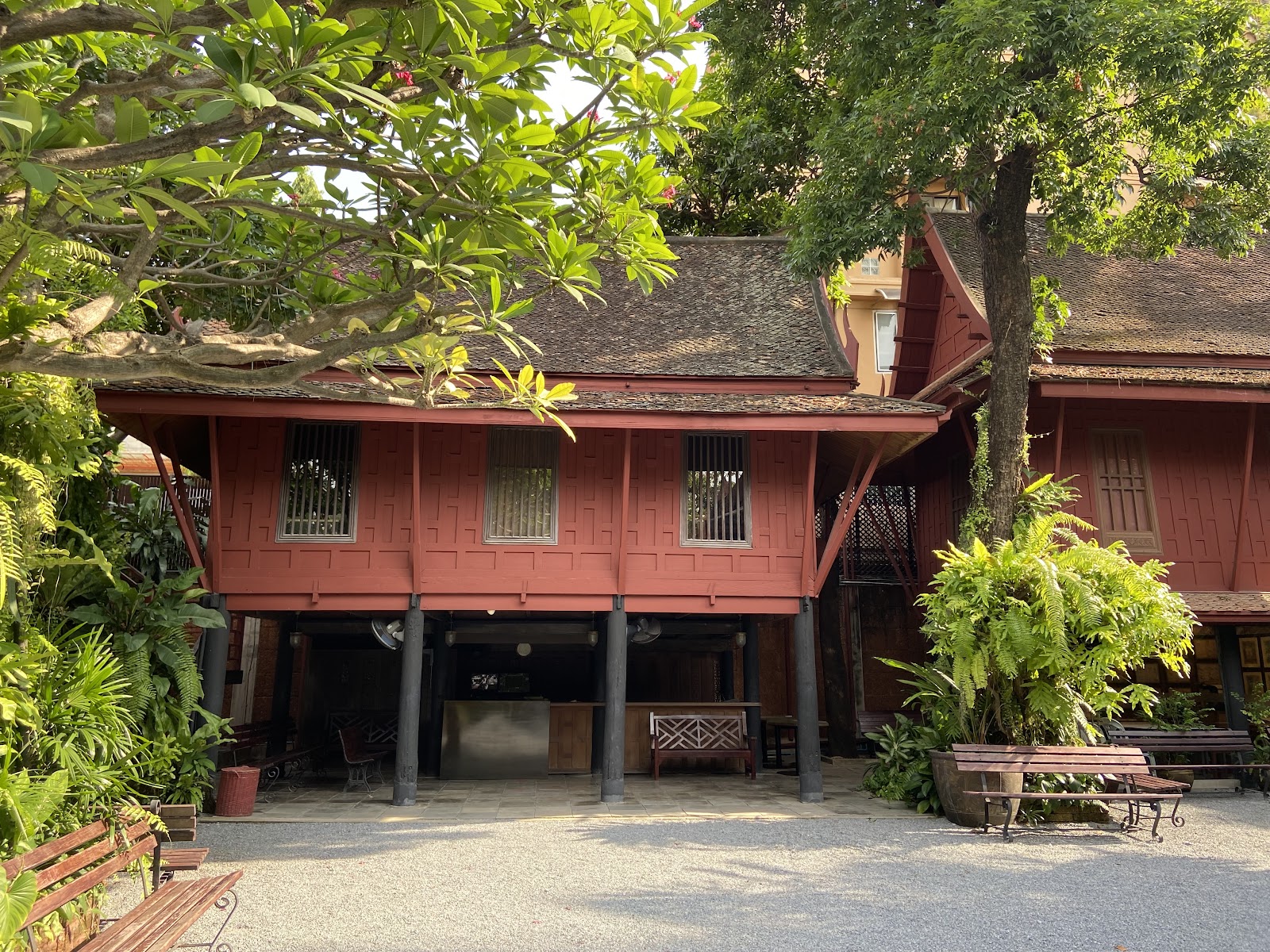
- The Jim Thompson House, traditional Thai teak houses holding Jim Thompson's Asian art collection, near BTS National Stadium.
- The Bangkok Art and Culture Centre, whose galleries connect straight to the same station.
- Museum Siam near Wat Pho, with interactive exhibitions on Thai identity.
- SEA LIFE Bangkok, in the basement of Siam Paragon.
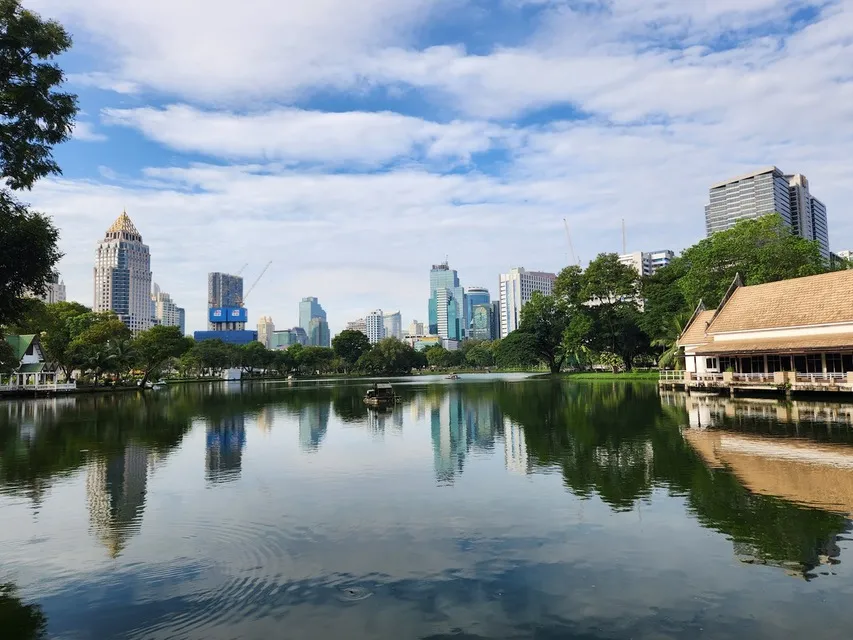
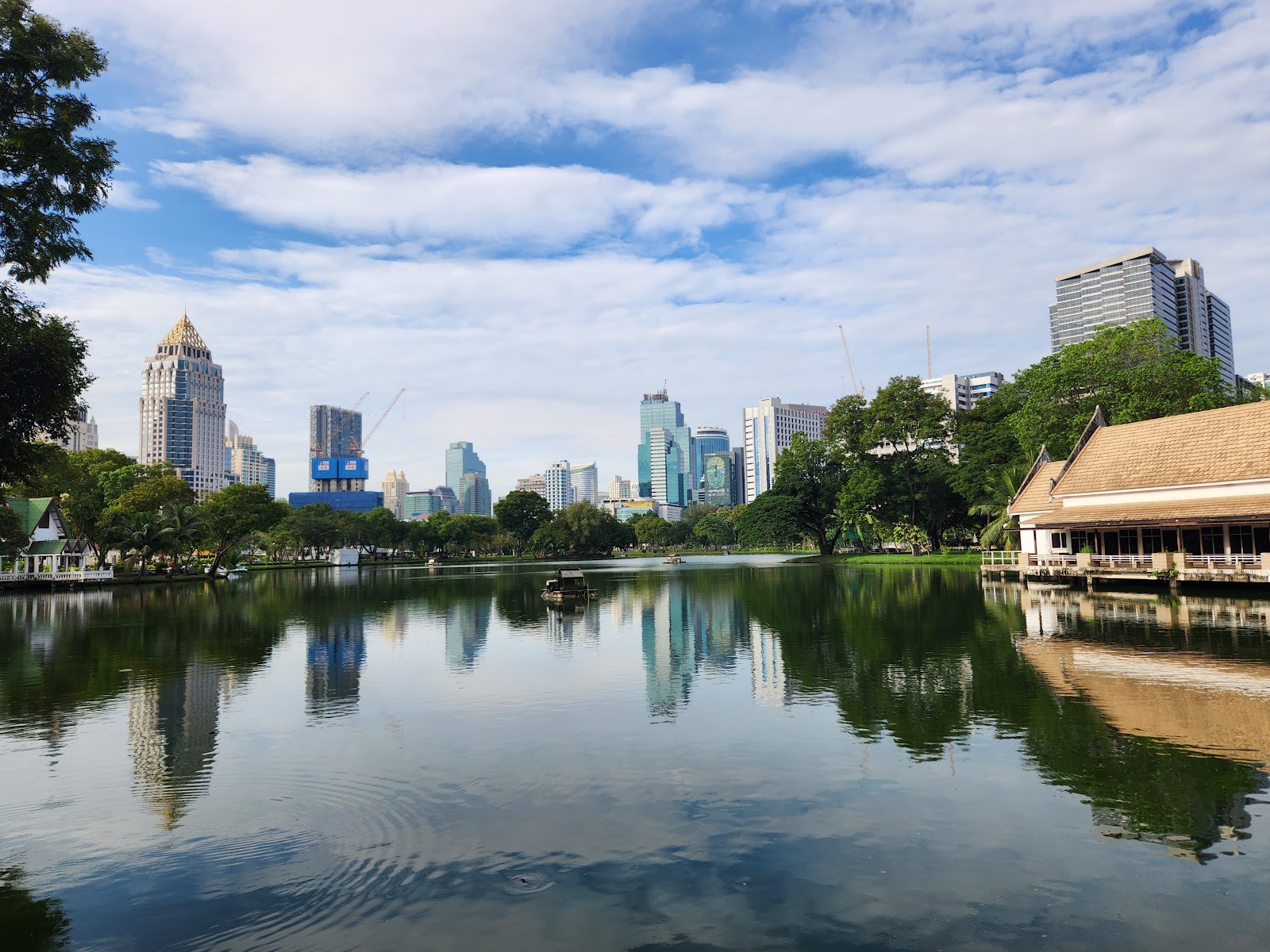
When the sky clears, Lumphini Park is at its greenest. More ideas are in our guide to indoor things to do in Bangkok.
Sources: World Meteorological Organization, World Weather Information Service: Bangkok (Thai Meteorological Department data), TAT Newsroom, weather and travel conditions in Bangkok and surrounding areas, Thai Meteorological Department. Checked September 26, 2026.
Roughly May to October. Thai Meteorological Department climate averages for Bangkok, published by the World Meteorological Organization, show rain rising sharply in May, peaking in September and easing in November.
September, with an average of 344 millimeters of rain over 18 rain days, according to the WMO climate table for Bangkok (1961 to 1990 averages).
Usually not. Even in September the long-term average is 18 rain days in the month, so dry spells between showers and storms are common. Individual years vary.
Many visitors do. The rail lines, museums, malls and restaurants work well in the rain, and June and July have fewer rain days on average than August to October. Allow flexible plans for outdoor sights and extra time for road travel.
Localized flooding can happen after heavy rain, most often late in the season. In late September 2026 the Tourism Authority of Thailand advised visitors that flooding in parts of Bangkok was slowing road travel, especially to the airports.
About November to February. December and January average about one rain day each in the WMO climate table.
The Thai Meteorological Department publishes forecasts and heavy-rain warnings at tmd.go.th and runs a weather hotline on 1182.