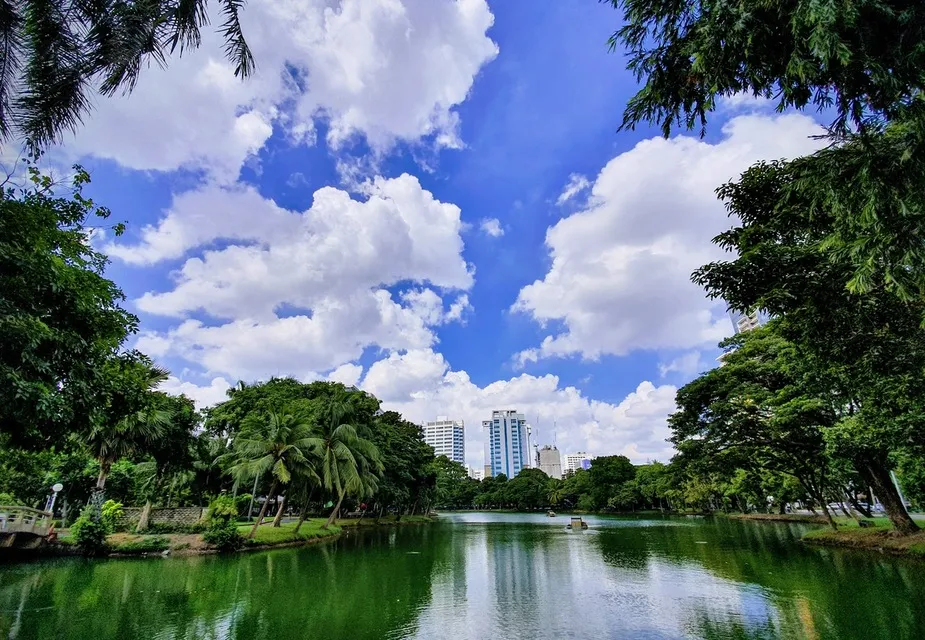
Bangkok is so hot because it sits in the tropics, about 13.7 degrees north of the equator, low and flat near the Gulf of Thailand, where the sun is high all year and humid air keeps nights warm. According to the climate normals the Thai Meteorological Department (TMD) supplies to the World Meteorological Organization (WMO), the average daily maximum in Bangkok never falls below 31 degrees Celsius in any month, and in April it averages 34.9 degrees. On top of that, a large built-up city holds heat in its roads and buildings.
Here is what the official figures show, why they add up to such a hot city, and how to stay safe in the heat on a visit.
What the numbers say
The WMO's World Weather Information Service publishes Bangkok's monthly climate normals from TMD, based on 1961 to 1990 records at the city's station:
| Month | Average high | Average low | Rain days |
|---|---|---|---|
| January | 32.0°C | 21.0°C | 1 |
| March | 33.7°C | 24.9°C | 2 |
| April | 34.9°C | 26.1°C | 4 |
| May | 34.0°C | 25.6°C | 13 |
| August | 32.5°C | 24.9°C | 15 |
| September | 32.3°C | 24.6°C | 18 |
| December | 31.3°C | 20.8°C | 1 |
Two things stand out. The range through the year is small: the coolest month, December, still averages a high above 31 degrees, and the monthly mean temperature only moves between 25.6 and 29.7 degrees. And the nights barely cool off in the hot months, with average lows around 25 to 26 degrees from April to August.
Why Bangkok is so hot
It is in the tropics
At about 13.7 degrees north, Bangkok gets a high midday sun all year, and the sun passes directly overhead twice a year, in late April and mid-August. That is why April, just before the rains, is the hottest month in the normals: the sun is at its highest and there is little cloud to block it.
Humidity keeps the heat in
Bangkok lies on the low, flat plain of the Chao Phraya River, close to the Gulf of Thailand, and its air is humid. The WMO explains that heat stress depends on humidity, sun and wind as well as temperature, because humid air reduces the effectiveness of sweating, the body's main way of cooling down. So 33 degrees in Bangkok can feel harder going than the same reading in a dry climate, and moist air also slows cooling at night.
The monsoon brings rain, not relief
From May, the rains arrive: rain days jump from four in April to thirteen in May and peak at eighteen in September, the wettest month, with an average of 344 millimeters. Cloud and showers take the edge off the afternoon peak, but the air stays warm and wet. The drier months, December and January, have the lowest temperatures and the fewest rain days, which is why they are the most comfortable time to visit. Our guide to when the rainy season is in Bangkok has more on the wet months.
The city holds the heat
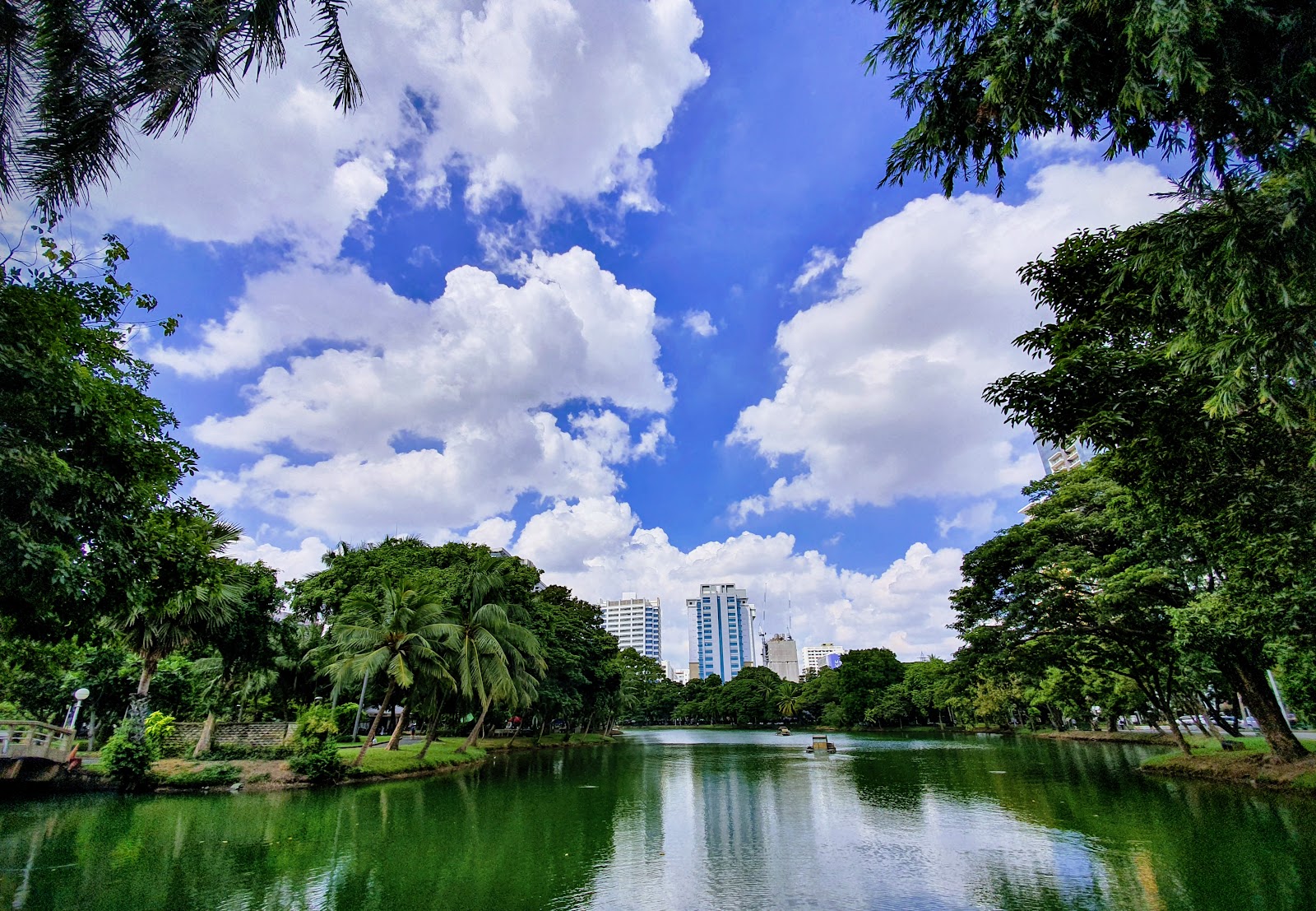
The WMO describes the urban heat island effect: buildings, roads and other hard surfaces absorb and hold heat, and too little green space and reduced airflow make it worse, so cities can have hotter days and warmer nights than the countryside around them. Bangkok, with its dense center and heavy traffic, is exactly the kind of place where that applies, and its parks offer valuable shade.
Staying safe in the heat
The World Health Organization's hot-weather advice applies directly to a Bangkok trip:
- Stay in the shade and out of the midday sun. WHO notes that temperatures in the sun can feel 10 to 15 degrees higher. Plan outdoor sightseeing for early morning and late afternoon.
- Drink water regularly. WHO suggests about a cup an hour, and at least 2 to 3 liters a day, in hot weather.
- Spend two to three hours of the day somewhere cool. A museum, gallery or mall in the middle of the day works well.
- Dress for it. Lightweight, loose clothing that covers the skin, a wide-brimmed hat and sunscreen. Temples require covered shoulders and knees anyway, so loose long layers do double duty.
- Take care of children. Never leave a child in a parked vehicle, and WHO advises against covering a stroller with dry fabric, which traps heat.
- Know when to get help. WHO warns that extreme heat can cause heat exhaustion and heatstroke. If someone becomes unwell in the heat, get them somewhere cool and, if needed, call 1669 for an ambulance.
Cool places to spend the hottest hours
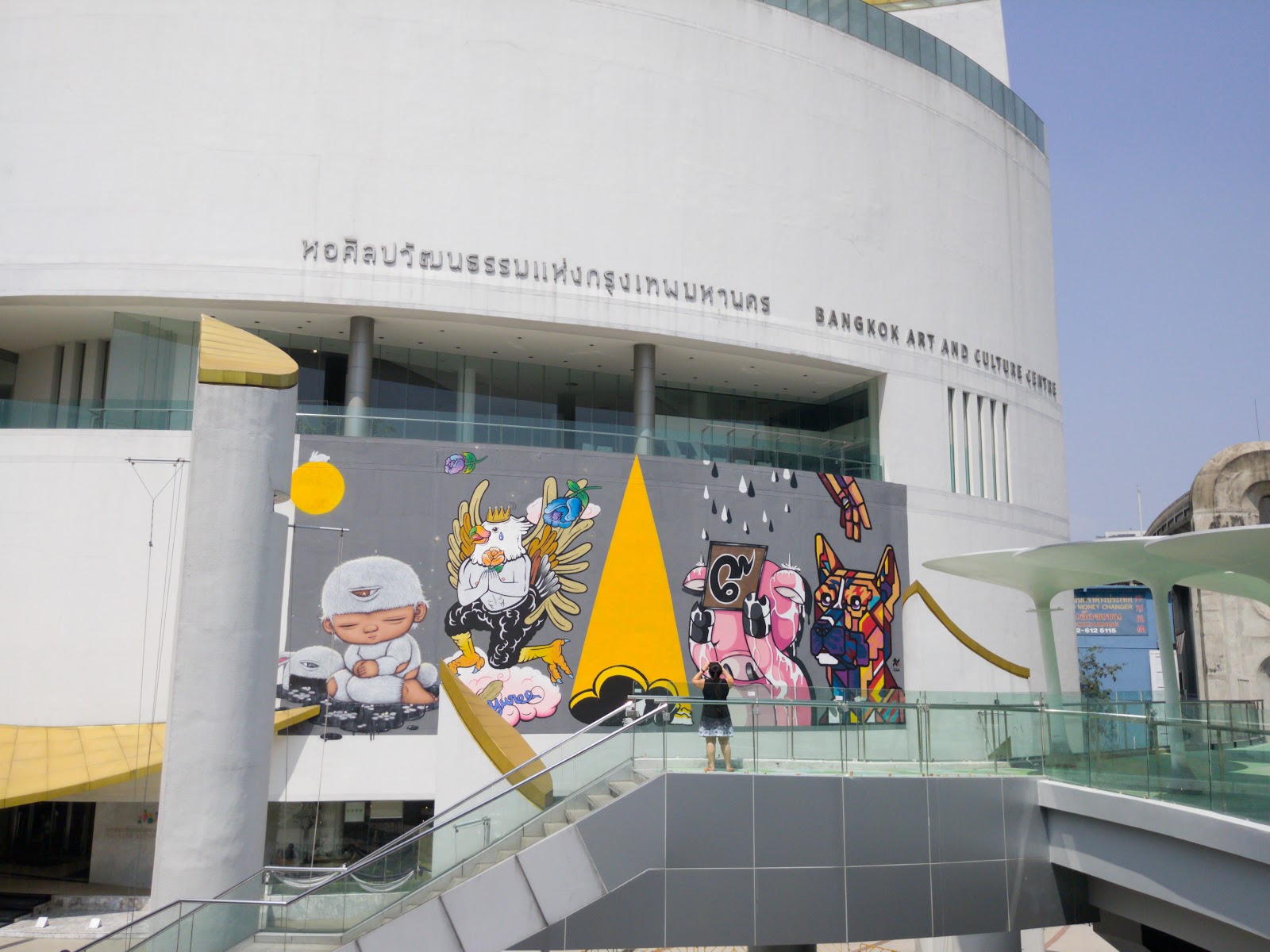
Use the heat of the day for indoor sights. The Bangkok Art and Culture Centre has free exhibitions and connects directly to BTS National Stadium, and SEA LIFE Bangkok Ocean World is underneath Siam Paragon. Save Lumphini Park for the early morning, when it is shaded and cooler. The air-conditioned Skytrain is the easy way between them; see BTS opening hours. For more ideas, see our Bangkok attractions.
Sources: WMO World Weather Information Service: Bangkok (Thai Meteorological Department climate normals), WMO: Extreme heat, WHO: Heat and health, UK FCDO: Thailand emergency numbers. Checked September 26, 2026.
It lies in the tropics at about 13.7 degrees north, on a low, humid plain near the Gulf of Thailand, so the sun is high all year and humid air keeps days hot and nights warm. As a large city, it also holds heat in its buildings and roads.
April. The Thai Meteorological Department's normals published by the WMO give an average April high of 34.9 degrees Celsius and an average low of 26.1 degrees.
December, with an average high of 31.3 degrees Celsius and an average low of 20.8 degrees, according to the same normals. January is similar.
Yes. In the WMO normals the average daily high is above 31 degrees Celsius in every month.
Rain days rise sharply in May and peak in September, which averages 18 rain days and 344 millimeters of rain; December to February are the driest months.
The World Health Organization suggests drinking water regularly in hot weather, about a cup an hour and at least 2 to 3 liters a day.
1669 for an ambulance, or 191 for general emergencies, according to the UK Foreign Office's Thailand advice.