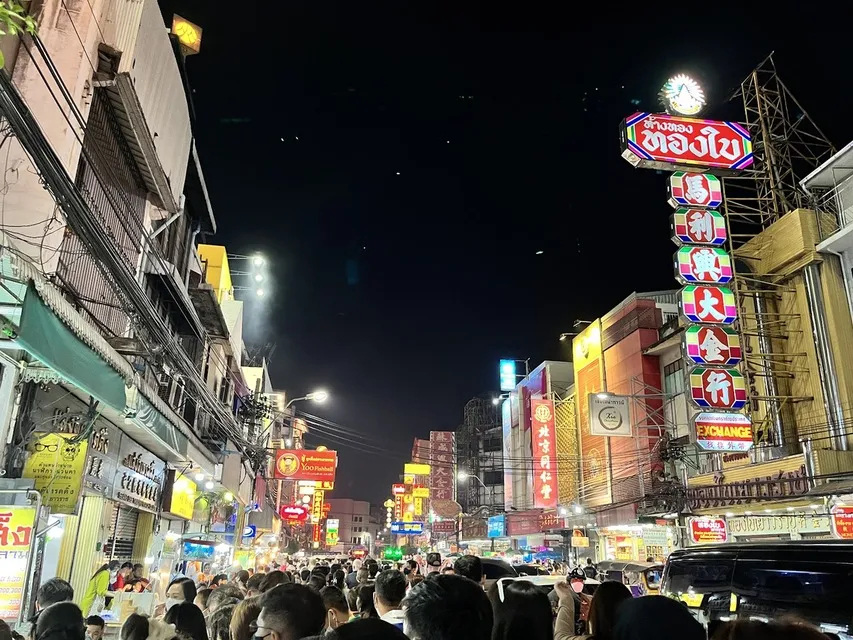
Yaowarat Road, Chinatown, after dark Photo above: Nawaratchagorn Haowhan via Google
Yaowarat is Bangkok's Chinatown: the district around Yaowarat Road in Samphanthawong, known for gold shops, Chinese temples and one of the city's best evenings of street food. The easiest way there is the MRT Blue Line to Wat Mangkon station, which the Tourism Authority of Thailand (TAT) places in the heart of Chinatown. Go in the late afternoon, see Wat Traimit and Wat Mangkon Kamalawat while it is light, then eat on Yaowarat Road after dark.
This guide to Chinatown Bangkok covers getting there by train and boat, what to eat, the temples, Sampeng Lane and the best time to visit.
What is Yaowarat?
Yaowarat Road is the main street of Bangkok's Chinatown, and the name Yaowarat is used for the whole neighborhood around it. TAT calls it Chinatown's high street and describes it as a food lover's destination in the evening, when street-side stalls sell dim sum, noodles, omelettes and more. It sits east of the Old City, between Hua Lamphong and the Chao Phraya River.
The district grew from Chinese trading families: TAT traces the Chinese community by the river to Hokkien sailors in the 1850s, and to the Hokkien, Teochew and Cantonese migrants who followed and helped shape much of what is now thought of as Thai food. For TAT's official Chinese New Year 2026 celebrations, Yaowarat Road was lit from Odeon Circle to the Chaloem Buri intersection, which marks the stretch most visitors walk.
How do you get to Yaowarat?
Take the MRT Blue Line to Wat Mangkon station, on Charoen Krung Road in the middle of Chinatown. Hua Lamphong MRT station, one stop east, is the better exit for Wat Traimit and the Chinatown Gate. From the river, Ratchawong Pier (Tha Ratchawong) is Chinatown's stop on the Chao Phraya.
- MRT Wat Mangkon: TAT recommends it for Wat Mangkon Kamalawat, Yaowarat Road and Sampeng Lane, all within walking distance. The station is decorated in red and gold with a dragon-inspired staircase.
- MRT Hua Lamphong: TAT says Wat Traimit is a few minutes' walk from this station, with the Chinatown Gate close by.
- By boat: TAT's river food guide lists Tha Ratchawong as a pier for Chinatown's steamed buns, dumplings and duck noodles. Check the operator's current routes before you travel.
Coming from Sukhumvit or Silom on the BTS Skytrain, change to the MRT Blue Line; our guide to getting to Chinatown by BTS walks through the routes. If you are catching a train, our post on things to do near Bangkok's train stations explains how Hua Lamphong fits in.
What should you eat in Chinatown Bangkok?
Eat what Yaowarat is known for: Chinese-Thai street food, cooked to order and eaten at plastic tables or on the move. TAT singles out kuay jab, rolled rice noodles in a peppery broth, as a Chinatown dish to look for, alongside steamed buns, dim sum, noodles and omelettes. The stalls are busiest after dark, so arrive hungry and graze.
Two addresses give the district's range, from a lunchtime shop to a tasting menu:
- Urai Braised Goose, on Song Wat Road in Samphanthawong, holds a Bib Gourmand in the 2026 MICHELIN Guide Thailand, which says the family has been braising goose with aromatic spices for six decades. It is a morning and lunch stop, not an evening one.
- Restaurant POTONG serves a progressive Thai-Chinese tasting menu in a restored five-story shophouse on Vanich 1 Road, where the chef's family once made Chinese herbal medicine. It holds one MICHELIN star in the 2026 guide, and it needs a booking.
For a wider plan of where to eat across the city, see our Bangkok street food guide, and for sit-down options browse our Bangkok restaurants.
Which temples should you see in Yaowarat?
Chinatown has two temples worth planning around. Wat Traimit, near Hua Lamphong, houses the Golden Buddha. Wat Mangkon Kamalawat, beside the MRT station of the same name, is what TAT calls the city's largest Chinese Buddhist temple. Both are easy to combine in one walk along Charoen Krung and Yaowarat roads.
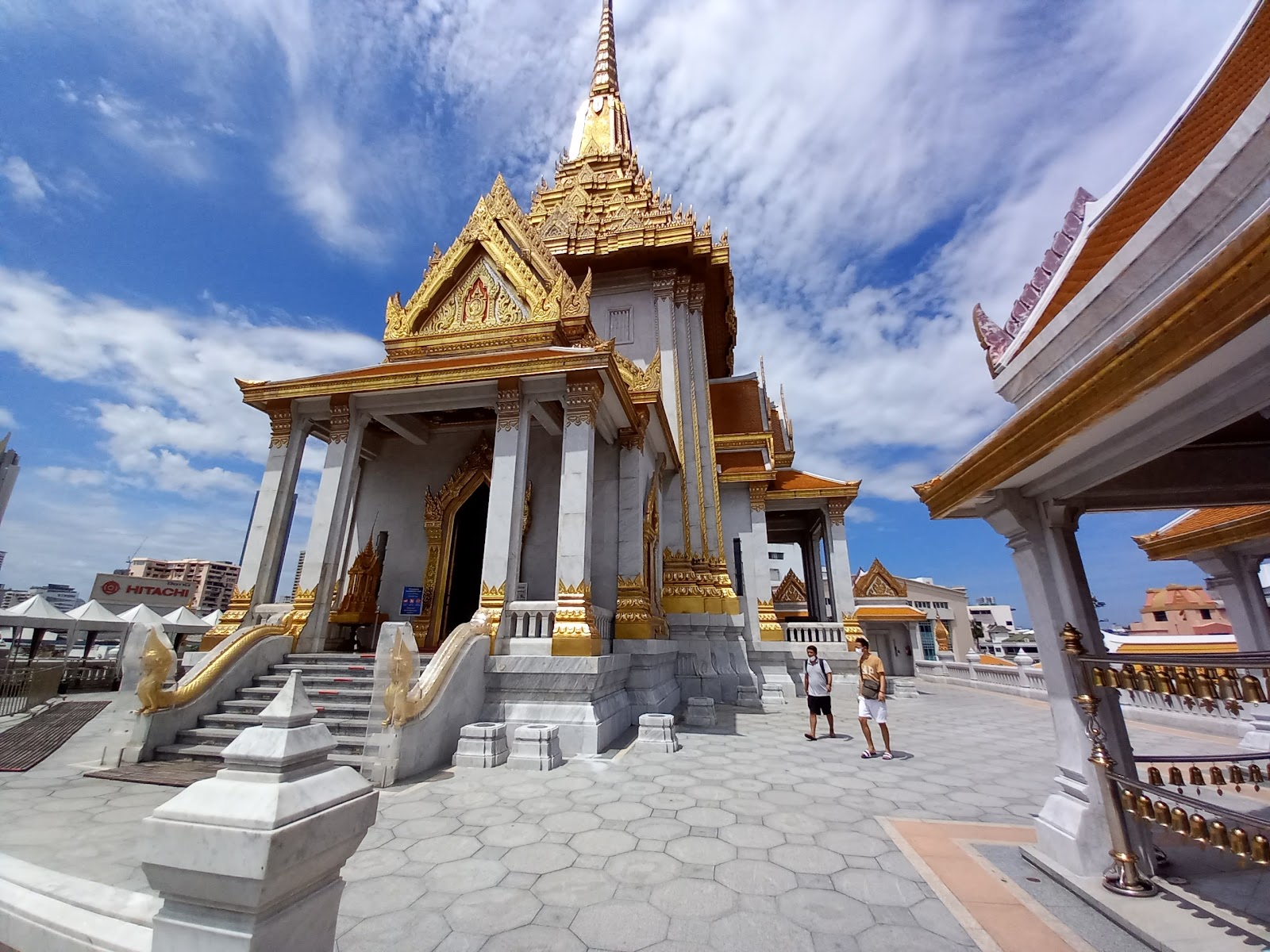
Wat Traimit and the Golden Buddha
Wat Traimit Withayaram Worawihan keeps its seated Golden Buddha, Phra Phuttha Maha Suwanna Patimakon, in the white-and-gold Phra Maha Mondop. TAT describes the image as containing a large amount of pure gold. The temple stands at the Hua Lamphong end of Chinatown, which makes it a natural first stop before walking west along Yaowarat Road.
Wat Mangkon Kamalawat
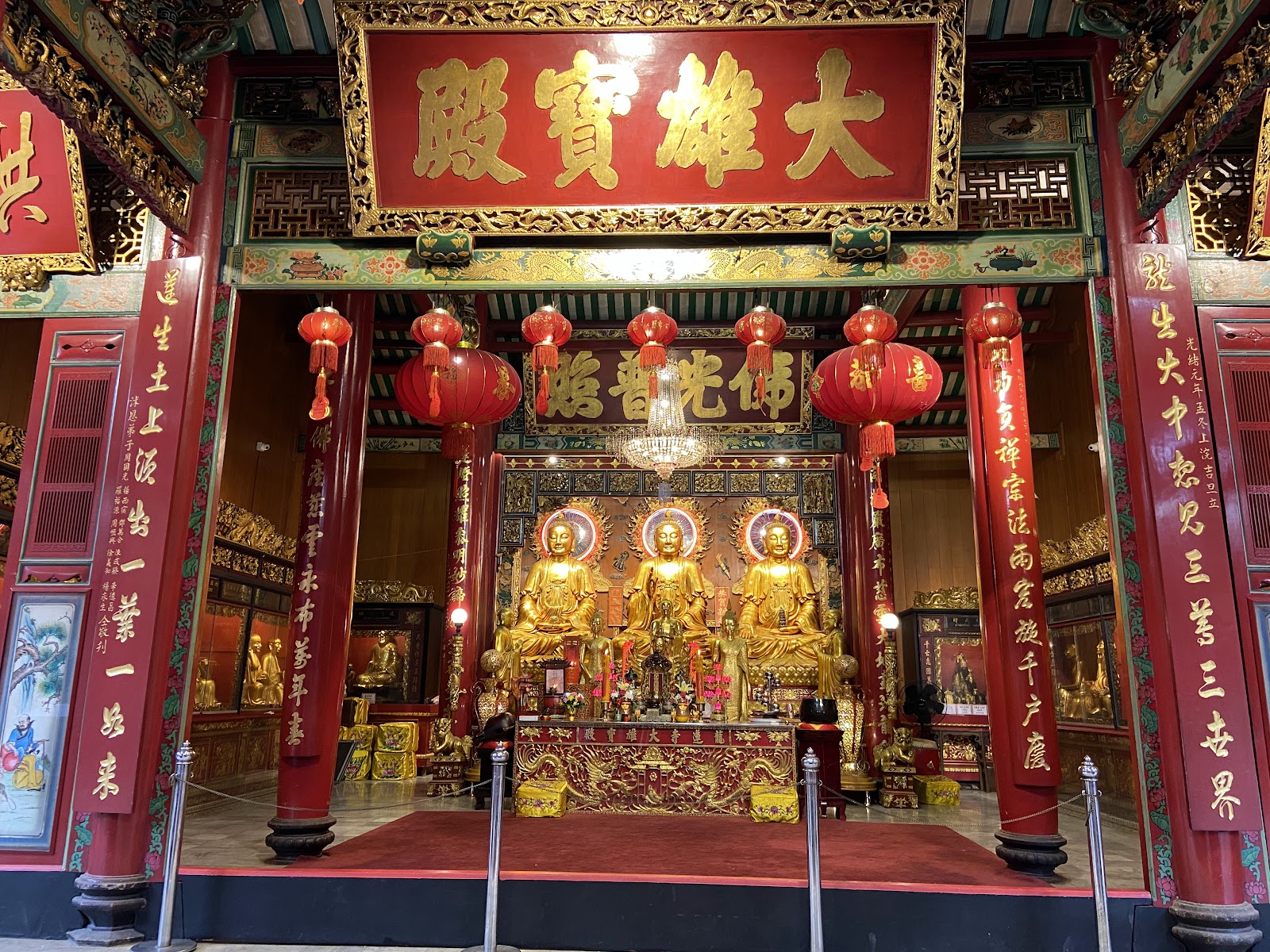
Wat Mangkon Kamalawat, also called Wat Leng Noei Yi, means Dragon Lotus Temple. TAT describes a low, rambling complex with dragons playing with a pearl along the roof, and Buddhist, Taoist and Confucian shrines inside. It is the center of celebrations at Chinese New Year and during the Vegetarian Festival.
What is Sampeng Lane?
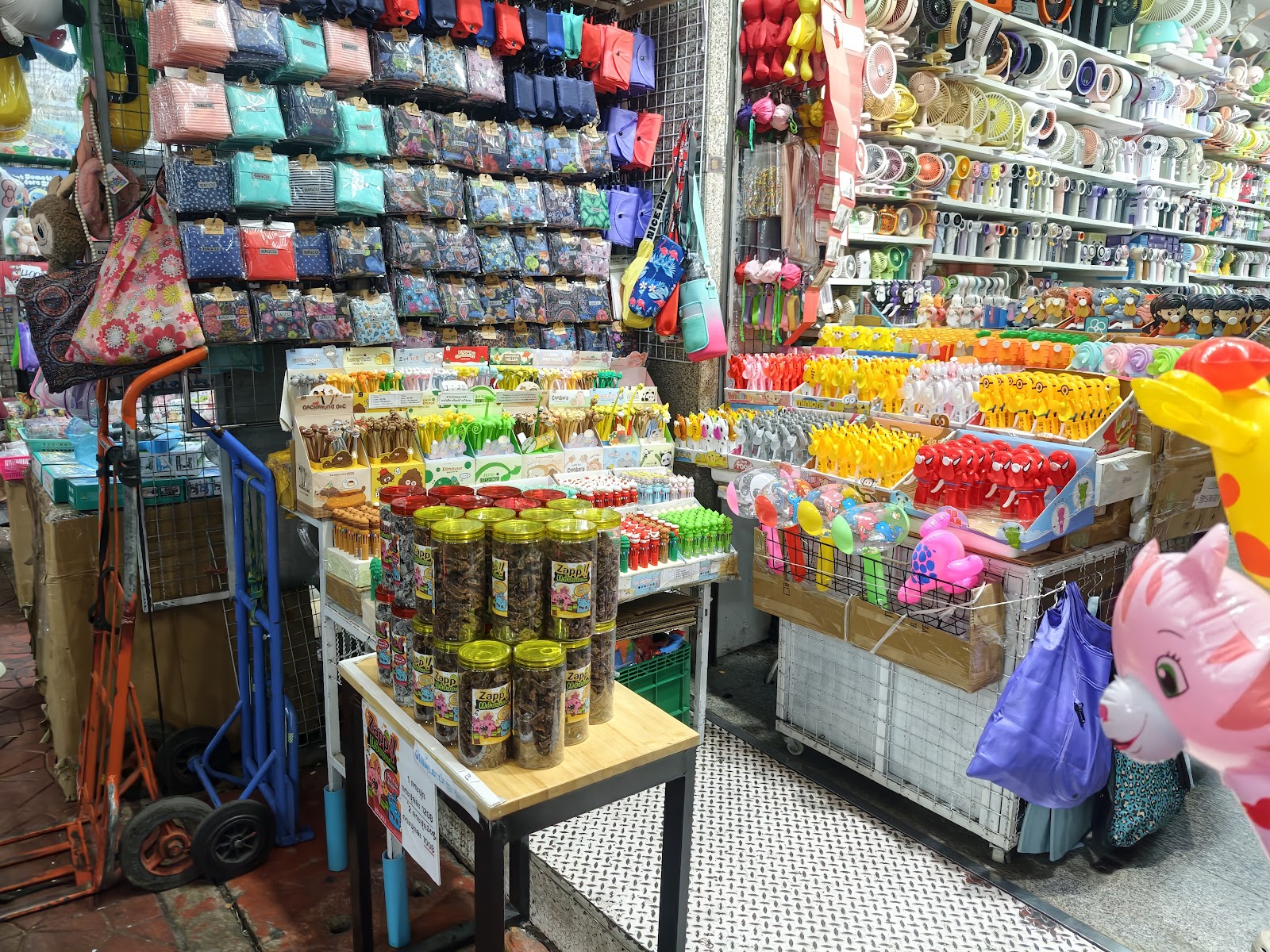
Sampeng Lane (TAT spells it Sampheng) is Chinatown's narrow market lane, within walking distance of MRT Wat Mangkon. TAT describes it as a cluttered, hectic lane about as wide as your outstretched arms, packed with shops selling jewelry, shoes, watches, toys, fabric and food. Go in the daytime, when the shops are trading, and keep valuables close in the crowd.
For gold, Yaowarat Road's gold shops are the main event; our guide on where to buy gold jewelry in Bangkok covers where else to shop.
When is the best time to visit Yaowarat?
Visit Yaowarat in the late afternoon and stay into the evening. Temples and Sampeng Lane are daytime sights, while the street food on Yaowarat Road is at its busiest after dark, as TAT notes. A 4 or 5 p.m. start gives you both: temples first, then dinner as the neon comes on.
| Time | What to do | Nearest station |
|---|---|---|
| Morning to lunch | Urai Braised Goose, Sampeng Lane shopping | MRT Wat Mangkon |
| Afternoon | Wat Traimit, then Wat Mangkon Kamalawat | MRT Hua Lamphong, MRT Wat Mangkon |
| Evening | Street food on Yaowarat Road, or dinner at POTONG | MRT Wat Mangkon |
Chinese New Year is the biggest event of the year on Yaowarat Road; in 2026 TAT listed the street's festive lights from 7 February to 1 March, from 6 to 11 p.m. daily. Expect large crowds then and during the Vegetarian Festival. For more on the area, browse our Bangkok attractions.
Sources: TAT: Old City and Yaowarat by MRT Blue Line, TAT: Silk Road on a Thai Plate, TAT: Thailand after dark, TAT: Chinese New Year 2026, TAT: Chao Phraya river piers, MICHELIN Guide: Urai Braised Goose, MICHELIN Guide: POTONG, Restaurant POTONG. Checked September 26, 2026.
Yaowarat is Bangkok's Chinatown, in the Samphanthawong district east of the Old City and beside the Chao Phraya River. Yaowarat Road is its main street.
Wat Mangkon on the MRT Blue Line, which TAT places in the heart of Chinatown. Hua Lamphong, one stop east, is closer to Wat Traimit and the Chinatown Gate.
TAT describes Yaowarat's street food as an evening affair that stays busy well into the night. Individual stalls set their own hours and publish no official schedule, so aim to arrive around dusk.
The Tourism Authority of Thailand gives two figures: its description says THB 100, while its fee table lists THB 40 for foreign adults. TAT lists the temple as open daily from 8 a.m. to 5 p.m. Bring cash and check at the entrance.
Yes. Restaurant POTONG, on Vanich 1 Road, holds one MICHELIN star in the 2026 MICHELIN Guide Thailand. Its tasting menu is THB 6,700 per person plus 10% service charge and 7% VAT, and it is closed on Wednesdays, according to the restaurant.
The MICHELIN Guide lists Urai Braised Goose at 935 Song Wat Road as open daily from 10 a.m. to 1 p.m.
Neither TAT nor an official market body publishes Sampeng Lane's opening days, and shops keep their own hours. Go on a weekday morning or early afternoon, when most shops are trading.
Chinese New Year falls in January or February. In 2026, TAT listed festive illuminations on Yaowarat Road from 7 February to 1 March, daily from 6 to 11 p.m.