Wat Mangkon Kamalawat (Wat Leng Noei Yi)
About
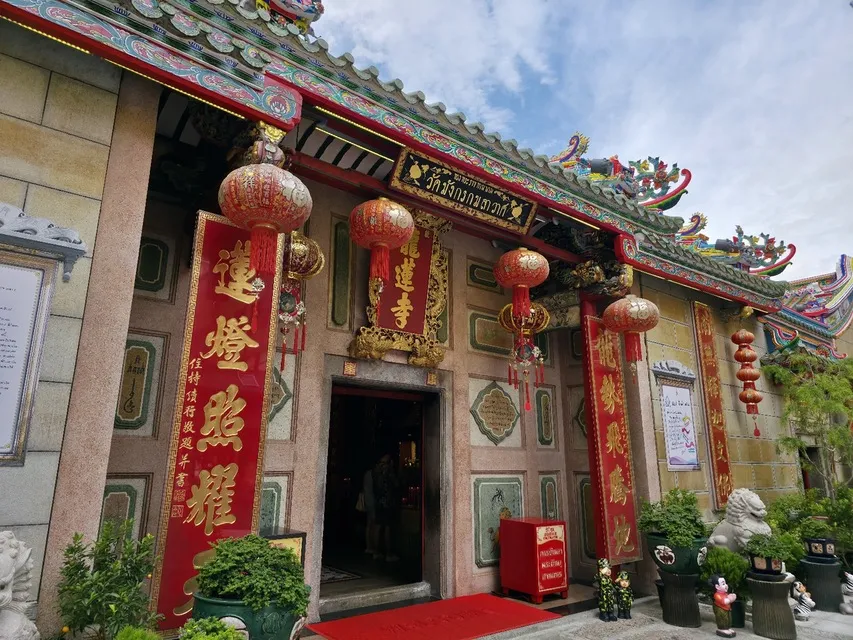
Wat Mangkon Kamalawat, the Dragon Lotus Temple, is what the Tourism Authority of Thailand (TAT) calls the city's largest Chinese Buddhist temple, and it gives its name to the Wat Mangkon MRT station on Charoen Krung Road. Also known as Wat Leng Noei Yi, it is a low, rambling complex with dragons playing with a pearl along its roofline and Buddhist, Taoist and Confucian shrines inside.
It suits anyone spending a day or an evening in Chinatown, and visitors curious about the Chinese side of Thai Buddhism. TAT describes the temple as within a comfortable walk of Wat Mangkon station, so it is easy to reach by rail and fits into a walk along Yaowarat and Sampeng Lane.
The head of the dragon
TAT describes Wat Leng Noei Yi as an important focal point for Bangkok's Chinese community and one of three related Sino-Buddhist temples in Thailand, each a showcase of Chinese art and architecture. In the tale TAT tells, the three form a single dragon: Wat Leng Noei Yi in Bangkok is the head, Wat Mangkon Watsana in Chachoengsao the body and Wat Leng Hua Yi in Chanthaburi the tail.
Chinese New Year and the Vegetarian Festival
The temple is a center of celebrations at Chinese New Year and during the Vegetarian Festival, and TAT suggests both as good times to visit. At New Year, TAT notes, it is traditional to make merit here and pay respect to the images of the Chinese gods.
Around Chinatown
Wat Mangkon station, finished in red and gold with a dragon-inspired staircase, puts the temple in the middle of Chinatown. At the Hua Lamphong end of the district, Wat Traimit houses a massive seated golden Buddha and makes a natural second stop.
Sources: Wat Mangkon Kamalawat on Facebook, TAT: Old City and Yaowarat by MRT, TAT: Chinese New Year, TAT: Sino-Buddhist temples. Checked September 26, 2026.
Contact Information
Bangkok, 10100
Photo: Sarawut Kururatphan via Google
Wat Mangkon Kamalawat (Wat Leng Noei Yi)
About Wat Mangkon Kamalawat (Wat Leng Noei Yi)
Wat Mangkon Kamalawat, the Dragon Lotus Temple, is what the Tourism Authority of Thailand (TAT) calls the city's largest Chinese Buddhist temple, and it gives its name to the Wat Mangkon MRT station on Charoen Krung Road. Also known as Wat Leng Noei Yi, it is a low, rambling complex with dragons playing with a pearl along its roofline and Buddhist, Taoist and Confucian shrines inside.
It suits anyone spending a day or an evening in Chinatown, and visitors curious about the Chinese side of Thai Buddhism. TAT describes the temple as within a comfortable walk of Wat Mangkon station, so it is easy to reach by rail and fits into a walk along Yaowarat and Sampeng Lane.
The head of the dragon
TAT describes Wat Leng Noei Yi as an important focal point for Bangkok's Chinese community and one of three related Sino-Buddhist temples in Thailand, each a showcase of Chinese art and architecture. In the tale TAT tells, the three form a single dragon: Wat Leng Noei Yi in Bangkok is the head, Wat Mangkon Watsana in Chachoengsao the body and Wat Leng Hua Yi in Chanthaburi the tail.
Chinese New Year and the Vegetarian Festival
The temple is a center of celebrations at Chinese New Year and during the Vegetarian Festival, and TAT suggests both as good times to visit. At New Year, TAT notes, it is traditional to make merit here and pay respect to the images of the Chinese gods.
Around Chinatown
Wat Mangkon station, finished in red and gold with a dragon-inspired staircase, puts the temple in the middle of Chinatown. At the Hua Lamphong end of the district, Wat Traimit houses a massive seated golden Buddha and makes a natural second stop.
Sources: Wat Mangkon Kamalawat on Facebook, TAT: Old City and Yaowarat by MRT, TAT: Chinese New Year, TAT: Sino-Buddhist temples. Checked September 26, 2026.
Frequently Asked Questions
Things to do in Bangkok
BangkokVacay may earn a commission from Klook bookings made through this box, at no extra cost to you.