Wat Benchamabophit Dusitwanaram (Marble Temple)
About
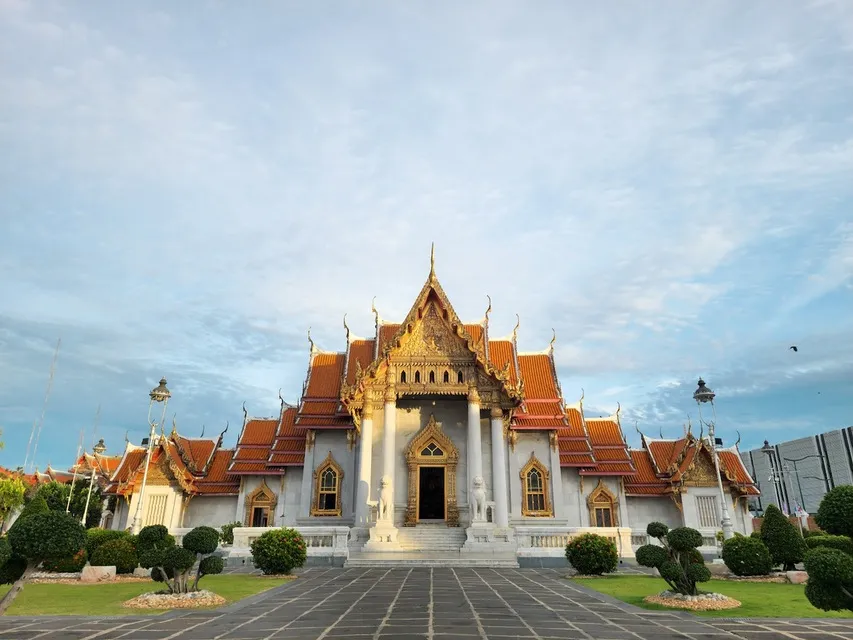
Wat Benchamabophit Dusitwanaram Ratchaworawihan is the Marble Temple. Its ordination hall, designed by Prince Narisara Nuwattiwong for King Chulalongkorn (Rama V), is faced in white marble the king ordered from Carrara in Italy, and the temple calls itself the temple of the fifth reign and the only one in Thailand built in a blend of Thai and European art.
It suits visitors with an interest in architecture or in the reign of Rama V, and it stands in Dusit, near the palace garden Rama V laid out in 1898. The temple lists city bus routes rather than a rail station in its visitor guidance, so most people arrive by bus or taxi. Early risers can join the morning alms round, which the temple opens to visitors every day.
From Wat Laem to the fifth reign
The site began as a small village temple known as Wat Laem or Wat Sai Thong. After the 1826 campaign against Vientiane, five royal siblings restored it and built five chedis at its front, and King Mongkut (Rama IV) renamed it Wat Benchabophit, the temple of the five princes. When King Chulalongkorn bought land for Suan Dusit in 1898, the garden that became Dusit Palace, the palace grounds took in two abandoned temples, and by royal custom he rebuilt this one entirely in return. One added letter changed the name to Benchamabophit, the temple of the fifth king.
The marble ordination hall
The ordination hall is cruciform, with five tiers of roof and gilded, glass-inlaid gables above its marble walls. The four pediments carry Rama V's personal royal seals, and the ten gables of the surrounding cloister carry the emblems of the ministries of his government, a picture in architecture of the state gathered around the king. Inside, gold motifs on deep blue walls rise to a red ceiling hung with chandeliers from Germany, and eight window-niche paintings show the great chedis of Siam's regions.
Phra Buddha Chinnarat and the cloister
The principal image is a replica of Phra Buddha Chinnarat of Wat Phra Si Rattana Mahathat in Phitsanulok. Rather than move the original, the king had it cast anew: he presided over the casting in Phitsanulok on 20 October 1901, and the image was installed here on 13 December that year. The temple states that the king's ashes are enshrined beneath its throne, as he wished. The cloister around the hall holds Buddha images gathered from inside and outside the kingdom, which the king intended as a living museum of Buddhist art.
Sources: Wat Benchamabophit on Facebook, temple visitor information (archived), temple history (archived), art and architecture (archived), Phra Buddha Chinnarat (archived). Checked September 26, 2026.
Contact Information
Bangkok, 10300
Photo: Podchong Juntarasiri via Google
Wat Benchamabophit Dusitwanaram (Marble Temple)
About Wat Benchamabophit Dusitwanaram (Marble Temple)
Wat Benchamabophit Dusitwanaram Ratchaworawihan is the Marble Temple. Its ordination hall, designed by Prince Narisara Nuwattiwong for King Chulalongkorn (Rama V), is faced in white marble the king ordered from Carrara in Italy, and the temple calls itself the temple of the fifth reign and the only one in Thailand built in a blend of Thai and European art.
It suits visitors with an interest in architecture or in the reign of Rama V, and it stands in Dusit, near the palace garden Rama V laid out in 1898. The temple lists city bus routes rather than a rail station in its visitor guidance, so most people arrive by bus or taxi. Early risers can join the morning alms round, which the temple opens to visitors every day.
From Wat Laem to the fifth reign
The site began as a small village temple known as Wat Laem or Wat Sai Thong. After the 1826 campaign against Vientiane, five royal siblings restored it and built five chedis at its front, and King Mongkut (Rama IV) renamed it Wat Benchabophit, the temple of the five princes. When King Chulalongkorn bought land for Suan Dusit in 1898, the garden that became Dusit Palace, the palace grounds took in two abandoned temples, and by royal custom he rebuilt this one entirely in return. One added letter changed the name to Benchamabophit, the temple of the fifth king.
The marble ordination hall
The ordination hall is cruciform, with five tiers of roof and gilded, glass-inlaid gables above its marble walls. The four pediments carry Rama V's personal royal seals, and the ten gables of the surrounding cloister carry the emblems of the ministries of his government, a picture in architecture of the state gathered around the king. Inside, gold motifs on deep blue walls rise to a red ceiling hung with chandeliers from Germany, and eight window-niche paintings show the great chedis of Siam's regions.
Phra Buddha Chinnarat and the cloister
The principal image is a replica of Phra Buddha Chinnarat of Wat Phra Si Rattana Mahathat in Phitsanulok. Rather than move the original, the king had it cast anew: he presided over the casting in Phitsanulok on 20 October 1901, and the image was installed here on 13 December that year. The temple states that the king's ashes are enshrined beneath its throne, as he wished. The cloister around the hall holds Buddha images gathered from inside and outside the kingdom, which the king intended as a living museum of Buddhist art.
Sources: Wat Benchamabophit on Facebook, temple visitor information (archived), temple history (archived), art and architecture (archived), Phra Buddha Chinnarat (archived). Checked September 26, 2026.
Frequently Asked Questions
Things to do in Bangkok
BangkokVacay may earn a commission from Klook bookings made through this box, at no extra cost to you.