How many temples in Bangkok are there? There is no single current figure you can check: we could not find an official count of Bangkok's temples published online by a Thai government body, and the numbers quoted in travel articles vary because they count different things. Most figures you will see are in the hundreds, but they depend on whether you count only registered Buddhist monasteries or every shrine and place of worship in the city.
For a visitor, the more useful question is which of those temples to see. A handful in the old city and Chinatown cover the essentials of Thai Buddhist architecture in a day or two, and all of them are easy to combine.
Why temple counts in Bangkok differ
A wat is not the same as a monastery or a shrine
Thai law recognizes two types of Buddhist temple. A wat is a temple with state recognition and a consecrated ordination boundary. A samnak song is a monastery or monks' residence without that status, and some are later raised to full wat status. A count of "wats" and a count of "Buddhist temples" can therefore differ, even for the same city in the same year.
Royal and ordinary temples
Within the wats there is a further division. Royal temples, phra aram luang, were founded or patronized by the king or members of the royal family, and they are graded by rank; the rest are ordinary temples. Some lists of "Bangkok's temples" include only the royal ones, which is why you may see a much smaller number.
Other faiths and shrines
Bangkok's places of worship are not only Buddhist. The city has Chinese shrines, Hindu temples, mosques and churches, and open-air shrines such as the Erawan Shrine at Ratchaprasong, which honors the four-faced Brahma. Whether these are included changes any total considerably.
Where the city ends
Some figures cover the City of Bangkok only; others include the surrounding provinces of the Bangkok Metropolitan Region, such as Nonthaburi and Samut Prakan, which are separate provinces with their own temples. Counts also go out of date as temples are founded, merged or upgraded. If you need an exact, dated number for research, the National Office of Buddhism, which keeps the register of Thai temples, is the body to ask.
The temples most visitors see
Wat Phra Kaew, inside the Grand Palace
The Temple of the Emerald Buddha is the royal chapel inside the Grand Palace compound, and it is covered by the palace ticket. If you only have time for one temple, make it this one.
Wat Pho
Wat Pho, next to the palace, is a first-grade royal monastery. King Rama I ordered the restoration of an older Ayutthaya-era temple on the site in 1788, and King Rama III's later restoration made it a center of Thai arts and learning. Its gilded Reclining Buddha is 46 meters long.
Wat Arun
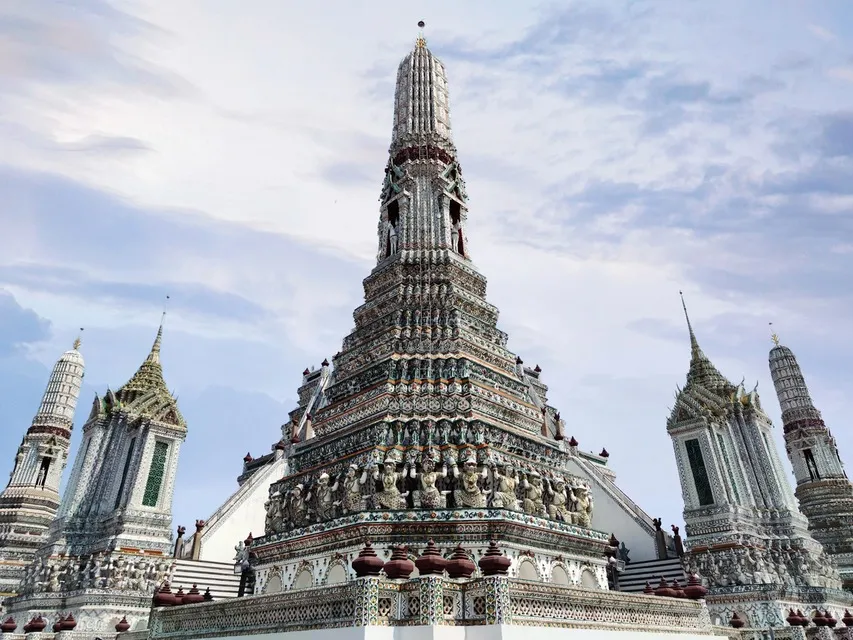
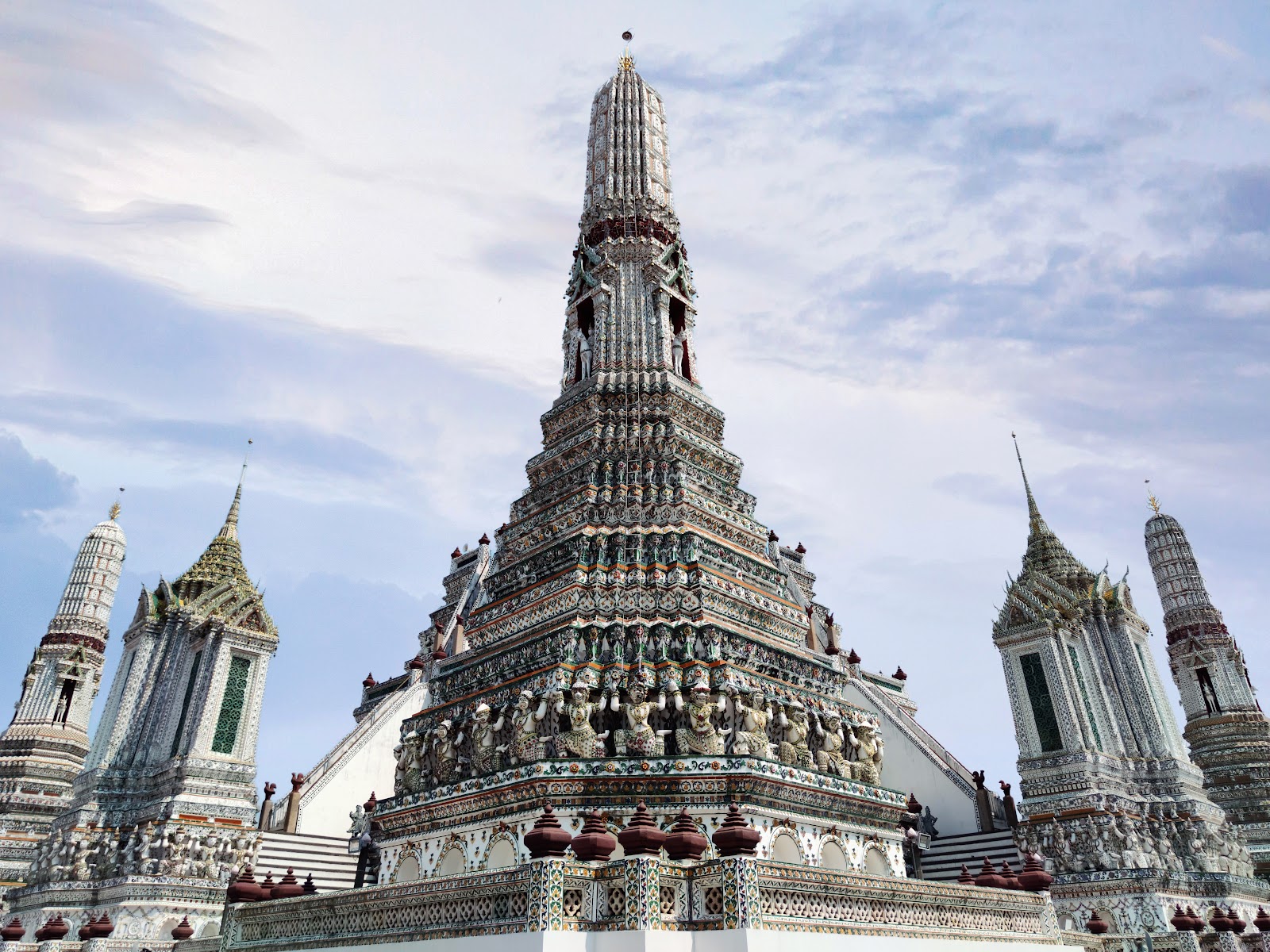
Wat Arun, the Temple of Dawn, faces Wat Pho from the Thonburi bank of the Chao Phraya by ferry from Tha Tien pier. Its tall central prang is set with pieces of porcelain and seashell.
Wat Saket and the Golden Mount
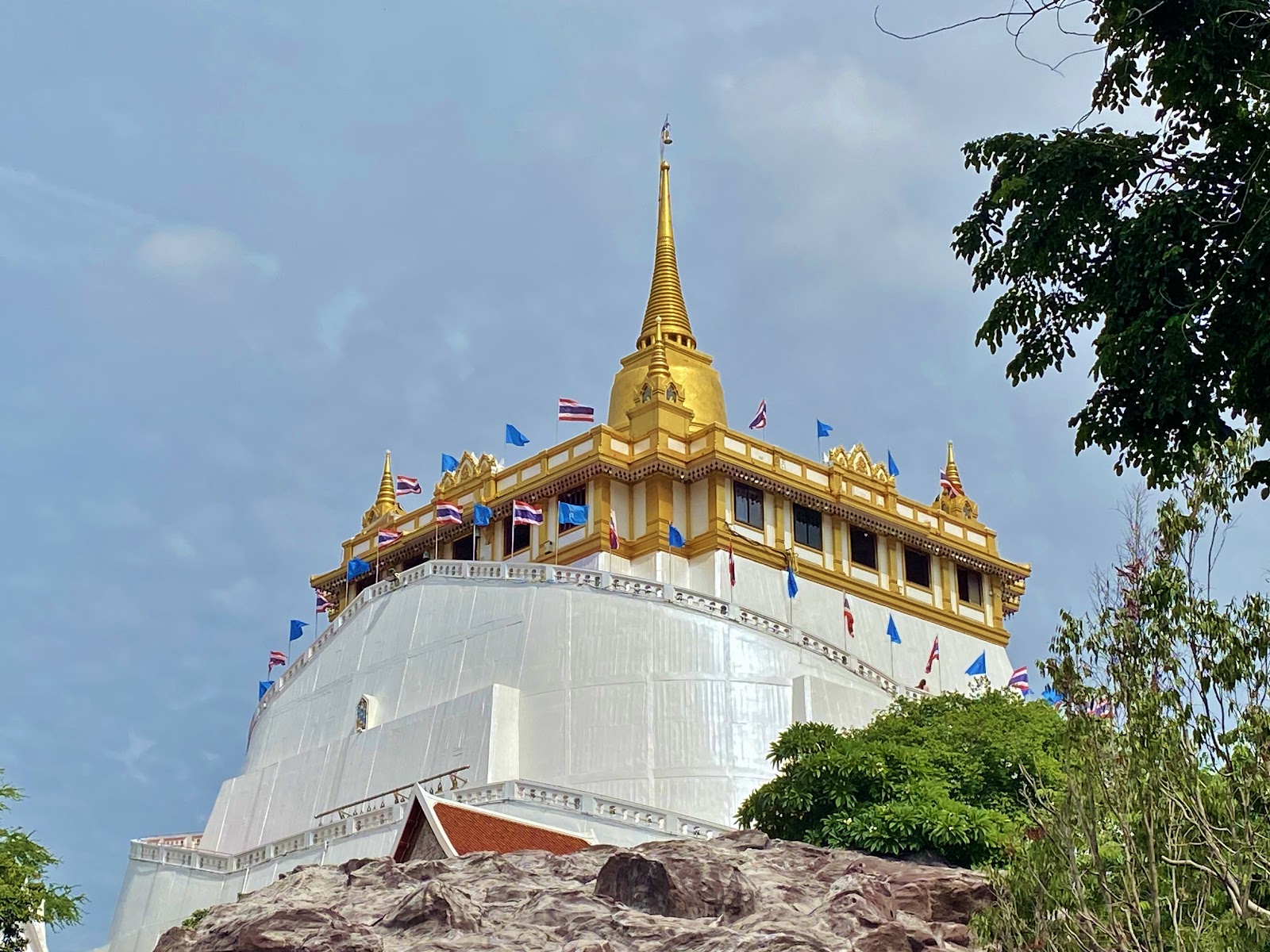
Wat Saket is the temple of the Golden Mount, a gilded chedi on a hill reached by 320 steps, with a view over the old city from the top.
Wat Traimit
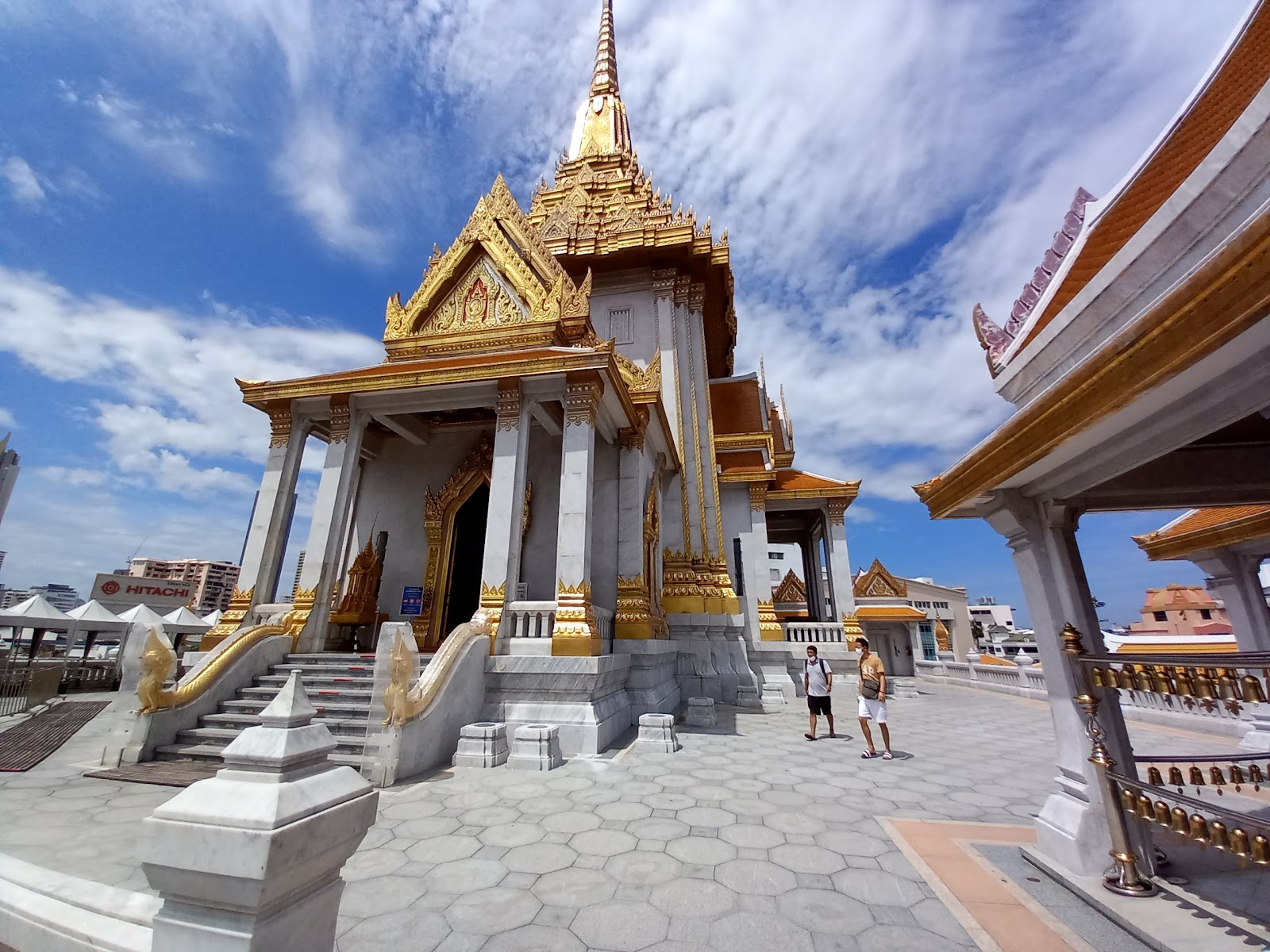
In Chinatown, Wat Traimit houses the Golden Buddha, a large seated image of gold in a white-and-gold hall, and makes a natural first stop before the food streets of Yaowarat.
Visiting temples respectfully
- Cover shoulders and knees. The Grand Palace refuses entry in sleeveless tops, see-through clothing and shorts, and Wat Pho asks for polite dress with no shorts.
- Take off your shoes before entering a hall where a Buddha image is enshrined.
- Many temples are working monasteries. Keep your voice down, do not climb on structures, and follow any signs about photography.
- Plan around closing times: the Grand Palace stops selling tickets in mid-afternoon, while Wat Pho stays open into the evening.
Our guide to what to wear in Bangkok has more on dressing for temples in the heat. Wat Pho, Wat Arun and the Grand Palace sit close together around Tha Tien pier, so they fit into one day, with Wat Traimit and the Golden Mount on a second. For more ideas, browse all Bangkok attractions.
Sources: Wikipedia: Wat (legal types of Thai temple), Wat Pho: history, Wat Pho: trip planning, The Grand Palace: practical information, TAT Newsroom: Wat Arun, Erawan Shrine. Checked September 26, 2026.
We could not find a current official count published online. Figures quoted elsewhere differ because some count only registered Buddhist wats, some include monasteries without wat status, royal temples only, or shrines of other faiths, and some cover the wider metropolitan region rather than the City of Bangkok.
The National Office of Buddhism, a Thai government agency, keeps records of Buddhist temples and monasteries. It is the body to contact for an exact, dated figure.
Under Thai law a wat is a temple with state recognition and a consecrated ordination boundary, while a samnak song is a monastery or monks' residence without that status. A samnak song can later be granted wat status.
Start with Wat Phra Kaew, the Temple of the Emerald Buddha and royal chapel inside the Grand Palace. Wat Pho is next door, and Wat Arun is a ferry ride across the river, so the three fit into one day.
On September 26, 2026, the Grand Palace listed 500 baht for foreign visitors, including Wat Phra Kaew, with ticket sales from 8:30 a.m. to 3:30 p.m. Wat Pho listed 300 baht, open 8:00 a.m. to 7:30 p.m., with free entry for children under 120 cm.
Cover your shoulders and knees. The Grand Palace does not allow sleeveless shirts, see-through tops or shorts, and Wat Pho asks visitors not to wear shorts; trousers are fine.