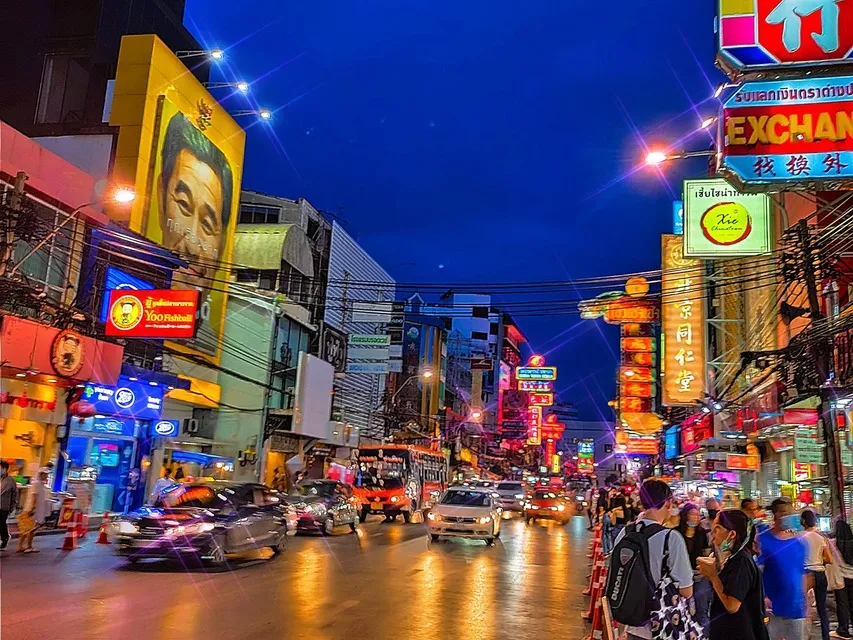
There is no BTS Skytrain station in Chinatown, so the way to get to Chinatown Bangkok by BTS is to ride the BTS to an interchange, switch to the MRT Blue Line and get off at Wat Mangkon, the underground station on Charoen Krung Road in the middle of Yaowarat. From the Silom and Sala Daeng area that is three MRT stops; from Asok on Sukhumvit it is seven. If you would rather arrive by water, a Chao Phraya Express boat from Sathorn Pier, next to BTS Saphan Taksin, lands you at Ratchawong Pier on Chinatown's river edge.
This guide covers each route, where to change, how to pay, and which station suits which part of Chinatown.
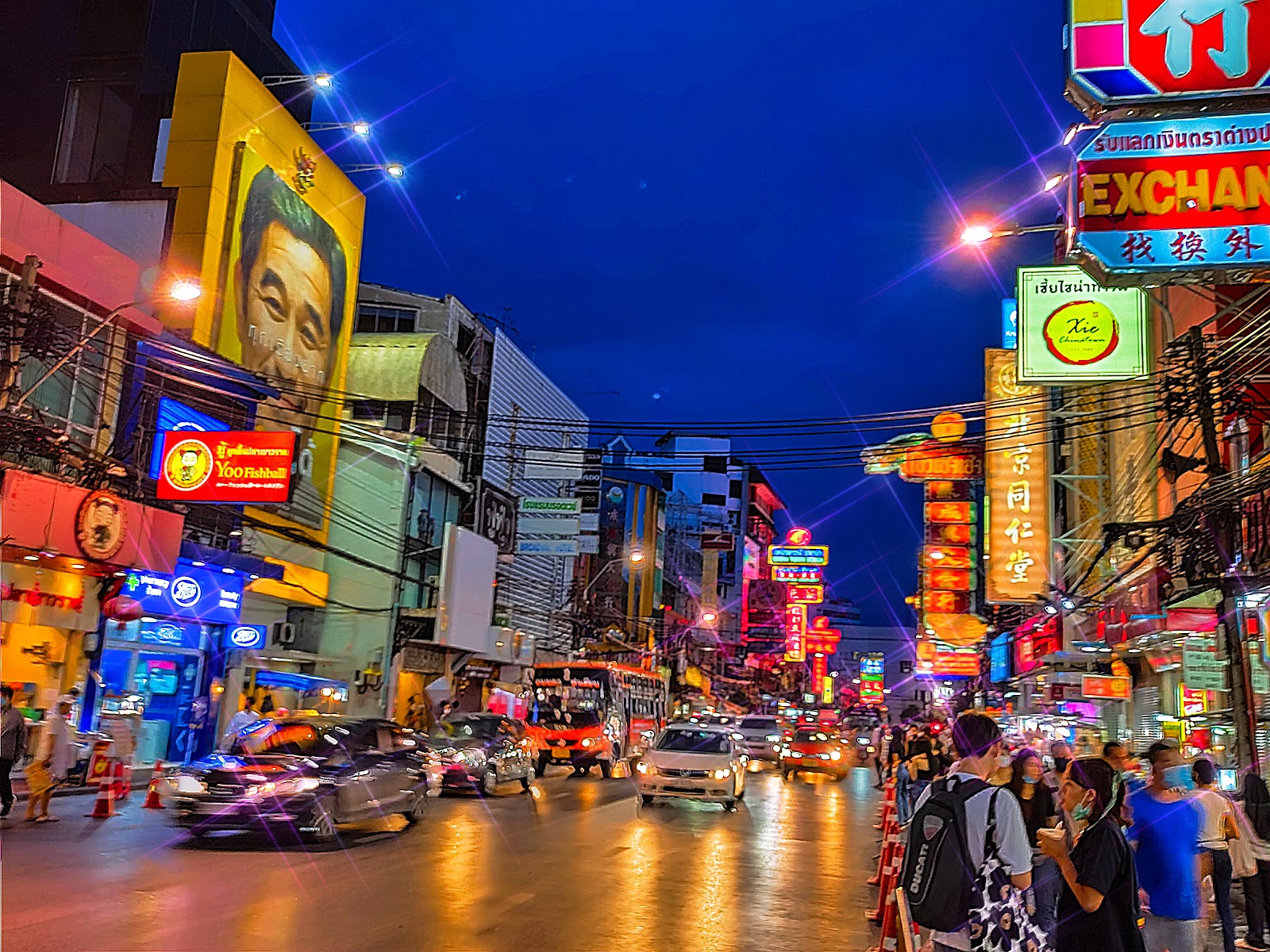
The short answer: BTS to the MRT, then Wat Mangkon
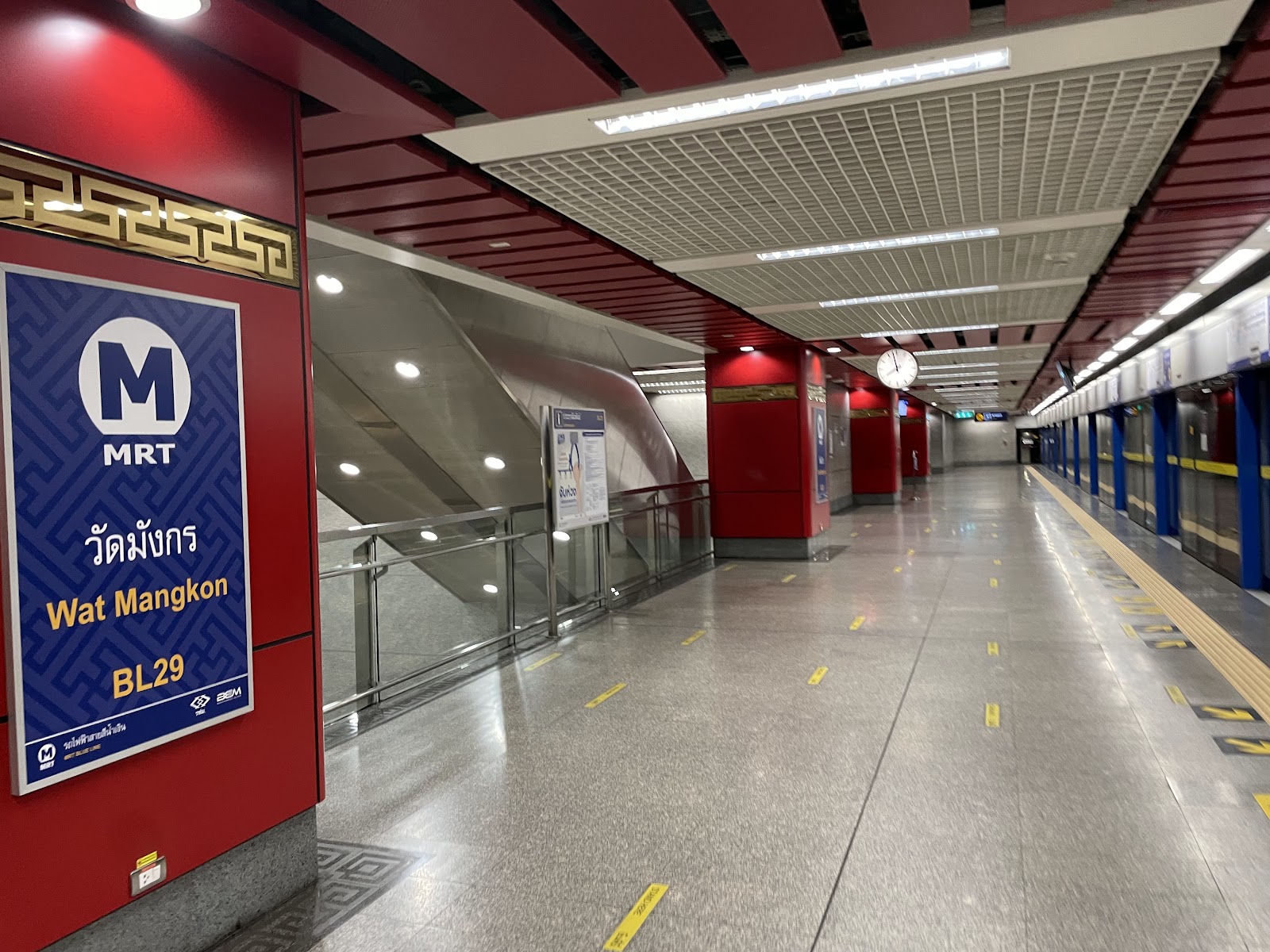
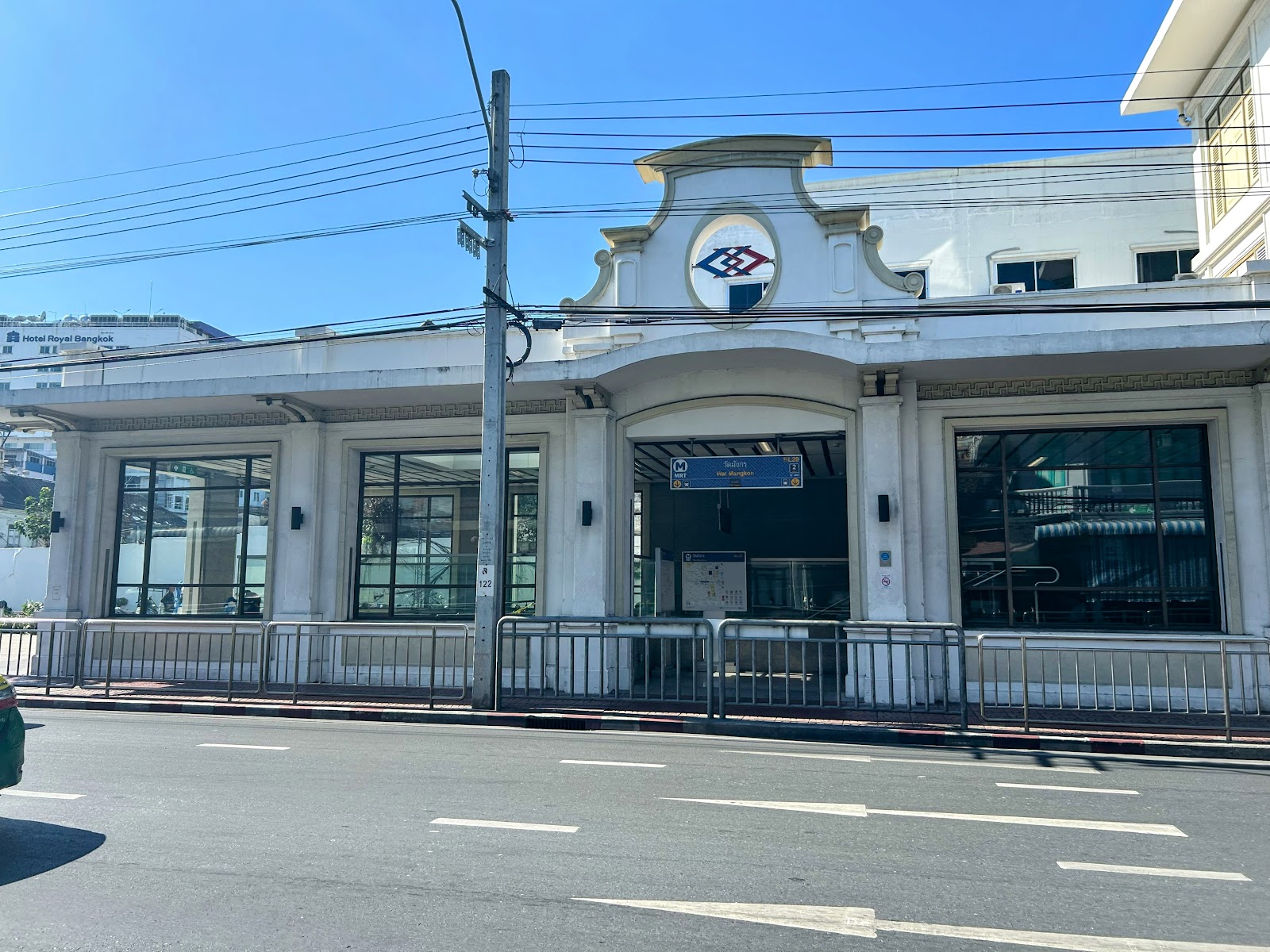
Bangkok's two main rail networks meet at a handful of stations. The BTS (the elevated Skytrain) serves Sukhumvit, Siam and Silom; the MRT Blue Line runs underground through Chinatown and the Old City. Wat Mangkon station (BL29) opened in 2019 and was named after Wat Mangkon Kamalawat, the Chinese Buddhist temple nearby. Its three exits come up around the Plaeng Nam intersection on Charoen Krung Road, a block from Yaowarat Road.
The BTS and MRT are run by different companies, so you leave one system and pay again to enter the other. The MRT accepts contactless Visa, Mastercard and UnionPay cards at the gates, which saves queueing at the ticket machines when you change trains.
Route 1: From Silom or Siam (BTS Sala Daeng to MRT Silom)
This is the most direct route for anyone staying around Siam, Ratchaprasong, Silom or Sathorn.
- Take the BTS Silom Line to Sala Daeng. From Siam, it is the line heading toward Bang Wa.
- Follow the signs to MRT Silom; the two stations are linked for passengers changing lines.
- Board the Blue Line toward Hua Lamphong and ride three stops: Sam Yan, Hua Lamphong, then Wat Mangkon.
The two platforms at Wat Mangkon are stacked on different levels, one for each direction, so check the direction signs before you head down on the way back.
Route 2: From Sukhumvit (BTS Asok to MRT Sukhumvit)
If your hotel is on the Sukhumvit Line (Nana, Asok, Phrom Phong, Thong Lo, Ekkamai), there is no need to go through Siam.
- Ride the BTS to Asok and change to MRT Sukhumvit, which sits beneath the Asok intersection.
- Take the Blue Line toward Hua Lamphong. Wat Mangkon is seven stops away, passing Queen Sirikit National Convention Centre, Khlong Toei, Lumphini, Silom, Sam Yan and Hua Lamphong.
This route skips the busy Siam interchange, which makes it the easier choice at rush hour.
Route 3: From the north (BTS Mo Chit to MRT Chatuchak Park)
Coming from Ari, Victory Monument or after a morning at Chatuchak Weekend Market, change at Mo Chit for MRT Chatuchak Park, then ride the Blue Line south toward Hua Lamphong. It is a long ride of 16 stops, but there is only one change.
Route 4: By river from BTS Saphan Taksin
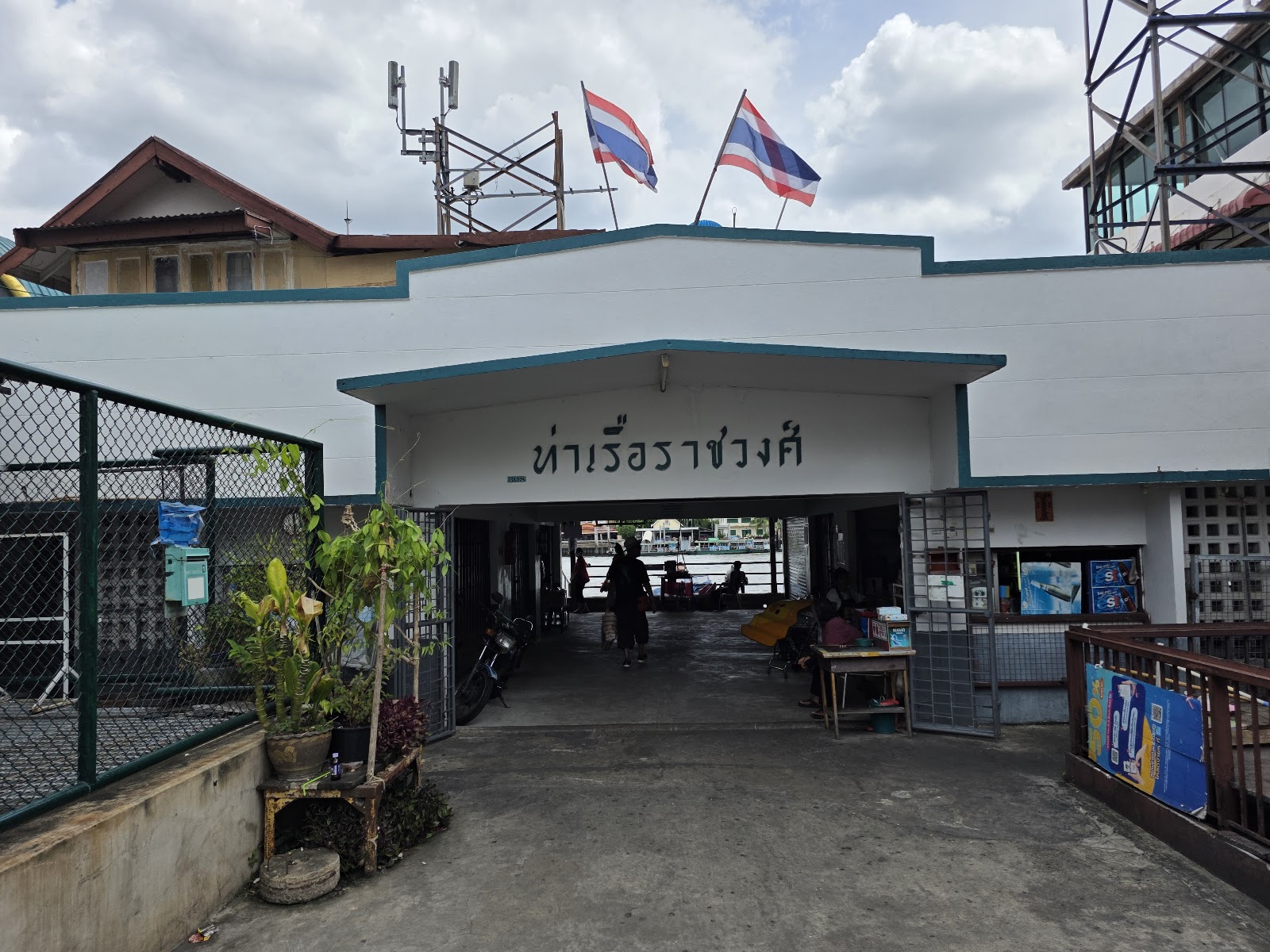
The river is the slowest way in and the most pleasant. Take the BTS Silom Line to Saphan Taksin and walk down to Sathorn Pier, where the Chao Phraya Express boats stop. Take a boat heading upriver and get off at Ratchawong Pier (N5), then walk inland along Ratchawong Road into the older lanes of Chinatown. The operator's Orange Line, which runs between Nonthaburi and Wat Rajsingkorn, charges a flat fare; see the FAQ below.
Guests at The Peninsula Bangkok, on the Thonburi bank, can use the hotel's own boats to cross to Saphan Taksin and pick up the BTS or the express boat from there.
Which station for which part of Chinatown?
Chinatown is long and narrow, and the best station depends on where you are going.
- Wat Mangkon is the stop for Yaowarat Road itself, the lanes around it and Wat Mangkon Kamalawat. The Thai-Chinese tasting-menu restaurant Restaurant POTONG gives directions from exit 1 of this station.
- Hua Lamphong, one stop earlier, is closer to the eastern end of Chinatown and to Wat Traimit, the temple of the Golden Buddha, which stands at the edge of the district near Yaowarat.
- Sam Yot, one stop after Wat Mangkon, sits on the Old City side, toward Wang Burapha.
- Ratchawong Pier suits a visit that starts at the river and works inland through the Sampheng market lanes.
Combine Chinatown with the Old City
Because the Blue Line continues west, Chinatown pairs well with the temples. Two stops past Wat Mangkon is Sanam Chai, the station for Wat Pho and Museum Siam. A practical day is the Old City in the morning, then back one or two stops for Chinatown in the afternoon and evening. For more ideas, see our guide to Bangkok attractions, and for dinner plans our Bangkok restaurants page.
Practical tips
- Keep your BTS card or ticket until you exit, then pay separately for the MRT (or tap a contactless bank card).
- Wat Mangkon's exits come up on busy streets; decide before you surface which side of Charoen Krung Road you need.
- Taxis and ride-hailing cars move slowly on Yaowarat Road in the evening. Rail or the river is usually the more predictable choice.
Sources: BEM MRT (Bangkok Expressway and Metro), BEM MRT EMV Contactless, BEM MRT Blue Line, Chao Phraya Express Boat, Wat Mangkon MRT station (Wikipedia), MRT Blue Line (Wikipedia). Checked September 26, 2026.
No. The BTS Skytrain does not reach Chinatown. The nearest rail station is Wat Mangkon on the MRT Blue Line, which you reach by changing from the BTS at Sala Daeng (to MRT Silom), Asok (to MRT Sukhumvit) or Mo Chit (to MRT Chatuchak Park).
Wat Mangkon (BL29), on Charoen Krung Road near the Plaeng Nam intersection. Hua Lamphong, one stop east, is closer to Wat Traimit and the eastern end of Chinatown.
Three: Sam Yan, Hua Lamphong, then Wat Mangkon. From MRT Sukhumvit (the Asok interchange) it is seven stops.
No. They are separate systems run by different operators, so you pay for each. The MRT Blue Line accepts contactless Visa, Mastercard and UnionPay cards at the gates, according to BEM, the MRT operator.
Yes. Take the BTS to Saphan Taksin, walk to Sathorn Pier and take a Chao Phraya Express boat upriver to Ratchawong Pier (N5). The operator lists its Orange Line (Nonthaburi to Wat Rajsingkorn) at a flat fare of 18 baht, checked September 26, 2026.
The MRT Information Service Center, run by BEM, is on 0-2624-5200. It lists its hours as 7 a.m. to 8 p.m. Monday to Friday, and 8 a.m. to 5 p.m. on weekends and public holidays.