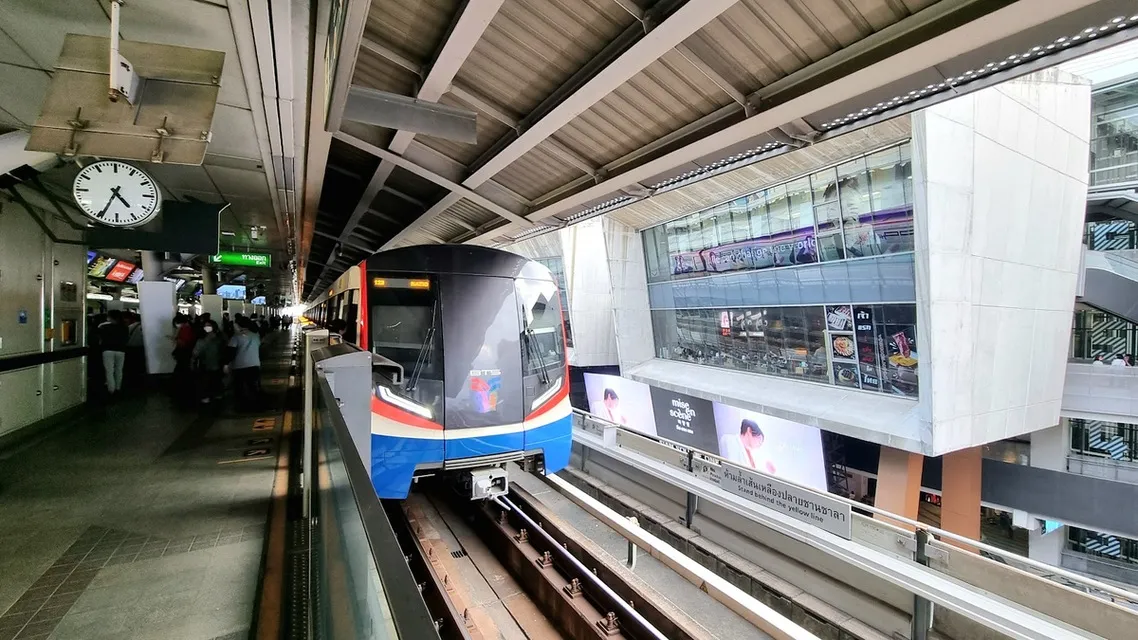
What is BTS in Bangkok? It is the BTS Skytrain, the elevated rail system that runs above Sukhumvit, Silom and the Siam shopping district. BTS stands for Bangkok Mass Transit System, and the name covers two main lines, the Sukhumvit Line and the Silom Line, with about 68.5 kilometers of track and 60 stations between them. For visitors it is usually the quickest way across the central city, because it runs above the traffic.
(If you were searching for the K-pop group BTS, this page is about the train, which Bangkok had long before the band.)
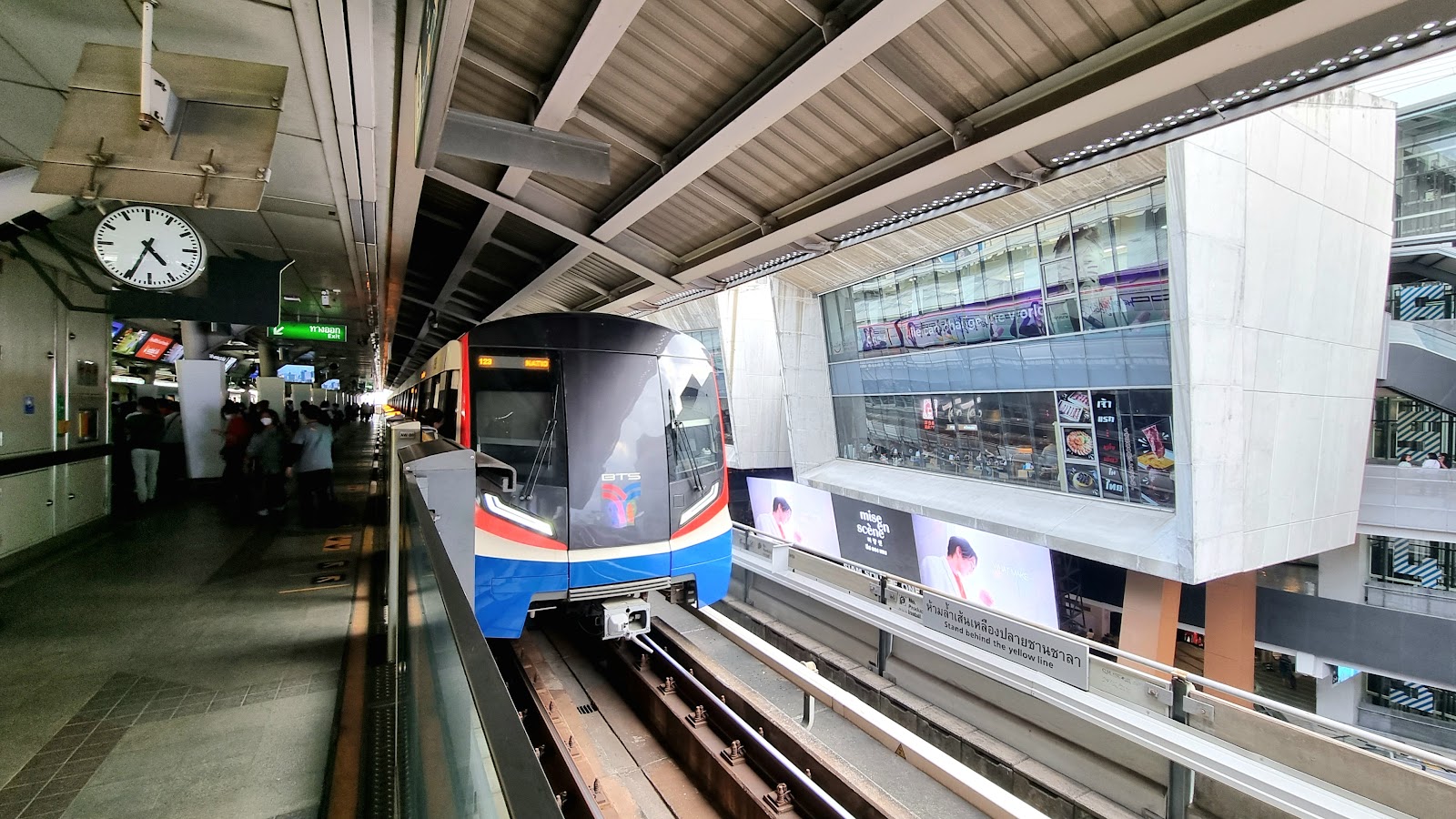
The two BTS lines
The operator, Bangkok Mass Transit System Public Company Limited (BTSC), describes the network like this:
- Sukhumvit Line (light green): about 54 kilometers and 47 stations, from Kheha Samutprakan in the south-east to Khu Khot in the north. It follows Sukhumvit Road through the Bang Na junction, then Ploenchit Road, Rama I Road, Phaya Thai Road and Victory Monument, and continues up Phahonyothin Road past Chatuchak Park. The line crosses three provinces, Samut Prakan, Bangkok and Pathum Thani, so its far ends lie outside the city.
- Silom Line (dark green): about 14 kilometers and 14 stations, from National Stadium to Bang Wa. From Siam it heads down Ratchadamri Road, passes Lumphini Park, runs along Silom Road, curves onto Sathorn Road at Chong Nonsi, crosses the Chao Phraya beside the Taksin Bridge and continues into Thonburi.
The two lines meet at Siam, the only interchange between them, where you change platforms without leaving the paid area. The whole system rides on a viaduct about 12 meters above the road, which is why it is called the Skytrain.
The Gold Line and the other lines on the BTS website
The BTS also runs the short Gold Line on behalf of the Bangkok Metropolitan Administration. It is an automated people mover with three stations over 1.8 kilometers, from Krung Thon Buri, where it connects with the Silom Line, along Charoen Nakhon Road to Khlong San. It is the handy link to the riverside malls and hotels on the Thonburi bank.
The BTS website also carries the Pink and Yellow Line monorails and the Sathorn BRT bus line, which are run by related companies. The underground and Purple Line trains are a different system, the MRT, with its own tickets; if you are using both, our guide on where to buy an MRT card covers the MRT side.
Hours and frequency
The BTS timetable lists service from 5:00 a.m. to 1:00 a.m. Trains run more often at weekday rush hours and less often late at night, and the operator publishes separate intervals for weekdays and for weekends and public holidays. Ticket offices keep shorter hours than the trains. The exact last-train times from Siam are in the FAQ below, and our post on what time the Bangkok BTS opens goes into the timetable in more detail.
Tickets and the Rabbit card
BTS fares are based on distance, and there are two ways to pay:
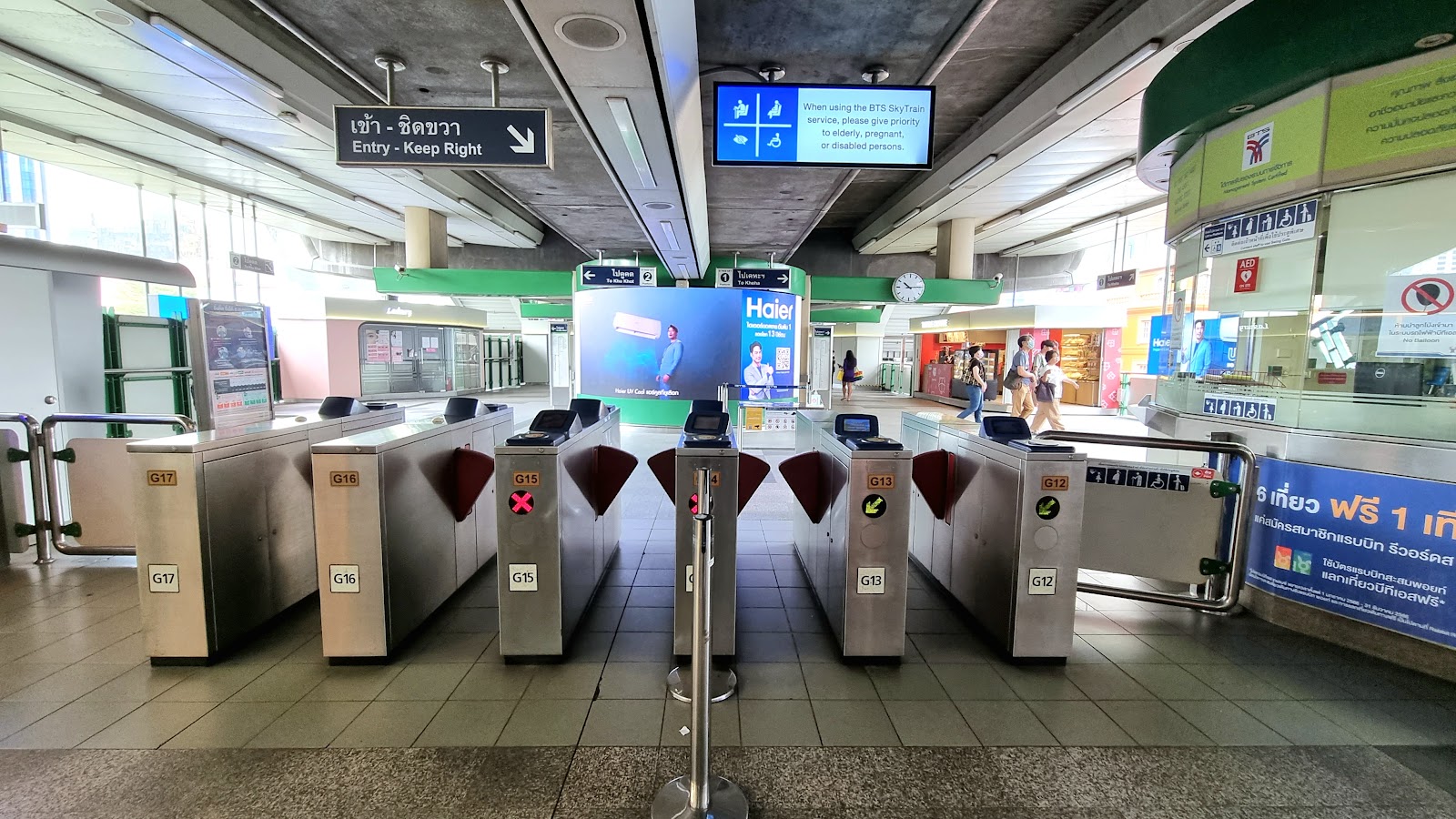
- Single Journey card: a thin card bought from a ticket vending machine for one trip. The touch-screen machines take coins, banknotes and QR-code payment, and you choose your destination station on the screen.
- Rabbit card: the stored-value card for regular riders, topped up at station ticket offices or at vending machines that take banknotes. It saves queuing at the machines every time you travel.
The BTS also sells a One-Day Pass at ticket offices. Our step-by-step guide on how to buy a BTS ticket in Bangkok walks through the machines.
Where the BTS takes visitors
A few stations do most of the work on a first trip:
- Siam and National Stadium: the malls around Siam, SEA LIFE Bangkok in the basement of Siam Paragon, the Bangkok Art and Culture Centre with its entrance off the National Stadium walkway, and the Jim Thompson House a few minutes' walk away.
- Chit Lom: the Ratchaprasong shopping district and the Erawan Shrine, reached along the elevated skywalk.
- Chong Nonsi and Sala Daeng: Silom, the Mahanakhon SkyWalk and Lumphini Park.
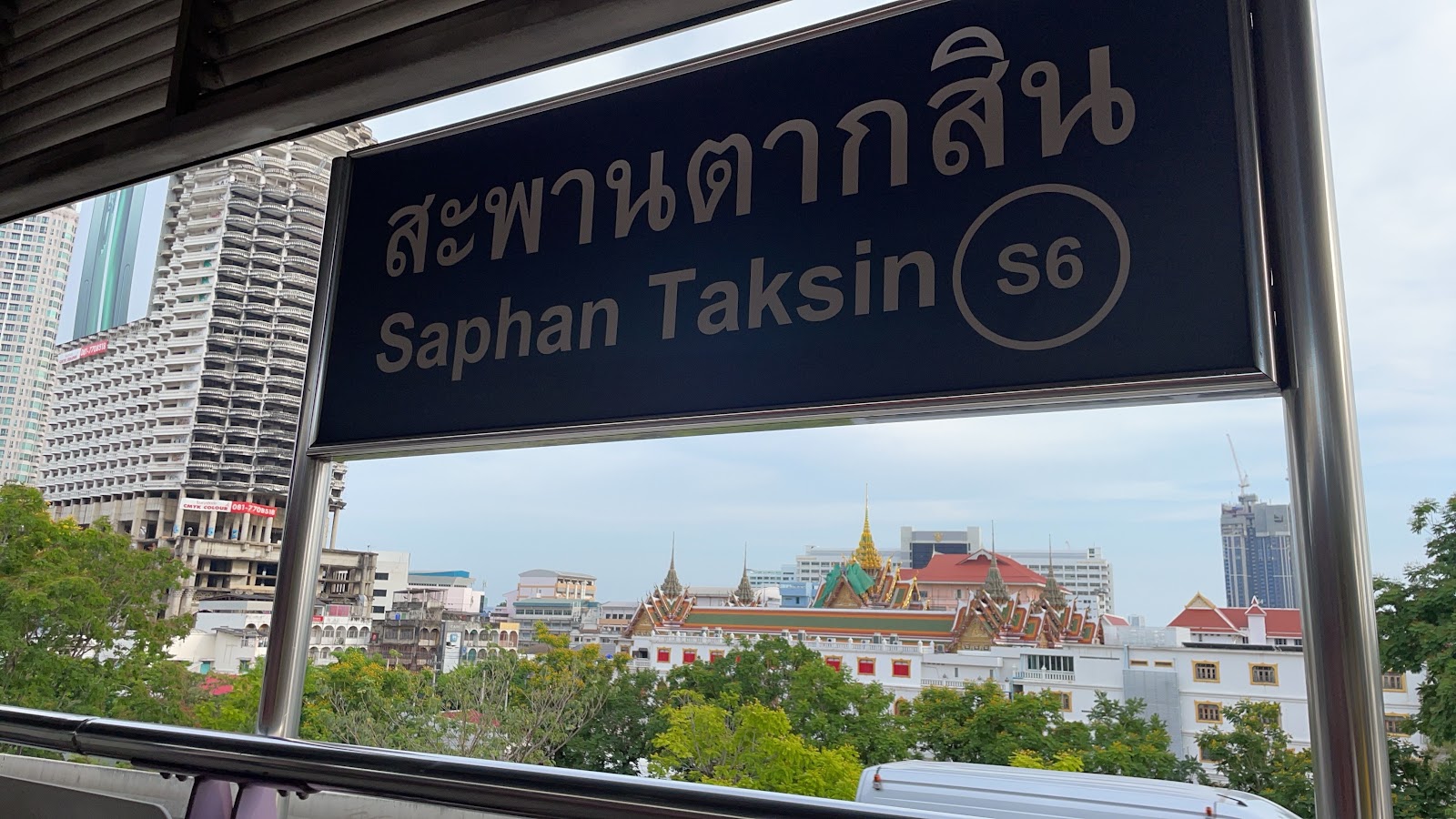
- Saphan Taksin: the station beside the river piers, where boats run up the Chao Phraya toward the Old City.
- Mo Chit: the stop for Chatuchak Park and the Chatuchak Weekend Market.
Staying on the line saves a lot of time in traffic. Our pick of the best hotels near the BTS starts there, and the broader guide to getting around Bangkok covers boats, taxis and the MRT.
Sources: BTS SkyTrain, Structure and Stations, BTS SkyTrain, Timetable, BTS SkyTrain, Ticketing System, BTS SkyTrain, Gold Line, BTS SkyTrain home page. Checked September 26, 2026.
Bangkok Mass Transit System. Most people call it the BTS or the Skytrain, because the trains run on an elevated viaduct above the roads.
No. The BTS is the elevated Skytrain (Sukhumvit and Silom lines, plus the Gold Line). The MRT is a separate system that runs the Blue Line, much of it underground, and the Purple Line, and it uses its own tickets.
The BTS timetable lists service from 5:00 a.m. to 1:00 a.m. The last train from Siam to all stations leaves at about 12:02 a.m., and the last trains from Siam to Samrong, Ha Yaek Lat Phrao, Bang Wa and National Stadium at about 12:15 a.m. Ticket offices open from 6:00 a.m. to midnight. These times were effective from January 1, 2026 and checked on September 26, 2026.
Two main lines: the Sukhumvit Line (Kheha to Khu Khot, 47 stations) and the Silom Line (National Stadium to Bang Wa, 14 stations). They meet at Siam. The BTS also operates the three-station Gold Line in Thonburi.
Buy a Single Journey card from a ticket vending machine, which accepts coins, banknotes and QR payment, or use a stored-value Rabbit card. One-Day Passes are sold at station ticket offices.
The BTS lists a flat fare of 15 baht on the Gold Line, checked on September 26, 2026.
Not to Suvarnabhumi. The Airport Rail Link is a separate line that connects with the BTS at Phaya Thai. See our guide to getting from Bangkok airport to the city for the options.